Overview
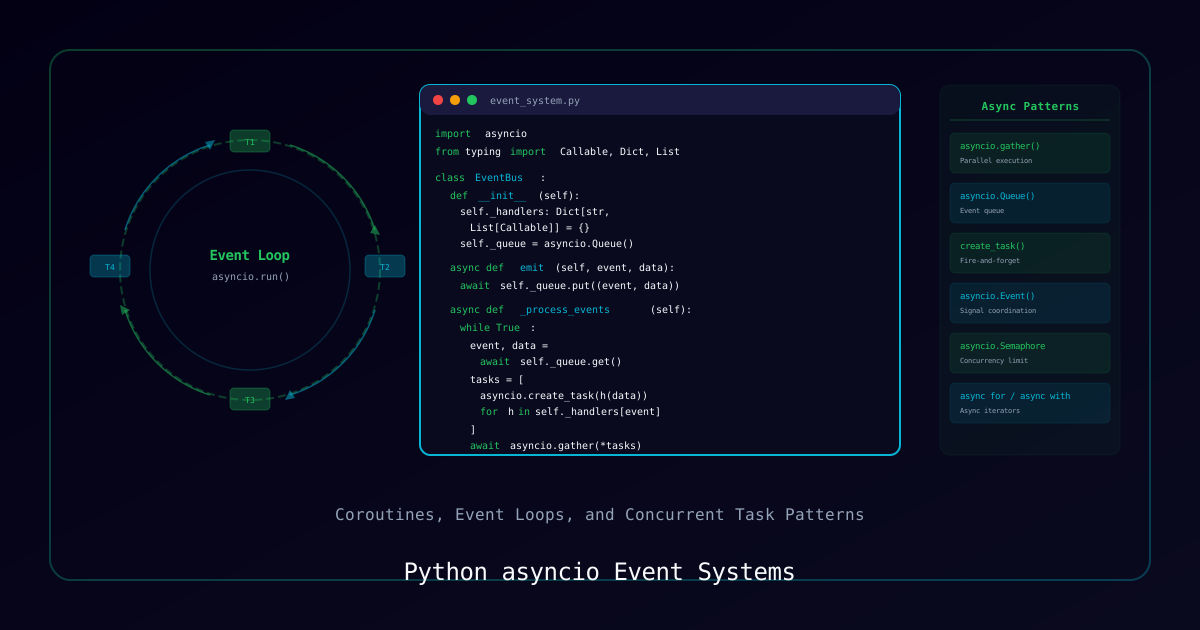
Event-driven architecture decouples components by communicating through events rather than direct function calls. Combined with Python's asyncio, this creates highly concurrent, maintainable systems. This guide covers patterns proven in production trading systems processing thousands of events per second.
What You'll Build
┌──────────────┐     ┌──────────────┐     ┌──────────────┐
│  Data Feed   │────►│  Event Bus   │────►│  Strategy    │
│  (Producer)  │     │  (Router)    │     │  (Consumer)  │
└──────────────┘     └──────┬───────┘     └──────────────┘
                           │
                     ┌─────┴──────┐
                     │  Risk Mgr  │
                     │  (Guard)   │
└────────────┘Requirements
| Component | Version |
|---|---|
| Python | 3.10+ |
| asyncio | stdlib |
| aiohttp | 3.9+ (optional, for HTTP) |
Process
Step 1: Event Bus Implementation
The event bus is the backbone — it routes events to registered handlers:
# event_bus.py
import asyncio
from collections import defaultdict
from typing import Any, Callable, Coroutine

EventHandler = Callable[..., Coroutine[Any, Any, None]]

class EventBus:
    def __init__(self):
        self._handlers: dict[str, list[EventHandler]] = defaultdict(list)
        self._queue: asyncio.Queue = asyncio.Queue()
        self._running = False

    def subscribe(self, event_type: str, handler: EventHandler) -> None:
        """Register a handler for an event type."""
        self._handlers[event_type].append(handler)

    def unsubscribe(self, event_type: str, handler: EventHandler) -> None:
        """Remove a handler."""
        self._handlers[event_type].remove(handler)

    async def publish(self, event_type: str, data: Any = None) -> None:
        """Queue an event for processing."""
        await self._queue.put((event_type, data))

    async def start(self) -> None:
        """Start processing events from the queue."""
        self._running = True
        while self._running:
            try:
                event_type, data = await asyncio.wait_for(
                    self._queue.get(), timeout=1.0
                )
                handlers = self._handlers.get(event_type, [])
                # Run all handlers concurrently
                await asyncio.gather(
                    *(h(data) for h in handlers),
                    return_exceptions=True
                )
            except asyncio.TimeoutError:
                continue  # Check if still running

    async def stop(self) -> None:
        """Gracefully stop the event bus."""
        self._running = False
        # Drain remaining events
        while not self._queue.empty():
            event_type, data = self._queue.get_nowait()
            handlers = self._handlers.get(event_type, [])
            await asyncio.gather(
                *(h(data) for h in handlers),
                return_exceptions=True
)Step 2: Component Registry
Register and manage components with lifecycle hooks:
# registry.py
import asyncio
from typing import Protocol

class Component(Protocol):
    """Interface that all system components must implement."""
    async def start(self) -> None: ...
    async def stop(self) -> None: ...
    @property
    def name(self) -> str: ...

class ComponentRegistry:
    def __init__(self):
        self._components: dict[str, Component] = {}

    def register(self, component: Component) -> None:
        self._components[component.name] = component

    async def start_all(self) -> None:
        """Start all components concurrently."""
        await asyncio.gather(
            *(c.start() for c in self._components.values())
        )

    async def stop_all(self) -> None:
        """Stop all components in reverse registration order."""
        for component in reversed(list(self._components.values())):
            try:
                await asyncio.wait_for(component.stop(), timeout=5.0)
            except asyncio.TimeoutError:
                print(f"Warning: {component.name} did not stop within 5s")

    def get(self, name: str) -> Component:
return self._components[name]Step 3: Graceful Shutdown with Signal Handling
# shutdown.py
import asyncio
import signal

class GracefulShutdown:
    def __init__(self):
        self._shutdown_event = asyncio.Event()

    def setup(self, loop: asyncio.AbstractEventLoop) -> None:
        """Register signal handlers for graceful shutdown."""
        for sig in (signal.SIGINT, signal.SIGTERM):
            loop.add_signal_handler(sig, self._handle_signal)

    def _handle_signal(self) -> None:
        print("\nShutdown signal received...")
        self._shutdown_event.set()

    async def wait(self) -> None:
        """Block until shutdown signal received."""
        await self._shutdown_event.wait()

    @property
    def is_shutting_down(self) -> bool:
return self._shutdown_event.is_set()Step 4: Kill Switch Pattern
For safety-critical systems, implement a kill switch that immediately halts all operations:
# kill_switch.py
import asyncio
from event_bus import EventBus

class KillSwitch:
    """Emergency stop for all system operations."""

    def __init__(self, event_bus: EventBus):
        self._event_bus = event_bus
        self._triggered = False
        self._reason: str | None = None

    async def trigger(self, reason: str) -> None:
        """Activate the kill switch."""
        if self._triggered:
            return
        self._triggered = True
        self._reason = reason
        await self._event_bus.publish("KILL_SWITCH", {
            "reason": reason,
            "timestamp": asyncio.get_event_loop().time()
        })

    @property
    def is_active(self) -> bool:
        return self._triggered

    async def reset(self, authorization: str) -> None:
        """Reset requires explicit authorization."""
        if authorization == "AUTHORIZED_RESET":
            self._triggered = False
            self._reason = None
await self._event_bus.publish("KILL_SWITCH_RESET", {})Step 5: Putting It All Together
# main.py
import asyncio
from event_bus import EventBus
from registry import ComponentRegistry
from shutdown import GracefulShutdown
from kill_switch import KillSwitch

class DataFeed:
    """Example producer component."""
    name = "data-feed"

    def __init__(self, event_bus: EventBus):
        self._bus = event_bus
        self._running = False

    async def start(self):
        self._running = True
        asyncio.create_task(self._produce())

    async def stop(self):
        self._running = False

    async def _produce(self):
        counter = 0
        while self._running:
            counter += 1
            await self._bus.publish("market_data", {
                "symbol": "BTC-USD",
                "price": 45000 + counter,
                "volume": 1000
            })
            await asyncio.sleep(0.1)

class Strategy:
    """Example consumer component."""
    name = "strategy"

    def __init__(self, event_bus: EventBus, kill_switch: KillSwitch):
        self._bus = event_bus
        self._kill = kill_switch

    async def start(self):
        self._bus.subscribe("market_data", self._on_market_data)
        self._bus.subscribe("KILL_SWITCH", self._on_kill)

    async def stop(self):
        pass

    async def _on_market_data(self, data):
        if self._kill.is_active:
            return
        # Process market data...
        print(f"Processing {data['symbol']} @ {data['price']}")

    async def _on_kill(self, data):
        print(f"Kill switch activated: {data['reason']}")

async def main():
    event_bus = EventBus()
    kill_switch = KillSwitch(event_bus)
    registry = ComponentRegistry()
    shutdown = GracefulShutdown()

    # Register components
    registry.register(DataFeed(event_bus))
    registry.register(Strategy(event_bus, kill_switch))

    # Start everything
    loop = asyncio.get_event_loop()
    shutdown.setup(loop)

    bus_task = asyncio.create_task(event_bus.start())
    await registry.start_all()

    # Wait for shutdown signal
    await shutdown.wait()

    # Graceful teardown
    await registry.stop_all()
    await event_bus.stop()
    bus_task.cancel()

if __name__ == "__main__":
asyncio.run(main())Error Handling Patterns
Circuit Breaker
class CircuitBreaker:
    def __init__(self, failure_threshold: int = 5, reset_timeout: float = 60):
        self._failures = 0
        self._threshold = failure_threshold
        self._reset_timeout = reset_timeout
        self._state = "closed"  # closed, open, half-open
        self._last_failure: float = 0

    async def call(self, coro):
        if self._state == "open":
            if asyncio.get_event_loop().time() - self._last_failure > self._reset_timeout:
                self._state = "half-open"
            else:
                raise RuntimeError("Circuit breaker is open")

        try:
            result = await coro
            if self._state == "half-open":
                self._state = "closed"
                self._failures = 0
            return result
        except Exception:
            self._failures += 1
            self._last_failure = asyncio.get_event_loop().time()
            if self._failures >= self._threshold:
                self._state = "open"
raiseKey Takeaways
- Use
asyncio.Queuefor backpressure control between producers and consumers - Always implement graceful shutdown — drain queues before exiting
- Kill switches are essential for safety-critical systems
- Circuit breakers prevent cascading failures across components
- Run handlers with
return_exceptions=Trueso one failure doesn't block others - Keep event handlers fast — offload heavy work to separate tasks