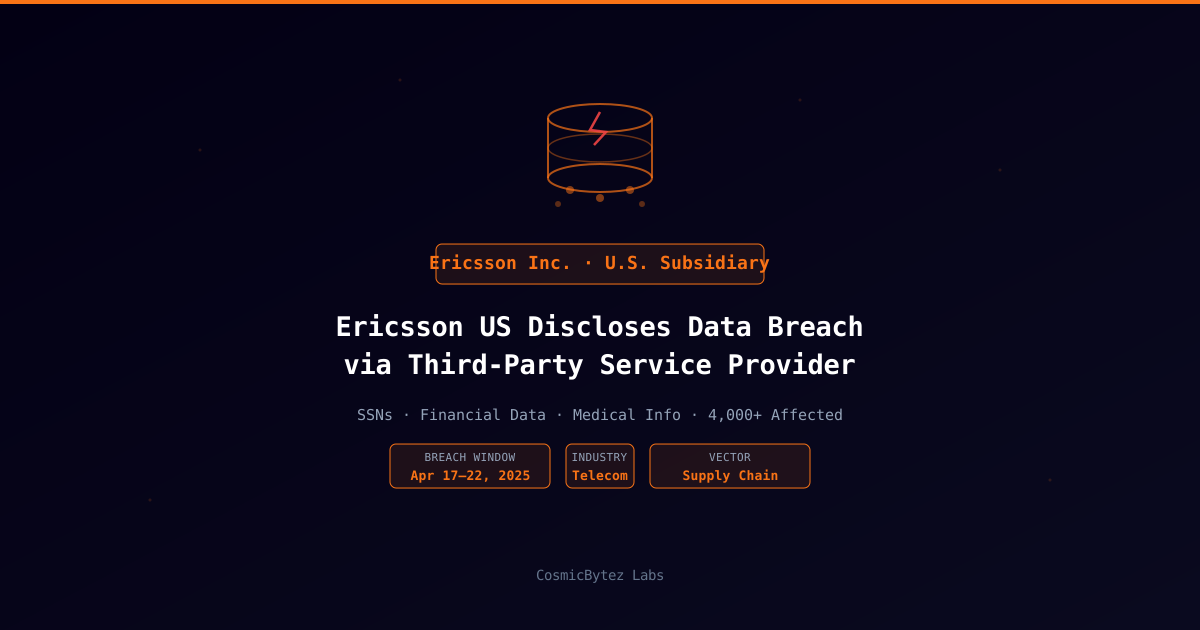
Ericsson US Confirms Third-Party Breach Exposed Employee and Customer PII
Ericsson Inc., the U.S. subsidiary of Swedish telecommunications and networking giant Ericsson, has disclosed a significant data breach that exposed the personal information of employees and customers. The breach originated at a third-party service provider — not Ericsson's own systems — and compromised sensitive data including Social Security numbers, financial records, and medical information.
The disclosure, made in March 2026, covers a breach that occurred nearly a year earlier, between April 17 and April 22, 2025, with the service provider only completing its forensic review on February 23, 2026.
Incident Details
| Attribute | Value |
|---|---|
| Victim Organization | Ericsson Inc. (U.S. subsidiary) |
| Breach Source | Third-party service provider (name undisclosed) |
| Breach Window | April 17–22, 2025 |
| Discovery Date | April 28, 2025 (by service provider) |
| Review Completed | February 23, 2026 |
| Publicly Disclosed | March 2026 |
| Confirmed Affected | 4,377+ individuals (Texas notification); total nationwide higher |
| Data Exposed | PII, SSNs, driver's licenses, financial data, medical information |
What Data Was Exposed?
The forensic review confirmed that the following categories of personal information were potentially accessed or acquired by the attackers:
| Data Category | Details |
|---|---|
| Full Name | Employee and customer names |
| Social Security Numbers | High identity theft risk |
| Addresses | Home and mailing addresses |
| Driver's License Numbers | Government-issued ID numbers |
| Financial Information | Account details and financial records |
| Medical Information | Health-related data for some individuals |
| Dates of Birth | Used in identity verification |
How the Breach Occurred
Third-Party Service Provider Attack
The service provider storing personal data on behalf of Ericsson was compromised by attackers, who accessed a limited subset of files over a five-day window. This reflects a continuing trend where organizations with strong internal security are breached via weaker links in their supply chain — third-party vendors and service providers that process or store sensitive data.
Extended Timeline
A notable aspect of this breach is the extended timeline between the incident and disclosure. The breach occurred in April 2025, was discovered days later by the service provider, but notification to affected individuals only began after the forensic review was completed in February 2026 — nearly 10 months later.
Impact Assessment
| Impact Area | Description |
|---|---|
| Identity Theft | SSNs, driver's licenses, and DOBs create a complete identity theft package |
| Financial Fraud | Exposed financial data could enable account takeover or fraudulent transactions |
| Medical Privacy | Healthcare data exposure carries HIPAA implications for some individuals |
| Reputational Harm | Ericsson faces scrutiny over vendor security management practices |
| Regulatory Risk | State notification laws triggered; potential FTC and state AG scrutiny |
Ericsson's Response
Ericsson is providing affected individuals with free identity protection services through IDX, including:
- Credit monitoring (12-month coverage)
- Dark web monitoring for exposed credentials
- Identity theft recovery assistance
- $1 million identity fraud loss reimbursement policy
Affected individuals must enroll by June 9, 2026 to access these services. As of the disclosure, the service provider had found no evidence that the stolen data had been actively misused.
Recommendations
For Affected Individuals
- Enroll in the IDX identity protection service before the June 9, 2026 deadline
- Place a credit freeze with all three major bureaus (Equifax, Experian, TransUnion) — free and effective against new account fraud
- Monitor financial accounts closely for unauthorized transactions
- Be alert to phishing attempts — your name and contact details may be in criminal hands
- Request your free annual credit reports at AnnualCreditReport.com
For Security and Procurement Teams
- Audit third-party vendors for data security controls before entrusting them with PII
- Require contractual notification windows — mandate breach reporting within 72 hours
- Minimize data shared with service providers — only provide the minimum necessary data
- Conduct regular vendor security assessments and enforce compliance with your security standards
- Implement data loss prevention (DLP) tools to monitor what data leaves your environment
Key Takeaways
- Third-party supply chain breaches remain the most common avenue for large-scale PII exposure — attackers target the weakest link in the vendor chain.
- The 10-month gap between breach and disclosure underscores the challenges of forensic reviews in complex multi-party incidents.
- SSNs combined with medical and financial data create a highly damaging exposure profile, enabling comprehensive identity fraud.
- Ericsson's response — free credit monitoring and a $1M reimbursement policy — reflects the growing expectations placed on breached organizations.
- The breach highlights the need for contractual data security requirements and regular third-party audits in all vendor relationships handling sensitive data.
- Organizations should assume that any data shared with a service provider could eventually be exposed and govern accordingly.