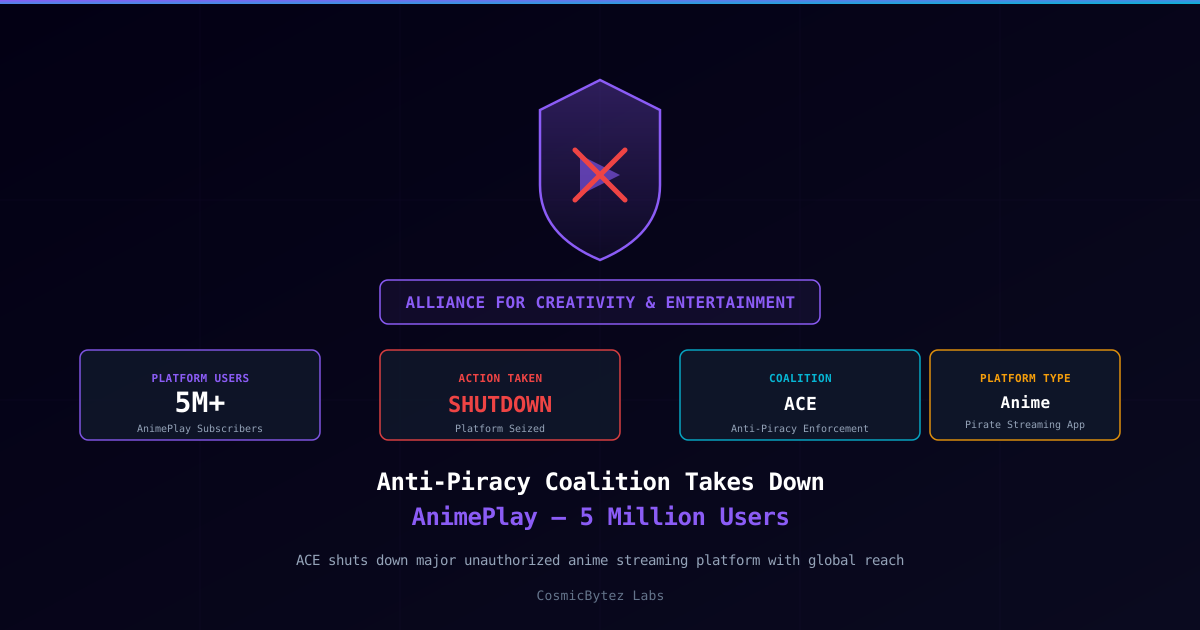
The Alliance for Creativity and Entertainment (ACE) has announced the successful shutdown of AnimePlay, a major unauthorized anime streaming platform that had amassed over 5 million users worldwide. The takedown is one of the largest anti-piracy actions targeting the anime streaming sector in recent years.
What Was AnimePlay
AnimePlay operated as a pirate streaming application offering access to a wide catalogue of anime series and films without authorization from rights holders. The platform's user base of 5 million reflects the significant scale of the operation — placing it among the larger piracy platforms to be dismantled by ACE.
Pirate anime streaming platforms have become an increasingly prominent enforcement target for ACE, as global demand for anime content continues to grow and legitimate services expand their licensing portfolios. Unauthorized platforms that capture millions of users represent substantial revenue loss for studios, distributors, and licensed streaming services.
ACE and Its Enforcement Role
The Alliance for Creativity and Entertainment is a global coalition of major content companies focused on reducing online piracy. ACE members include major Hollywood studios, streaming platforms, and international broadcasters — collectively representing the world's leading entertainment content owners.
ACE has developed an established pattern of targeting high-traffic piracy platforms through a combination of:
- Legal action and court orders in relevant jurisdictions
- Domain seizures and infrastructure takedowns
- Operator identification and prosecution where possible
- Coordinated international enforcement with law enforcement agencies
The AnimePlay shutdown follows a pattern of ACE enforcement actions that have dismantled multiple large-scale streaming piracy platforms over the past several years.
Impact on Users
With the platform now offline, the 5 million registered users of AnimePlay lose access to its content library. ACE enforcement actions typically involve domain seizure and server shutdown, making recovery of the service under the same brand effectively impossible.
Users of pirated streaming services face ongoing risks beyond simply losing service access:
- Data exposure: Piracy platforms often collect user account data, payment information (for premium tiers), and viewing history. Following enforcement action, that data may be exposed or mishandled
- Malware risk: Pirate applications frequently bundle adware, trackers, or malware alongside their primary function
- Legal risk: In some jurisdictions, users of piracy services may face civil or criminal liability, though consumer-facing enforcement is rare for streaming viewers
Broader Anime Piracy Landscape
Anime piracy has historically been driven by regional licensing gaps — content available in Japan but not yet licensed for Western streaming platforms. The rapid expansion of services such as Crunchyroll (now owned by Sony), Funimation, and Netflix's anime library has closed many of these gaps, though simulcast availability and regional licensing remain ongoing challenges.
ACE's continued enforcement pressure against anime piracy platforms signals that the industry is treating this as a priority enforcement area, particularly as major studios invest heavily in anime co-productions and acquisitions.
What This Means
The AnimePlay shutdown demonstrates that large-scale anime piracy platforms — even those with millions of users — are not immune to coordinated enforcement action. ACE has shown a sustained ability to identify and dismantle major piracy operations regardless of platform scale.
For the broader cybersecurity community, takedowns of this kind also highlight how piracy infrastructure often overlaps with other risk areas: credential harvesting, malware distribution, and exposure of user data are common secondary concerns when piracy services are shut down by enforcement rather than closed by operators.
Source: BleepingComputer