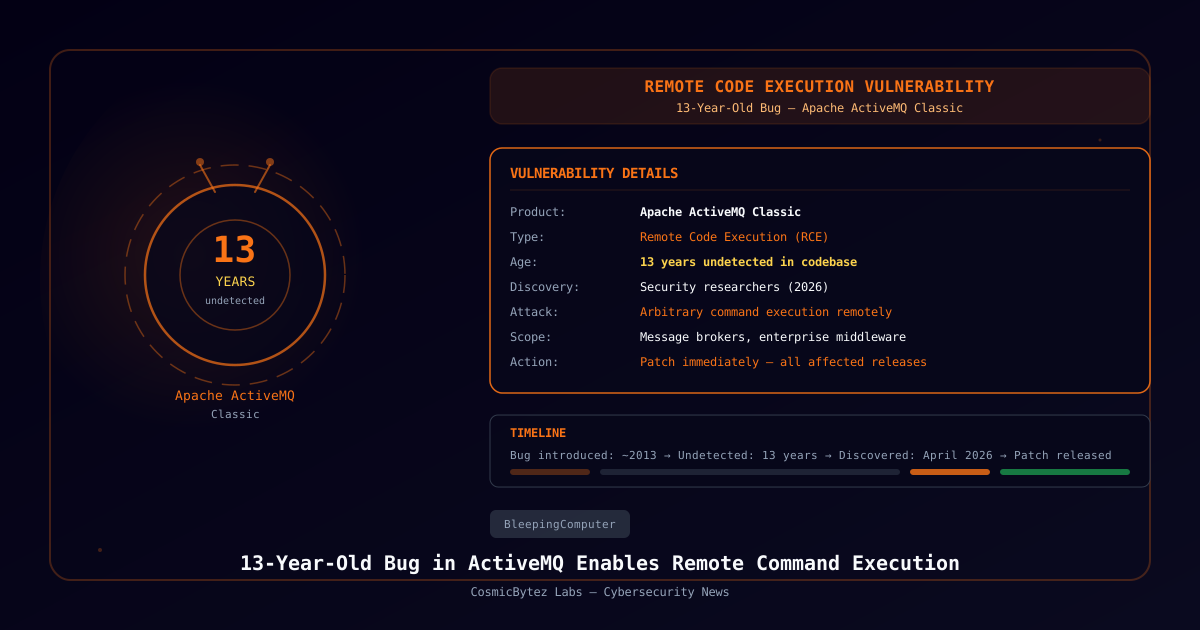
Security researchers have uncovered a remote code execution (RCE) vulnerability in Apache ActiveMQ Classic — a widely deployed open-source message broker — that had been sitting undetected in the codebase for 13 years. The flaw allows an attacker to remotely execute arbitrary commands on any server running a vulnerable version, making it a significant risk for enterprise environments that rely on ActiveMQ for asynchronous messaging and event-driven architectures.
The Vulnerability
The bug resides in ActiveMQ Classic and stems from a flaw in how the message broker processes certain input, enabling an unauthenticated or low-privileged attacker to trigger command execution on the server. The precise technical mechanism was disclosed by researchers alongside a coordinated disclosure to the Apache Software Foundation, which has released a patched version.
What makes this discovery notable is its age: the vulnerable code was introduced approximately 13 years ago and survived through multiple major releases, security audits, and the project's wide adoption across enterprise middleware stacks. This underscores a systemic challenge in open-source security — legacy code paths may remain under-reviewed for years, particularly in mature, stable projects where active development has slowed.
Why ActiveMQ Is a High-Value Target
Apache ActiveMQ is one of the most widely deployed Java-based message brokers in the world, used across financial services, healthcare, telecommunications, and enterprise software. Its prevalence makes vulnerabilities particularly impactful:
| Deployment Pattern | Risk Context |
|---|---|
| Enterprise Java middleware | Often exposed on internal networks with broad service access |
| Container orchestration | Frequently deployed in Kubernetes alongside sensitive workloads |
| Legacy on-premises stacks | May run unpatched versions for extended periods |
| Cloud-hosted instances | Sometimes inadvertently exposed to the internet |
ActiveMQ has been targeted in previous high-profile campaigns. In 2023, threat actors — including ransomware groups — mass-exploited CVE-2023-46604, an RCE vulnerability with a CVSS score of 10.0, within days of its public disclosure. That pattern illustrates the risk posed by RCE flaws in this software.
Scope and Impact
An attacker exploiting this vulnerability can:
- Execute arbitrary operating system commands under the service account running ActiveMQ
- Pivot to other systems reachable from the broker host
- Deploy backdoors, cryptominers, or ransomware
- Intercept or manipulate messages flowing through the broker
The impact is compounded by ActiveMQ's typical network position: brokers often have privileged access to application databases, internal APIs, and inter-service communication channels that would give an attacker significant lateral movement opportunities.
Remediation
The Apache Software Foundation has issued a patch. Organizations running Apache ActiveMQ Classic should:
- Identify all running instances — audit your environment for any ActiveMQ Classic deployments, including containerized instances and legacy on-premises installations
- Apply the patch immediately — upgrade to the patched version as specified in the Apache Security Advisory
- Restrict network access — if immediate patching is not possible, restrict access to the ActiveMQ admin console and broker ports to trusted networks only
- Review exposed ports — ActiveMQ's default ports (61616, 8161, 5672, 61613, 61614, 1883) should not be internet-accessible without explicit justification
- Check for indicators of compromise — review broker logs for unexpected command execution patterns or unusual client connections
Lessons for Open-Source Dependency Management
The 13-year lifespan of this bug illustrates why dependency hygiene and ongoing security review of mature open-source components matter. Legacy code paths in widely adopted libraries often receive less scrutiny than actively developed features, yet can carry significant risk due to the breadth of downstream consumers.
Security teams should:
- Maintain a current Software Bill of Materials (SBOM) to identify all ActiveMQ dependencies
- Subscribe to Apache security announcements for components in use
- Implement network segmentation to limit blast radius from message broker compromises
- Treat message broker instances as high-value targets deserving dedicated security monitoring
Source: BleepingComputer — 13-year-old bug in ActiveMQ lets hackers remotely execute commands