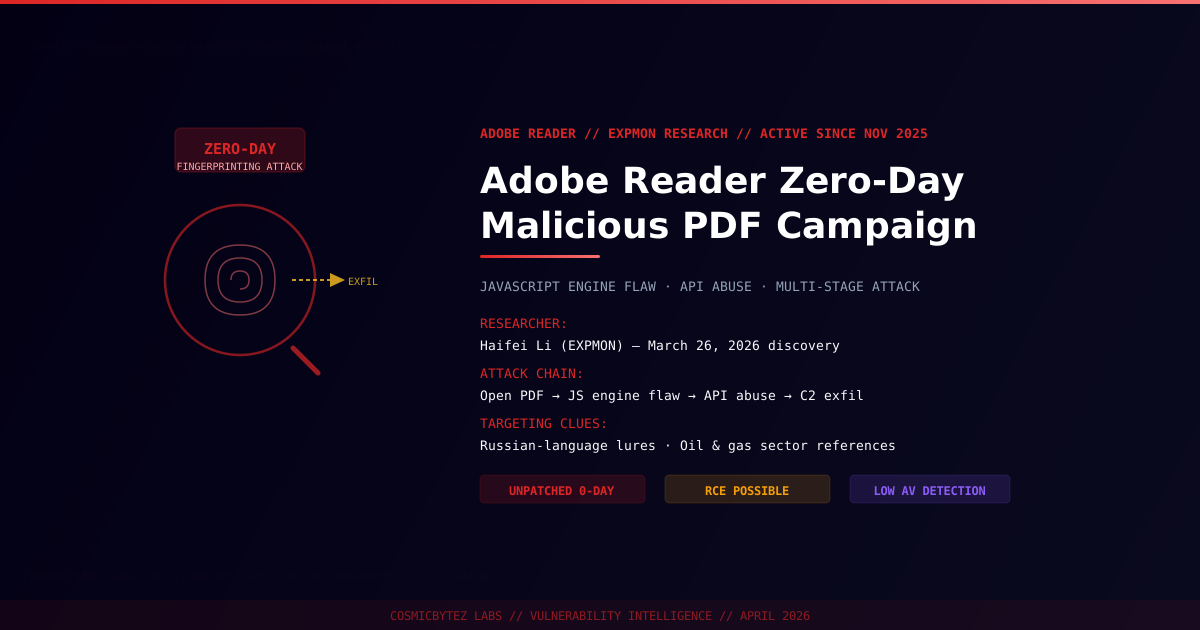
Threat actors have been actively exploiting a previously unknown zero-day vulnerability in Adobe Reader through maliciously crafted PDF documents since at least November 2025, according to research by EXPMON's Haifei Li. The highly sophisticated exploit leverages a logic flaw in Adobe Reader's JavaScript engine to bypass sandbox protections, collect detailed system intelligence, and silently exfiltrate data to attacker-controlled infrastructure — all triggered by simply opening a PDF document.
As of the time of reporting, the vulnerability remains unpatched and Adobe has not released a security advisory.
The Discovery: "yummy_adobe_exploit_uwu.pdf"
EXPMON — a public automated exploit analysis platform — flagged the threat on March 26, 2026, after a user submitted a sample with the unusual filename yummy_adobe_exploit_uwu.pdf. The platform's behavioral analysis identified characteristics consistent with an active exploit against a zero-day vulnerability.
Li confirmed the finding represents a "highly-sophisticated PDF exploit" that works against the latest version of Adobe Reader without requiring any user interaction beyond opening the file:
"This 'fingerprinting' exploit has been confirmed to leverage a zero-day/unpatched vulnerability that works on the latest version of Adobe Reader without requiring any user interaction beyond opening a PDF file."
Further investigation revealed that the campaign had been active much longer. A related sample, Invoice540.pdf, was found on VirusTotal with an upload date of November 28, 2025, establishing a minimum campaign duration of over four months before public discovery. A second sample appeared on March 23, 2026.
Technical Analysis
Exploit Mechanism
The vulnerability is a logic flaw in Adobe Reader's JavaScript engine that allows code running within the sandboxed PDF environment to invoke privileged Acrobat APIs that should only be accessible from trusted processes. This constitutes a sandbox escape — one of the most serious categories of vulnerability in document-handling applications.
The specific APIs abused in the attack:
| API | Malicious Use |
|---|---|
util.readFileIntoStream() | Reads arbitrary files from the victim's local filesystem |
RSS-addFeed() | Transmits collected data silently to an attacker C2 server |
To avoid detection, the core exploit script is Base64-encoded and hidden within PDF object structures — a technique that defeats many signature-based detection approaches.
What the Exploit Collects
In its initial "fingerprinting" phase, the exploit harvests:
- Operating system — exact version and build details
- System language — locale and language settings
- Adobe Reader version — to tailor follow-on payloads
- PDF file path — reveals local directory structure and potentially organizational file naming conventions
C2 Filtering: Targeted, Not Mass Exploitation
A significant operational security detail in this campaign is the server-side victim filtering the C2 performs. When requests arrive from known security sandbox environments or analysis systems, the C2 returns empty responses — revealing no payload to researchers. When the request comes from a genuine victim system matching the target profile, the full payload chain presumably continues.
This behavior is characteristic of targeted threat actors who prioritize operational security over infection volume.
Potential for Full System Compromise
Li warned explicitly that the fingerprinting phase is likely just the beginning:
"Even more concerning, this exploit allows the threat actor to not only collect/steal local information but also potentially launch subsequent RCE/SBX attacks, which could lead to full control of the victim's system."
The implication is that for victims who match the targeting criteria, follow-on payloads could include full remote code execution — moving beyond data collection to complete system compromise.
Attribution Clues: Russian Oil and Gas Targeting
Independent researcher Gi7w0rm identified that lure documents associated with the campaign contain Russian-language content specifically referencing current events in Russia's oil and gas sector. This targeting indicator is consistent with several possible threat profiles:
- Russian or Russia-adjacent threat actors conducting competitive intelligence
- Western or adversary nation-state actors targeting Russian energy infrastructure
- Financially motivated actors targeting oil and gas sector organizations
While attribution remains unclear, the specificity of the targeting strongly suggests this is a nation-state or advanced persistent threat actor operation rather than opportunistic cybercrime.
Patch Status and Mitigations
Adobe has not released a patch as of April 9, 2026. EXPMON states it has notified Adobe Security and is awaiting a response. Until a fix is available:
Immediate mitigations:
- Disable JavaScript in Adobe Reader: Edit → Preferences → JavaScript → uncheck "Enable Acrobat JavaScript"
- Enable Protected Mode and Protected View (File → Preferences → Security (Enhanced))
- Use alternative PDF readers for documents from untrusted sources
- Restrict PDF opening from email attachments via email gateway policies
- Monitor network traffic from Adobe Reader processes for unexpected outbound connections
Detection guidance:
- Submit suspicious PDFs to EXPMON's public analysis service
- Watch for Adobe Reader processes initiating connections to external IP addresses
- Monitor for Base64 decode operations and unusual JavaScript API calls in Reader process logs
The Dwell Time Problem
One of the most significant aspects of this disclosure is the four-month dwell time between the earliest identified sample (November 28, 2025) and public discovery (March 26, 2026). During that period, an unknown number of organizations were potentially fingerprinted and targeted with follow-on payloads.
This pattern — sophisticated exploit, long dwell time, low AV detection, targeted deployment — is a defining characteristic of advanced persistent threat operations in 2026.
Source: The Hacker News — Adobe Reader Zero-Day Exploited via Malicious PDFs Since December 2025