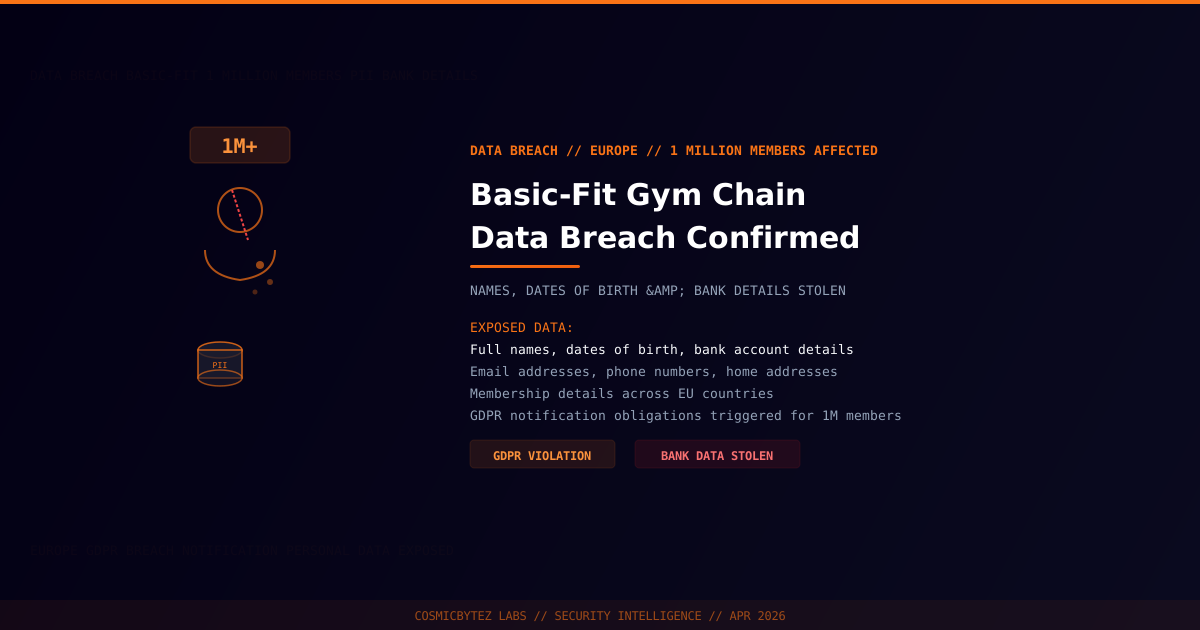
Basic-Fit, Europe's largest gym chain by number of clubs, has confirmed that cybercriminals breached its systems and accessed personal data belonging to approximately one million members. The company disclosed the incident on April 14, 2026, noting that the stolen data includes names, dates of birth, and bank account details — one of the most sensitive combinations of personal financial information a consumer data breach can expose.
The disclosure comes via a SecurityWeek report and represents an update to Basic-Fit's ongoing incident response, with the full scope of the breach and the attack vector still under investigation.
What Was Stolen
Unlike many data breaches where organizations minimize the disclosed data scope, Basic-Fit's confirmed data categories are notable for including bank account details — information typically used for direct debit membership billing across European markets.
| Confirmed Stolen Data | Notes |
|---|---|
| Full names | Member registration data |
| Dates of birth | Used for age verification and membership |
| Bank account details | Direct debit billing data (IBAN, account numbers) |
The presence of bank account data significantly elevates the risk to affected members. Unlike email addresses or phone numbers, compromised bank account details can enable:
- Unauthorized direct debit initiations — fraudulent charges against the account
- Account takeover at the member's bank — attackers can use account details combined with other PII to impersonate members to financial institutions
- Targeted financial fraud — detailed financial impersonation using the combination of name, date of birth, and bank account number
Scale of the Incident
Basic-Fit operates over 1,400 clubs across the Netherlands, Belgium, France, Spain, Luxembourg, and Germany, serving millions of members through an app-based digital membership model. The company is the largest low-cost fitness chain in Europe by club count.
The one million affected members figure represents a substantial portion of Basic-Fit's membership base. The cross-border nature of the breach — affecting members across multiple EU member states — creates a complex GDPR compliance landscape.
GDPR and Regulatory Exposure
The combination of bank account data and the scale of affected individuals creates significant GDPR exposure for Basic-Fit. Under the General Data Protection Regulation:
- Controllers must notify the relevant supervisory authority within 72 hours of becoming aware of a breach
- When the breach is likely to result in high risk to individuals' rights and freedoms, affected individuals must be notified without undue delay
Bank account data exposure almost certainly crosses the "high risk" threshold under GDPR, meaning Basic-Fit faces notification obligations to approximately one million individuals across multiple EU jurisdictions.
Regulatory authorities likely monitoring:
| Country | Authority |
|---|---|
| Netherlands (HQ) | Autoriteit Persoonsgegevens (AP) |
| Belgium | Gegevensbeschermingsautoriteit (GBA) |
| France | Commission Nationale de l'Informatique et des Libertés (CNIL) |
| Spain | Agencia Española de Protección de Datos (AEPD) |
| Germany | Landesbeauftragte für Datenschutz (varies by state) |
GDPR fines for significant breaches can reach up to 4% of global annual turnover or €20 million, whichever is higher.
How This Differs from Standard Gym Breaches
Many gym chain breaches involve email addresses, usernames, and hashed passwords — valuable for credential stuffing but with limited immediate financial harm. Basic-Fit's breach is more severe because:
- Bank account details are present — not just tokenized payment metadata, but actual account numbers used for direct debit billing
- Date of birth data — a key verification factor used by banks and financial institutions for identity confirmation
- Combination with full name — the trifecta of name + DOB + bank account is sufficient for financial impersonation in many contexts
What Affected Members Should Do Immediately
Financial Accounts
1. Contact your bank and report that your account details may have
   been compromised in the Basic-Fit breach

2. Request a new IBAN / account number if your bank offers this
   — this is the most effective mitigation for direct debit fraud

3. Review your bank statements for any unauthorized direct debits
   or charges you do not recognize

4. Set up transaction alerts on your bank account to receive
   real-time notifications of any activity
Basic-Fit Account
5. Change your Basic-Fit account password immediately

6. If you use the same password on other services,
   change those passwords as well

7. Enable two-factor authentication if available
   in the Basic-Fit app or portal
Phishing Awareness
8. Be alert to phishing emails or calls impersonating:
   - Basic-Fit (e.g., "verify your details to keep your membership")
   - Your bank (e.g., "suspicious activity detected on your account")

   Attackers frequently exploit breaches with follow-on social
   engineering using the stolen data to appear legitimate
Basic-Fit's Response
The company has acknowledged the breach and stated it is:
- Investigating the full scope of the incident with cybersecurity experts
- Notifying affected customers in accordance with GDPR obligations
- Cooperating with relevant supervisory authorities
- Implementing security improvements to prevent recurrence
Basic-Fit has not disclosed the attack vector, the duration of unauthorized access, or whether any ransom demands were made.
Context: European Consumer Data Breaches in 2026
The Basic-Fit breach is the latest in a series of significant consumer data breaches affecting European organizations in 2026. Key trends:
- Fitness and wellness platforms hold large volumes of PII combined with payment data and physical location patterns — making them attractive targets
- Direct debit billing data is increasingly targeted as a more financially actionable alternative to credit card data (which benefits from stronger fraud protection mechanisms)
- GDPR enforcement actions are becoming more frequent and larger in 2026, creating substantial financial risk for organizations that fail to adequately protect member data
Affected Basic-Fit members should treat this breach as high priority given the financial sensitivity of the exposed data.
Sources: SecurityWeek