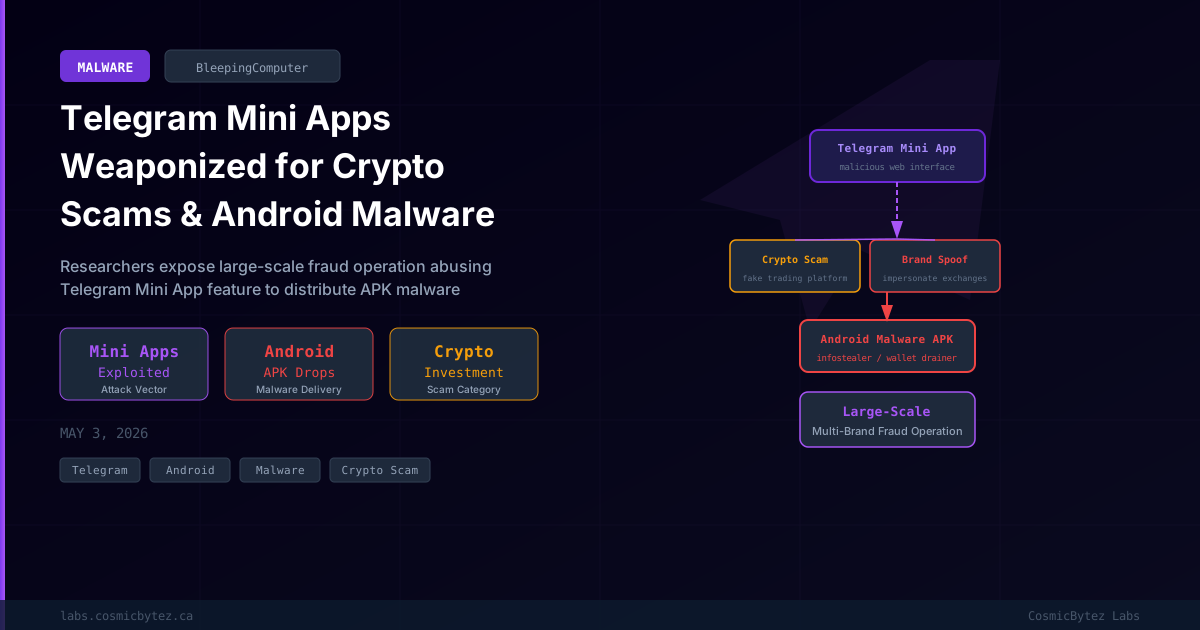
Cybersecurity researchers have uncovered a large-scale fraud operation that weaponizes Telegram's Mini App feature to execute cryptocurrency investment scams, impersonate legitimate brands, and distribute Android malware — exploiting the trust users place in the messaging platform's integrated mini-application ecosystem.
What Are Telegram Mini Apps?
Telegram Mini Apps are lightweight web applications embedded directly within the Telegram client interface. Launched via bot interactions or inline buttons, they run in a sandboxed WebView and can interact with the Telegram platform API to access basic user profile data, process payments, and trigger notifications. Legitimate use cases include in-chat games, ticket booking, e-commerce storefronts, and productivity tools.
The platform's broad user base — exceeding 900 million monthly active users — combined with the inherent trust users extend to applications operating within the Telegram environment makes Mini Apps an attractive attack surface for threat actors seeking to bypass traditional phishing defenses.
The Fraud Operation
Researchers discovered the campaign involves a coordinated network of malicious Mini Apps operating across multiple Telegram bots and channels. The operation runs three distinct abuse vectors in parallel:
1. Cryptocurrency Investment Scams
The most prevalent abuse type involves fake crypto trading and investment platforms delivered as Mini Apps. These applications present polished, professional interfaces mimicking legitimate cryptocurrency exchanges and DeFi protocols. Victims are:
- Encouraged to deposit funds into "high-yield" investment accounts.
- Shown fabricated profit dashboards to build confidence and encourage larger deposits.
- Ultimately denied withdrawals through a variety of pretexts, with funds routed directly to attacker-controlled wallets.
The in-app nature of the scam makes it significantly harder for victims to identify warning signs — the application loads inside Telegram with no browser address bar, no visible domain, and the implicit trust of the Telegram brand surrounding the interface.
2. Brand Impersonation
A second component of the operation targets users of well-known services by creating Mini Apps that spoof the interfaces of:
- Major cryptocurrency exchanges (order books, withdrawal flows, KYC forms).
- Banking and fintech applications collecting login credentials and one-time codes.
- Delivery and logistics services harvesting personal and address data.
Legitimate brand names, logos, and color schemes are cloned precisely to maximize deception. Victims who interact with these apps surrender credentials, two-factor authentication codes, and personal information directly to attacker infrastructure.
3. Android Malware Distribution
The third vector is potentially the most technically dangerous: the Mini Apps serve as a delivery mechanism for malicious Android APK files. The attack flow operates as follows:
- A Mini App presents a fake software update, exclusive application download, or security tool.
- The user is prompted to allow installation from unknown sources and download the APK.
- The malicious APK — once installed — operates as an infostealer or cryptocurrency wallet drainer, exfiltrating:
- Browser credentials and session cookies.
- Crypto wallet seed phrases and private keys.
- SMS messages (used to intercept 2FA codes).
- Contact lists and device information.
The use of Telegram as the delivery channel sidesteps traditional malware distribution defenses. Unlike downloads from the open web or email attachments, APKs delivered through a Telegram interface may not be scanned by corporate web filters or email security gateways.
Scale and Attribution
Researchers characterized the operation as large-scale, noting the involvement of multiple coordinated bot accounts, automated promotion through Telegram channels, and infrastructure designed for high-volume victim processing. Attribution to a specific threat actor or group has not been publicly confirmed at this time.
The operational sophistication — particularly the multi-vector approach combining scam platforms, credential phishing, and malware delivery — suggests a well-resourced criminal operation rather than an opportunistic individual actor.
Why This Works
Several factors make Telegram Mini Apps an effective fraud and malware delivery vehicle:
- Platform trust halo: Users perceive content delivered inside Telegram as more trustworthy than random web links. The Telegram UI frames Mini Apps visually as part of the application.
- No visible URL: Unlike browser-based phishing, Mini Apps display no address bar, eliminating the URL inspection behavior that security-aware users rely on.
- Easy deployment: Telegram's Bot API makes Mini App creation and distribution accessible with minimal technical overhead, enabling rapid campaign iteration.
- Cross-platform reach: Telegram's multi-platform availability (Android, iOS, desktop) allows the campaign to reach victims on multiple device types with a single infrastructure.
Defense Recommendations
For individual users:
- Treat unsolicited Telegram bots and Mini Apps with the same skepticism applied to unknown websites.
- Never install APK files delivered through Telegram Mini Apps or bots — legitimate applications are distributed through the Google Play Store.
- Never enter cryptocurrency wallet seed phrases, exchange login credentials, or banking passwords into any Mini App, regardless of how legitimate it appears.
- Enable Google Play Protect on Android devices to detect and block known malware samples.
- Verify investment platforms independently — check official exchange websites directly rather than clicking Telegram links.
For organizations:
- Include Telegram-based social engineering scenarios in security awareness training.
- Consider mobile device management (MDM) policies that prevent sideloading of APKs outside authorized app stores on corporate-enrolled devices.
- Monitor for Telegram-related indicators in endpoint detection telemetry.
Reporting Malicious Mini Apps
Users who encounter suspected fraudulent or malicious Telegram Mini Apps can report them directly within Telegram by opening the bot profile, tapping the three-dot menu, and selecting Report. Reports of cryptocurrency fraud or Android malware distribution should also be filed with relevant national cybercrime reporting agencies (e.g., IC3 in the US, Action Fraud in the UK).
This article is based on reporting from BleepingComputer. The investigation into this campaign is ongoing.