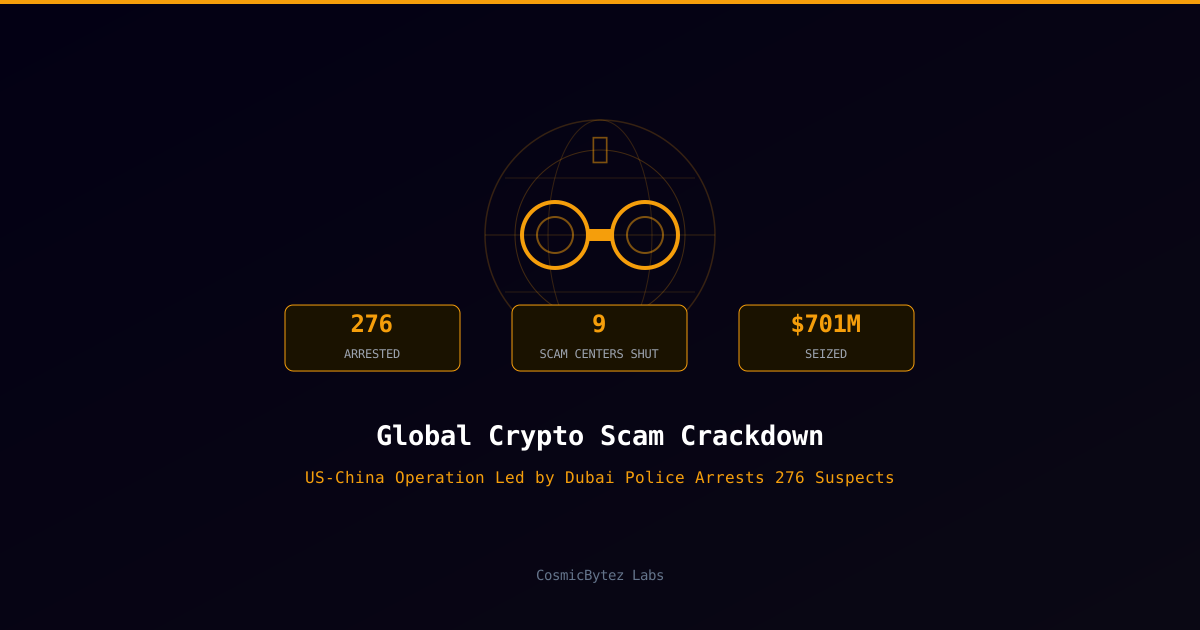
A sweeping international law enforcement operation has dealt a significant blow to organized cryptocurrency fraud networks, resulting in 276 arrests, the shutdown of nine scam operation centers, and the seizure of approximately $701 million in illicit proceeds. The operation was led by Dubai Police with cooperation from United States and Chinese authorities.
The Operation
The crackdown targeted networks running cryptocurrency investment fraud schemes, colloquially known as "pig-butchering" scams. In these operations, criminal syndicates build long-term relationships with victims — often over weeks or months — before luring them into fraudulent crypto investment platforms that display fabricated profits before ultimately stealing deposited funds.
The nine scam centers shut down in the operation were sophisticated call-center-style facilities where teams of workers — many themselves victims of human trafficking — were forced to conduct fraudulent conversations with targets around the world, including a significant number of Americans.
Scale and Scope
| Metric | Count |
|---|---|
| Suspects Arrested | 276 |
| Scam Centers Dismantled | 9 |
| Assets Seized | ~$701 million |
| Victims Targeted (reported) | Tens of thousands globally |
The seized assets include cryptocurrency holdings, fiat currency, and other financial instruments traced to the fraud networks. Investigators characterized the $701 million figure as representing only a portion of the total fraud volume generated by these operations.
How Pig-Butchering Scams Work
Pig-butchering (from the Chinese term shāzhūpán, 杀猪盘) refers to a class of investment fraud where criminals:
- Build rapport — Contact victims via social media, dating apps, or messaging platforms and cultivate a fake relationship over weeks or months
- Introduce "investment opportunities" — Present the victim with seemingly legitimate cryptocurrency investment platforms or trading apps
- Show fabricated gains — Allow victims to withdraw small amounts to build trust while showing inflated fake profits
- Maximize deposits — Encourage victims to invest increasingly large sums, often borrowing money or liquidating retirement accounts
- Execute the exit — Freeze the victim's account and vanish with all deposited funds
The criminal networks operating these scams have industrialized the process, with scam centers employing hundreds of workers running simultaneous fraud operations against targets in North America, Europe, and Asia-Pacific.
Human Trafficking Element
A disturbing feature of many scam center operations is the use of trafficked workers. Criminal syndicates recruit or abduct workers — often under the guise of legitimate employment offers — and force them to conduct scams under threat of violence. Victims in these facilities are frequently subjected to:
- Confiscation of travel documents
- Physical confinement
- Violence or threats for failing to meet fraud quotas
- Sale between criminal organizations
Law enforcement operations of this type thus serve a dual humanitarian and criminal justice purpose: freeing trafficked workers while disrupting the financial networks underpinning the operations.
US-China Law Enforcement Cooperation
The involvement of both US and Chinese authorities in this operation reflects growing bilateral cooperation on financial cybercrime, despite broader geopolitical tensions. Both nations have been significant source countries for pig-butchering victims, driving shared interest in dismantling these networks.
The US has increasingly coordinated with international partners through INTERPOL, the Financial Crimes Enforcement Network (FinCEN), and bilateral agreements to trace and seize cryptocurrency assets linked to fraud.
Protecting Yourself from Investment Fraud
The FBI and FTC consistently warn that pig-butchering and crypto investment fraud are among the highest-loss cybercrime categories. Key red flags include:
- Unsolicited contact from strangers on social media or dating apps who quickly pivot to investment discussions
- Investment platforms not listed on legitimate exchanges or regulatory registries
- Guaranteed returns or requests to pay "taxes" or "fees" before withdrawing funds
- Urgency and pressure to invest more, especially after initial "gains" appear
- Inability to withdraw funds when requested
If you believe you have been targeted, report to the FBI's Internet Crime Complaint Center (IC3) at ic3.gov and your local financial regulator.