Overview
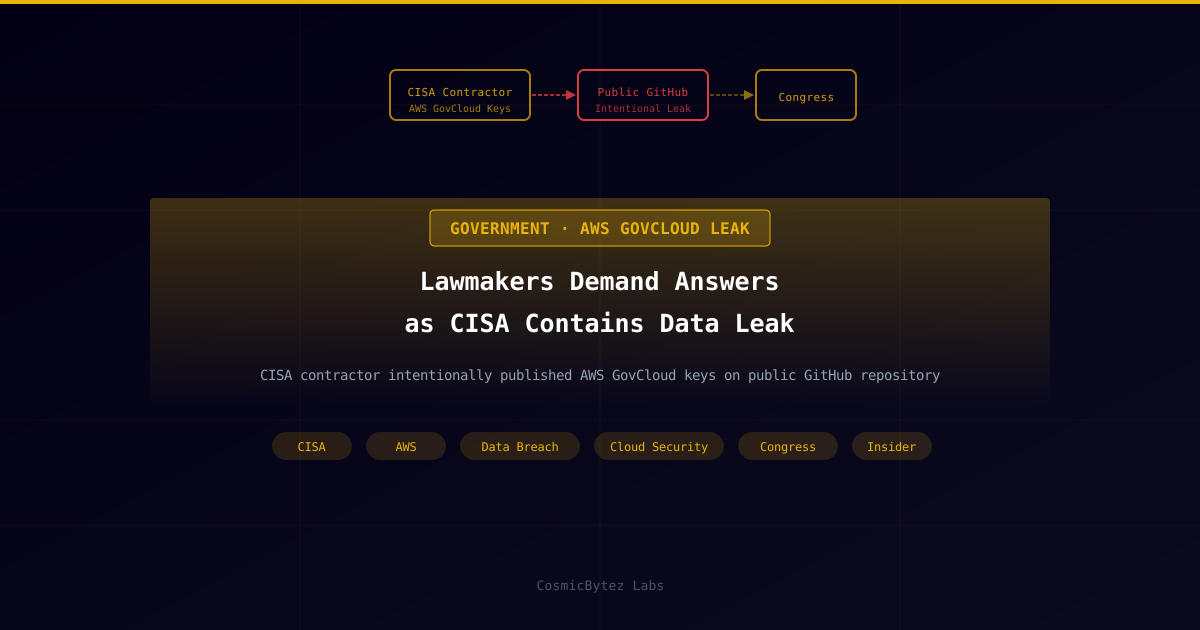
Lawmakers in both houses of Congress are demanding answers from the U.S. Cybersecurity and Infrastructure Security Agency (CISA) after KrebsOnSecurity reported that a CISA contractor intentionally published AWS GovCloud access keys and a vast collection of other agency secrets to a public GitHub repository.
The incident represents a serious insider threat event at the agency responsible for protecting U.S. government and critical infrastructure from exactly this type of exposure. CISA is working to contain and assess the damage while facing mounting political pressure from congressional oversight committees.
What Happened
A contractor working with CISA deliberately published sensitive credentials and configuration data to a publicly accessible GitHub repository. The leaked material reportedly included:
- AWS GovCloud access keys — credentials providing access to CISA's cloud infrastructure
- Other agency secrets — the scope of what was published beyond the AWS keys has not been fully disclosed, though KrebsOnSecurity described it as "a vast trove" of agency data
The publication appears to have been intentional rather than accidental — distinguishing this from the more common category of cloud credential exposure caused by developer error or misconfigured repositories.
Congressional Response
Lawmakers in both the Senate and House are demanding CISA explain:
- How a contractor obtained access to AWS GovCloud credentials
- What controls failed to detect or prevent the public publication of sensitive keys
- What data was actually exposed and for how long
- What CISA has done to revoke credentials, assess access during the exposure window, and prevent recurrence
The scrutiny comes at a sensitive time for CISA, which has faced ongoing questions about its workforce, resources, and operational posture. Congressional pressure ensures the incident will receive formal oversight attention beyond CISA's internal response.
Insider Threat Implications
The intentional nature of the leak places this firmly in the insider threat category — one of the most challenging threat vectors for any organization to defend against, particularly for government agencies where contractors often require broad access to perform their duties.
| Risk Factor | Detail |
|---|---|
| Privileged access | Contractors routinely require elevated cloud credentials to perform infrastructure work |
| Detection difficulty | Authorized users accessing authorized systems is hard to distinguish from malicious activity |
| Intent | Intentional leaks can be motivated by financial gain, ideological reasons, or coercion |
| External exposure | Public GitHub repositories are indexed by search engines and secrets-scanning tools within minutes |
| Credential windows | Cloud keys published to public repos are typically swept by automated scanners almost immediately |
Credentials published to public GitHub repositories are frequently captured by automated scanning tools operated by threat actors within minutes of publication — meaning the effective exposure window begins almost immediately regardless of how quickly the repository is taken down.
CISA's Containment Response
CISA has initiated containment actions including:
- Revoking the exposed AWS GovCloud credentials — rotating compromised keys is the critical first step
- Auditing access during the exposure window — reviewing CloudTrail and other logs for unauthorized access using the leaked keys
- Assessing scope — determining what other secrets were published and what they provided access to
- Contractor review — examining the contractor's access, actions, and motivations
The agency is also working to ensure the GitHub repository content is no longer publicly accessible, though copies may have been made by automated scanners or human actors before takedown.
Context: Government Cloud Security
This incident highlights ongoing challenges in securing government cloud environments:
Contractor access management — government agencies rely heavily on contractors who often require broad cloud access, creating a large insider threat surface that is difficult to monitor comprehensively.
Secrets management practices — AWS GovCloud credentials should never appear in code repositories or be accessible to individuals in plaintext form. Modern secrets management uses services like AWS Secrets Manager or HashiCorp Vault to prevent credential exposure even to privileged users.
GitHub monitoring — organizations should employ automated secrets scanning on any code repositories their workforce can access, with immediate alerting on credential pattern detection.
Zero trust principles — even for contractors with legitimate access needs, zero trust architectures apply least-privilege, just-in-time access controls that limit the blast radius of any credential compromise.
Questions CISA Must Answer
The congressional demands center on accountability across several dimensions:
- Access control — why did the contractor have access to production AWS GovCloud credentials rather than scoped, least-privilege access?
- Detection — did CISA have automated monitoring that should have detected the public GitHub publication? If not, why not?
- Response time — how long were the credentials publicly accessible before CISA became aware and initiated revocation?
- Scope assessment — what exactly was accessed using the leaked credentials during the exposure window?
- Contractor vetting — what cleared insider threat concerns, if any, should have flagged this contractor?
Broader Significance
CISA's core mission includes advising federal agencies and critical infrastructure operators on how to protect against exactly this category of incident — cloud credential exposure, insider threats, and secrets management failures. An incident of this nature at CISA itself carries significant reputational and institutional implications beyond the immediate security damage.
The incident will likely accelerate federal requirements around contractor credential management, secrets scanning, and insider threat monitoring — potentially including requirements for hardware-bound credentials that cannot be exfiltrated in plaintext.
Sources
- KrebsOnSecurity — Lawmakers Demand Answers as CISA Tries to Contain Data Leak