Overview
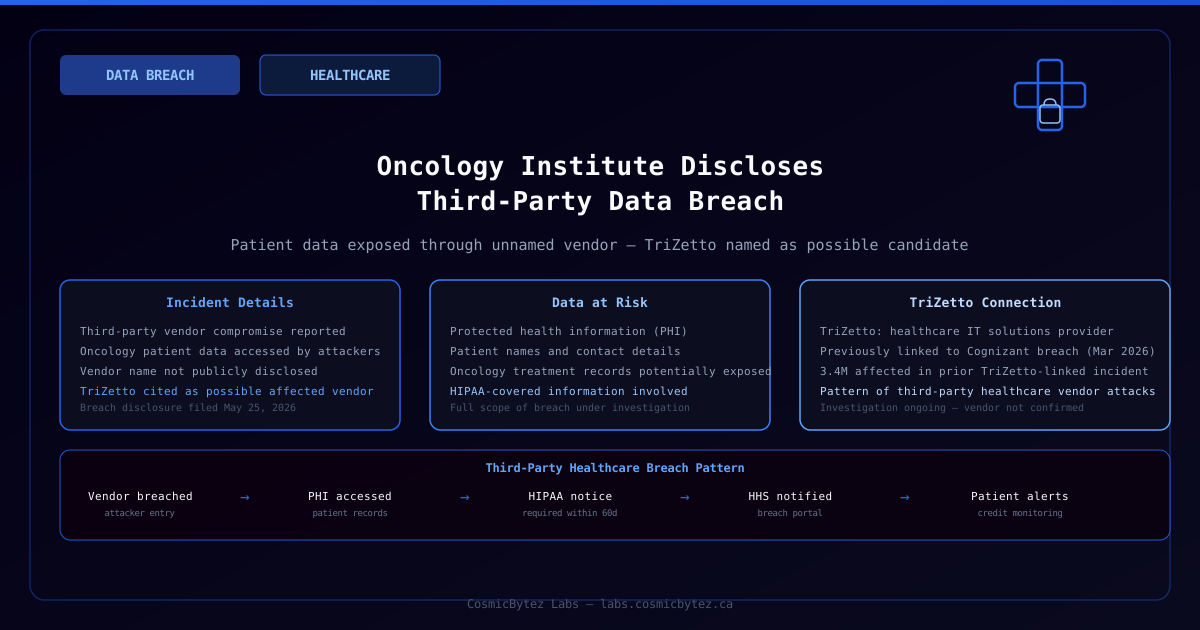
An oncology institute has disclosed a third-party data breach in which patient data was exposed through a compromised vendor. The affected third-party vendor has not been publicly named, though industry observers have flagged TriZetto, a healthcare IT solutions provider previously linked to other breach disclosures, as one possible candidate.
The breach raises significant concerns given the sensitivity of oncology patient data, which includes not only personal identifiers but also detailed medical histories, treatment records, and diagnostic information.
What Happened
Breach Origin
The oncology institute disclosed that a third-party vendor in its healthcare IT supply chain experienced a security incident that resulted in unauthorized access to patient data held by that vendor. This represents a common attack pattern in the healthcare sector: attackers compromise a vendor with broad access to multiple healthcare organizations, multiplying the breach impact.
The institute did not identify the vendor by name in its disclosure, which is common during active investigations or when legal proceedings are underway.
Possible TriZetto Connection
TriZetto, a subsidiary of Cognizant Technology Solutions, provides healthcare IT solutions including claims processing, payer-provider connectivity, and data management platforms to hundreds of healthcare organizations across the United States.
TriZetto was previously associated with a significant breach disclosure in March 2026, when Cognizant disclosed a data breach affecting 3.4 million patients across multiple healthcare clients. Security researchers have noted similarities in the disclosure language used by the oncology institute, suggesting TriZetto or a similar healthcare IT aggregator may be involved.
The vendor has not been officially confirmed, and the investigation is ongoing.
Data at Risk
While the full scope of the breach is still being assessed, the nature of oncology patient care means the following categories of protected health information (PHI) are potentially affected:
- Patient identifiers — full names, dates of birth, addresses, phone numbers
- Insurance information — policy numbers, payer IDs, claim histories
- Medical records — diagnoses, treatment plans, oncology care notes
- Lab and imaging results — pathology reports, radiology orders
- Provider information — referring physician and oncologist details
- Billing data — service dates, CPT codes, payment history
The combination of cancer diagnosis information with standard identifiers makes this breach particularly sensitive. Affected individuals face elevated risks of targeted phishing, insurance fraud, and medical identity theft.
HIPAA Obligations and Timeline
As a HIPAA-covered entity, the oncology institute is legally required to:
- Notify affected individuals within 60 days of breach discovery
- Notify the U.S. Department of Health and Human Services (HHS) via the breach notification portal
- Notify prominent media outlets if more than 500 residents of a given state are affected
- Provide a minimum of 12 months of credit monitoring to affected patients
The public disclosure on May 25, 2026 triggers the countdown for individual notification letters, which must be sent by the applicable deadline.
Healthcare Third-Party Breach Trend
This disclosure follows a well-established 2026 pattern of healthcare organizations being victimized through vendor compromises:
| Incident | Organization | Patients Affected |
|---|---|---|
| TriZetto (via Cognizant) | Multiple healthcare clients | 3.4 million |
| Qualderm Partners | Dermatology network | 3.1 million |
| OpenLoop Health | Mental health platform | 716,000 |
| Oncology Institute | Cancer care center | TBD |
Healthcare IT vendors represent a single point of failure for dozens or hundreds of healthcare organizations simultaneously. When a vendor's systems are compromised, every client organization that trusts them with PHI becomes a potential breach victim.
What Affected Patients Should Do
If you have received care at an oncology institute and suspect you may be affected:
- Watch for a notification letter — HIPAA requires written notification by mail
- Enroll in offered credit monitoring — accept any free monitoring offered in the notification
- Monitor your Explanation of Benefits (EOB) statements from your insurer for unfamiliar charges
- Consider a credit freeze with all three major bureaus (Equifax, Experian, TransUnion)
- Be alert for targeted phishing — attackers with your cancer diagnosis may use this information in convincing social engineering attacks
- Contact your healthcare provider if you notice unexpected changes to your medical records
Recommendations for Healthcare Organizations
The pattern of third-party vendor breaches demands a proactive vendor risk management approach:
- Conduct vendor security assessments before granting PHI access
- Require HIPAA Business Associate Agreements (BAAs) with all vendors handling PHI
- Audit vendor access logs regularly for anomalous activity
- Minimize PHI shared with vendors to only what is necessary
- Require vendors to carry cyber liability insurance with adequate coverage limits
- Establish breach notification SLAs in vendor contracts
Sources
- SecurityWeek — Oncology Institute Discloses Third-Party Data Breach