Overview
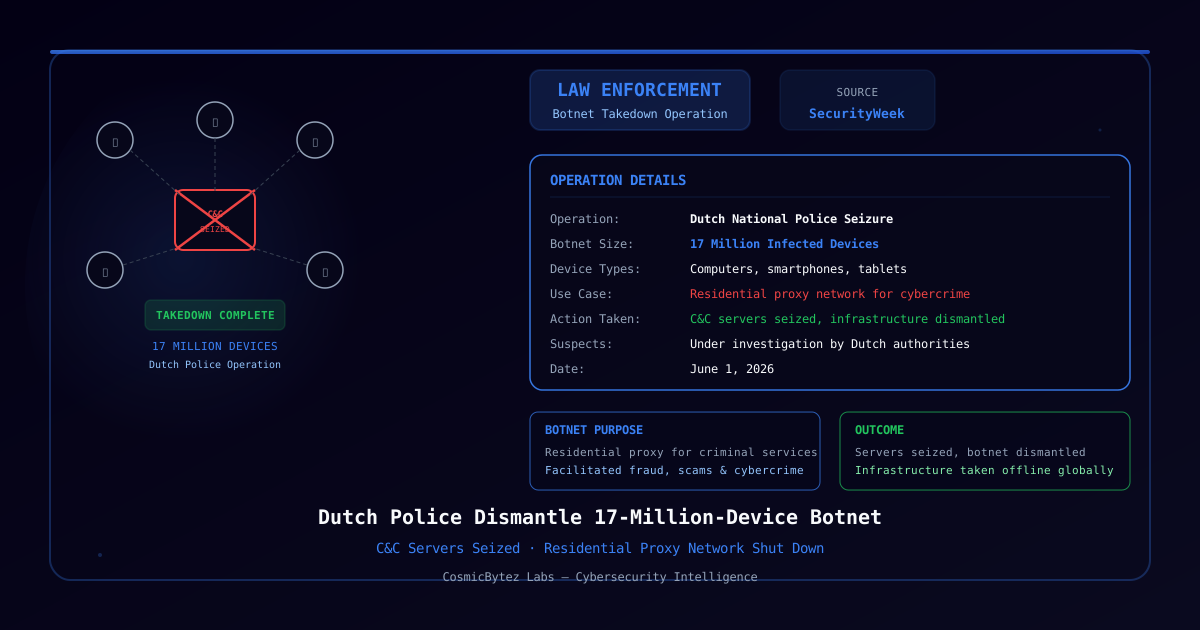
Dutch law enforcement authorities have dismantled a massive botnet comprising approximately 17 million infected devices — including computers, smartphones, and tablets — that was allegedly used to operate a residential proxy network and facilitate a broad range of cybercriminal activity. The operation involved the seizure of command-and-control (C&C) infrastructure and represents one of the larger botnet takedowns in recent memory.
Residential proxy networks are particularly prized by cybercriminals because they route malicious traffic through IP addresses belonging to real consumer devices — making it significantly harder for defenders to distinguish legitimate from malicious traffic using IP reputation filtering alone.
The Botnet Infrastructure
Scale and Composition
The botnet's 17 million infected devices spanned:
- Personal computers — Windows and potentially other operating systems running malware in the background
- Smartphones — Android and possibly iOS devices silently forwarding traffic
- Tablets — Consumer and enterprise tablets compromised via app-based or browser-based infection vectors
Devices were infected without their owners' knowledge, effectively enslaved into a proxy network that funneled cybercriminals' traffic through residential IP addresses.
How Residential Proxy Networks Work
Criminal Client
    ↓
Botnet C&C Server (now seized)
    ↓
Routes request through → Victim Device (residential IP)
    ↓
Target website/service sees traffic from legitimate home IP
    ↓
Criminal receives response via the same chain
This architecture makes it extremely difficult for security teams to block malicious actors based on IP reputation alone, since the traffic originates from genuine consumer ISP addresses that appear legitimate.
Criminal Use Cases
Residential proxy networks of this scale are used for:
- Credential stuffing and account takeover attacks — Testing stolen username/password combinations against targets while evading rate limiting and IP blocking
- Ad fraud — Generating fraudulent advertising traffic from "real" residential IPs to avoid detection
- Scalping and automated purchasing — Bypassing anti-bot measures on retail and ticketing platforms
- Web scraping — Harvesting data while evading detection
- Phishing infrastructure — Routing phishing traffic through residential IPs to avoid IP-based blacklisting
- Ransomware and malware delivery — Using residential IPs to deliver malicious payloads with reduced likelihood of firewall/proxy blocking
The Takedown Operation
Dutch Police Action
Dutch authorities seized the command-and-control servers that orchestrated the botnet's operation. The C&C infrastructure functioned as the nerve center controlling which infected devices were used for which proxy requests, managing the flow of criminal traffic through the network.
With the C&C infrastructure disabled:
- Infected devices can no longer receive commands or participate in proxy operations
- Criminal clients who paid for access to the residential proxy service lose their infrastructure
- The investigation can proceed against suspects using seized server data
Investigative Value of Seized Infrastructure
Seizing C&C servers typically provides law enforcement with:
- Logs of criminal clients — who connected, when, and what operations they ran
- Financial records — how criminals paid for proxy access (often cryptocurrency)
- Technical intelligence — malware characteristics, infection vectors, and C&C protocols
- Leads for further operations — downstream identification of criminals who used the proxy network for specific attacks
Context: Dutch Law Enforcement as a Cybercrime Leader
The Netherlands has established itself as a significant hub for international cybercrime law enforcement, hosting the European Cybercrime Centre (EC3) at Europol in The Hague and conducting numerous high-profile operations:
- Multiple large-scale botnet takedowns in recent years
- Co-leading operations that dismantled major ransomware infrastructure
- Active participation in the dismantling of marketplaces and forums facilitating cybercrime
Dutch authorities routinely coordinate with counterparts in the US, UK, Germany, and other Five Eyes and EU nations on complex cyber operations.
Impact on Affected Device Owners
The 17 million device owners whose systems were recruited into the botnet were almost certainly unaware of their participation. Common infection vectors for devices recruited into residential proxy botnets include:
- Trojanized mobile apps — Malicious apps distributed through official or third-party app stores containing hidden proxy functionality
- Browser extensions — Extensions that silently route traffic through infected browsers
- Malware bundled with pirated software — Infection via cracked applications or illegal downloads
- Exploitation of unpatched vulnerabilities — Drive-by downloads targeting browser or OS flaws
With the C&C infrastructure seized, infected devices are no longer actively participating in the proxy network, but the underlying malware may still be present. Affected users are unlikely to receive direct notification.
Recommendations for Users
- Run updated antivirus/anti-malware scans on all devices
- Review installed applications for anything unfamiliar, particularly on Android devices
- Check browser extensions for unrecognized entries
- Monitor network traffic for unexpected outbound connections, particularly to unfamiliar servers
- Update all software to eliminate known vulnerability exploitation paths
Key Takeaways
- Dutch police seized C&C servers for a botnet comprising 17 million infected consumer devices used as a residential proxy network
- Residential proxy botnets are high-value criminal infrastructure because they route traffic through legitimate-appearing consumer IP addresses
- The seized infrastructure likely contained valuable intelligence for ongoing criminal investigations
- Individual device owners are largely unaware when their devices are recruited into such networks
- The Netherlands continues to be a leading force in international cybercrime infrastructure takedowns