Overview
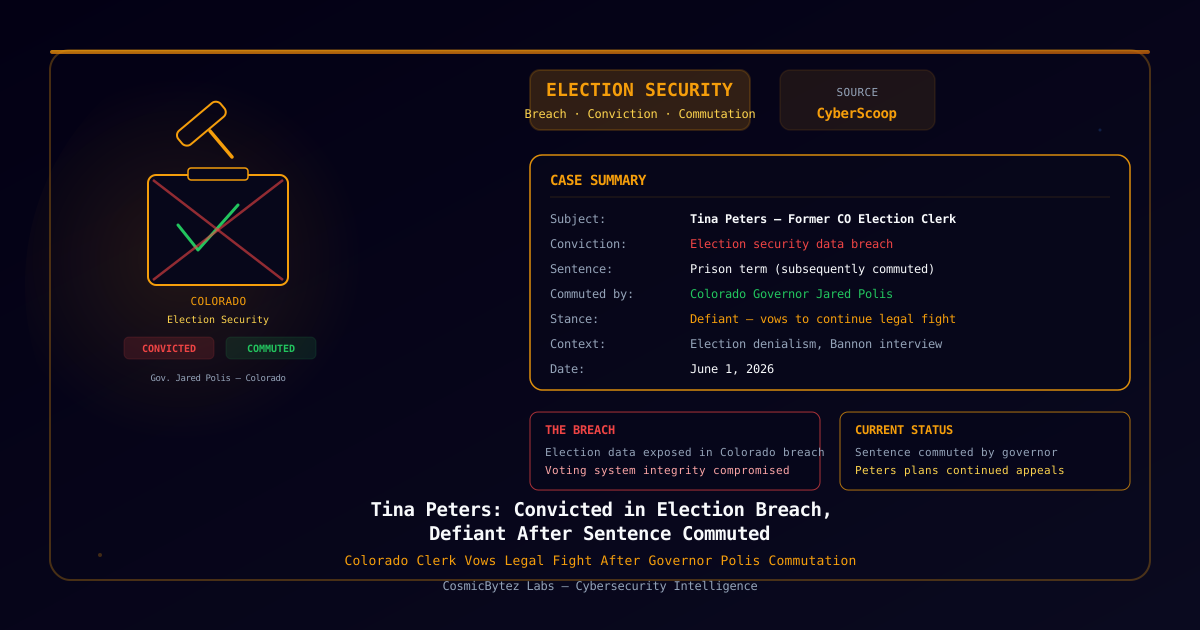
Former Mesa County, Colorado Clerk and Recorder Tina Peters — who was convicted on multiple felony charges related to an election security breach — emerged publicly defiant following the commutation of her prison sentence by Colorado Governor Jared Polis. In her first interview after the commutation, Peters struck an unrepentant tone, appearing on conservative media and vowing to continue her legal battle against what she describes as political prosecution.
The case sits at the intersection of election security, cybercrime law, and the post-2020 election denial movement — making it a prominent and contentious case in both security and political circles.
Background: The Election Security Breach
What Happened
Tina Peters was the elected Clerk and Recorder of Mesa County, Colorado — a position that gave her official oversight of elections in the county. In 2021, investigators discovered that voting system data from Mesa County had been unlawfully copied and published online in a breach that exposed sensitive election infrastructure information.
Specifically, Peters or those acting under her authority were accused of:
- Allowing unauthorized access to secure election systems during a software update that should have been accessible only to Colorado state officials and the voting equipment vendor
- Copying sensitive data from the election management system to an unauthorized device
- Enabling publication of that data — including passwords, configuration files, and other sensitive information — which subsequently appeared on conspiracy-focused platforms
The breach was particularly sensitive because election management system data, including passwords and configuration details, could potentially be used to undermine trust in election infrastructure or facilitate future attacks on voting systems.
The Criminal Case
Peters was charged with multiple felonies related to the breach and was convicted following a trial. Charges included violations related to computer tampering, attempting to influence a public servant, and misuse of her official position. The conviction represented one of the more significant criminal prosecutions of an election official related to post-2020 election conspiracy activity.
The Commutation
Colorado Governor Jared Polis, a Democrat, commuted Peters' prison sentence in a decision that surprised observers on both sides of the political divide. Polis indicated that while he maintained the conviction was appropriate, he exercised executive clemency on the prison term — a distinction between accepting guilt on the record while relieving the sentence.
The commutation was met with mixed reactions:
- Supporters of the prosecution argued the commutation undermined accountability for election officials who compromise the integrity of voting infrastructure
- Peters' supporters viewed the commutation as partial vindication and evidence that the case was politically motivated
- Legal observers noted that commutation of sentence does not erase the criminal conviction itself — Peters remains a convicted felon
Peters' Response: Defiance
Rather than expressing remorse or accepting the commutation as a resolution, Peters appeared in an interview — reportedly with conservative media figures including those associated with Steve Bannon — and struck a defiant posture.
Key elements of her public statements:
- Maintains innocence — Peters continued to assert that her actions were justified and that she was acting in the public interest by raising questions about election systems
- Political framing — She characterized her conviction as political persecution rather than a legitimate criminal proceeding
- Continued legal fight — Peters announced she would pursue ongoing legal action, suggesting appeals or other legal challenges are planned
- No acknowledgment of harm — The interview reflected no acknowledgment that exposing election system passwords and configuration data poses genuine security risks
Election Security Implications
The Peters case highlights ongoing tensions around election infrastructure security:
Election Systems as Critical Infrastructure
Voting management systems and election infrastructure are classified as critical infrastructure by the US Department of Homeland Security. This designation reflects the recognition that:
- Election systems contain sensitive configuration data that, if exposed, could be used to undermine election integrity
- Unauthorized access to or disclosure of election system credentials could enable malicious actors to probe for vulnerabilities
- Insider threats from election officials themselves represent a distinct risk category that traditional security controls may not address
The Insider Threat Problem
What makes the Peters case unusual in election security terms is that the threat came from an elected official with legitimate access to the systems, rather than an external attacker. This presents a particularly difficult security challenge:
- Access controls must be designed to limit what any single official can do without oversight
- Auditing and monitoring of privileged access by election officials is essential
- Physical security during software updates and hardware access must prevent unauthorized copying
Post-Disclosure Risks
The election system data that was copied and published — including configuration files and passwords — required remediation by Colorado election officials to mitigate potential downstream risks. While no fraudulent election activity was attributed to the breach, the exposure of election infrastructure details creates real security concerns:
- Published passwords require immediate rotation to prevent unauthorized access
- Exposed configuration data can reveal architectural details useful for targeted attacks
- Published information can fuel ongoing disinformation about election integrity
Key Takeaways
- Tina Peters, convicted of felony charges related to an election security breach in Colorado, had her prison sentence commuted by Governor Jared Polis
- Peters emerged defiant in her first post-commutation interview, vowing legal fights rather than expressing remorse
- The case highlights the insider threat dimension of election security — risks from officials with legitimate access acting outside their authority
- Commutation of sentence does not erase the criminal conviction itself; Peters remains convicted
- Election system data exposed in the breach required Colorado to undertake security remediation measures