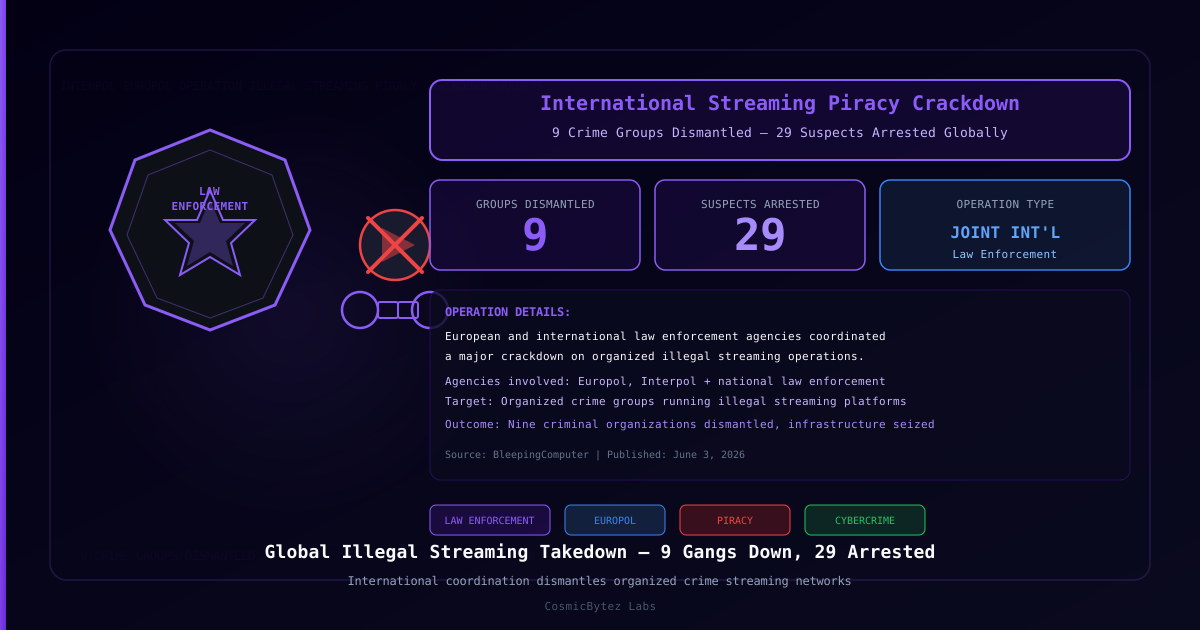
European and international law enforcement agencies have dismantled nine organized crime groups and arrested 29 suspects in a sweeping crackdown on illegal streaming operations. The coordinated action targeted criminal networks that operated large-scale illegal streaming platforms providing unauthorized access to live sports, premium television channels, movies, and other copyrighted content.
Scale of the Operation
The operation represents one of the larger coordinated anti-piracy enforcement actions in recent memory, spanning multiple countries and targeting distinct criminal organizations rather than a single platform. Key figures:
- 9 organized crime groups dismantled
- 29 suspects arrested across participating jurisdictions
- Multiple countries involved in the coordinated action
- Agencies including Europol and national law enforcement bodies participated
The simultaneous nature of the arrests — targeting nine separate groups in a coordinated fashion — suggests extensive prior intelligence gathering and inter-agency coordination to prevent suspects from tipping each other off.
How Illegal Streaming Operations Work
Illegal IPTV (Internet Protocol Television) operations have grown into a substantial criminal industry. A typical illegal streaming operation involves several layers:
Infrastructure Layer
Criminal operators acquire legitimate server infrastructure (often through fraud or using bulletproof hosting providers), ingest licensed broadcast feeds by illegally capturing satellite or cable signals, and re-encode and redistribute these streams over internet connections.
Distribution Layer
Pirated streams are distributed through:
- Reseller networks: Criminal operators sell wholesale access to resellers who, in turn, sell subscriptions to end users — often for €10–€30/month per user
- Dedicated apps: Custom Android applications (APKs) distributed outside official app stores
- M3U playlists: Playlist files compatible with media players like VLC or Kodi
- Set-top boxes: Pre-configured devices sold with illegal streams pre-loaded
Revenue Model
The profitability of illegal streaming operations can be substantial. With millions of paying subscribers across Europe and beyond, even a modest €15/month subscription yields tens of millions in annual revenue per major operation — most of it untaxed and often laundered through cryptocurrency or cash businesses.
Why Law Enforcement Is Escalating
Illegal streaming enforcement has intensified for several reasons:
Economic damage: Rights holders — sports leagues, broadcasters, studios — estimate billions in annual losses to illegal streaming. Premium sports rights in particular (Premier League, Champions League, Formula 1) represent enormous investments that are directly undercut by piracy.
Organized crime links: Illegal streaming operations are increasingly run by the same criminal networks involved in other organized crime — money laundering, fraud, and in some cases drug trafficking. The streaming revenue provides a money-laundering vehicle.
Technological sophistication: Modern illegal streaming operations use CDN-like infrastructure, automated fail-over systems, and dynamic IP rotation to stay resilient. Disrupting them requires significant technical investigative capability.
Consumer scale: Some estimates suggest that millions of households across Europe actively use illegal streaming services. The scale normalizes the activity and makes enforcement messaging challenging.
The Legal Framework
Operations like this typically proceed under:
- IP rights enforcement directives (EU Directive 2019/790 on Copyright in the Digital Single Market)
- National computer crime statutes criminalizing unauthorized access to protected content
- Anti-organized crime legislation allowing asset seizure and criminal conspiracy charges against operators and senior resellers
Europol's Intellectual Property Crime Coordinated Coalition (IPC3) plays a central coordination role in major European anti-piracy operations, working with national IP enforcement units, customs agencies, and rights holder organizations like the Alliance for Creativity and Entertainment (ACE).
What Happens After Takedowns
Experience from prior operations shows that illegal streaming ecosystems are resilient. When a major operation is dismantled:
- Subscribers migrate: Users of the disrupted service quickly find alternative providers — the market is competitive and alternatives are plentiful
- Operators adapt: Some arrested operators' technical infrastructure gets picked up by associates not caught in the sweep
- New entrants emerge: The profitability of the space attracts new criminal operators within weeks of major takedowns
Law enforcement and rights holders are increasingly aware of this dynamic. The goal of operations like this one is not to eradicate illegal streaming — which is considered unrealistic — but to increase the cost and risk of operating illegal streaming services, disrupt the criminal infrastructure, and seize assets that represent the proceeds of crime.
Prior Major Operations
This action follows several notable anti-piracy enforcement operations in recent years:
| Operation | Year | Result |
|---|---|---|
| Operation Jackal | 2024 | 102 arrested, 11 countries |
| Operation 30 Days | 2023 | Multiple platforms shut down |
| Operation Font | 2022 | 11 suspects arrested, €1.8M seized |
| Operation Creative | 2021 | Major IPTV provider disrupted |
The current operation's 29 arrests and nine groups dismantled make it a significant enforcement action, though not unprecedented in scale.
For IT and Security Professionals
Beyond the consumer context, illegal streaming infrastructure has security implications:
- Malware distribution: Some illegal streaming apps and set-top boxes have been found to contain malware — credential stealers, adware, or botnet clients
- Network exposure: Devices running unauthorized software on corporate or home networks introduce unmanaged endpoints
- Phishing via fake streaming sites: Fraudulent "subscription" pages harvest payment card data from users seeking cheap streaming access
Organizations with BYOD policies or home office workers using compromised streaming devices on networks that connect to corporate infrastructure should be aware of the threat vector.
Source: BleepingComputer — Published June 3, 2026