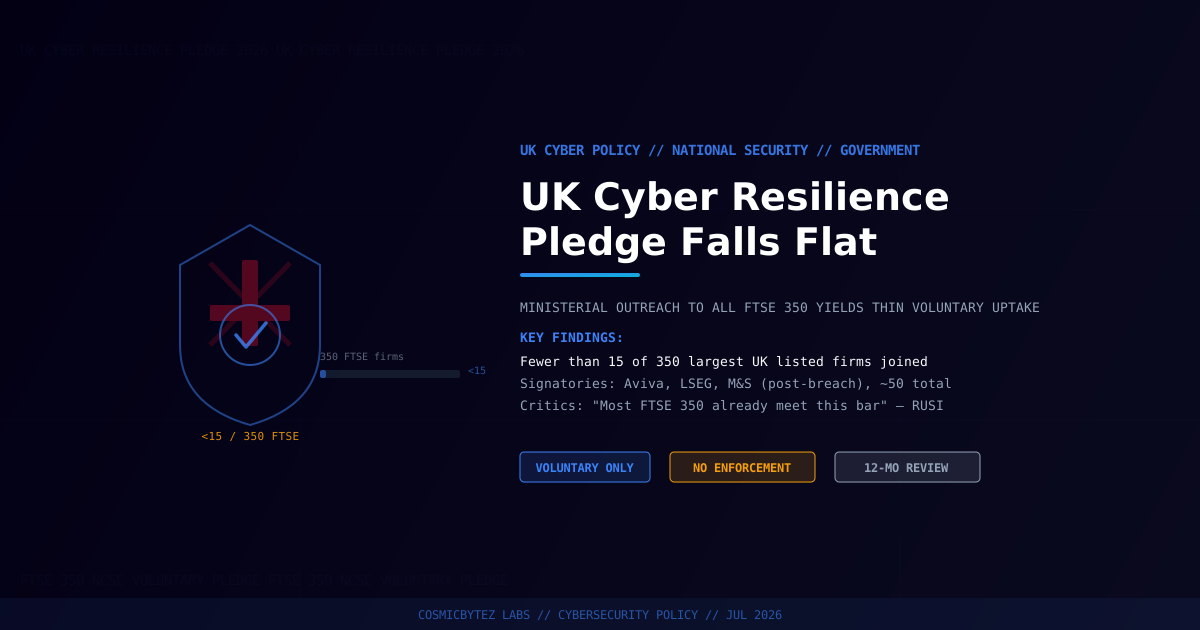
The UK government launched its voluntary Cyber Resilience Pledge on July 7, 2026 at a Downing Street reception hosted by Technology Secretary Liz Kendall — and the thin turnout illustrates both the limits of voluntary frameworks and the scale of the corporate cyber governance gap the government is trying to close.
What the Pledge Asks
Signatories commit to three voluntary measures:
- Board-level responsibility — cybersecurity must be formally owned at the executive and board level
- NCSC Early Warning registration — sign up for the NCSC's free threat intelligence feed
- Supply chain Cyber Essentials — apply a risk-based approach to Cyber Essentials certification across their vendor ecosystems
There are no enforcement mechanisms, audit requirements, or penalties for non-compliance. The commitments are aspirational by design.
The Response: Underwhelming
Despite eight months of direct ministerial outreach — with ministers personally contacting the chairs and CEOs of all 350 FTSE-listed companies — fewer than 15 of those firms voluntarily joined. The total of 70 founding signatories includes roughly 20 strategic government suppliers who were effectively guided to sign under a separate Government Cyber Charter, leaving approximately 50 genuinely voluntary participants from across British industry.
Notable signatories include:
- Aviva — UK's largest general insurer
- London Stock Exchange Group — critical financial market infrastructure
- Marks & Spencer — which lost hundreds of millions of pounds in a cyberattack last year attributed to the Scattered Spider threat group
- Various smaller cybersecurity consultancies including C3IA Solutions, Grey Zone Services, and Nexor
The inclusion of M&S is significant but reads more as a reactive signal than proactive industry leadership. The retailer signed the pledge following one of the highest-profile corporate cyber incidents in UK history — not before it.
Expert Criticism: The Bar Is Already Met
Jamie MacColl, senior research fellow at the Royal United Services Institute (RUSI), offered a blunt assessment: "I would be relatively surprised if most FTSE 350 companies were not meeting an equivalent standard already."
His critique cuts to the heart of the problem with voluntary pledges targeting the largest listed companies: the organizations most capable of signing are often already doing what the pledge asks. The companies least likely to sign — smaller, less security-mature firms without dedicated security leadership — are precisely the organizations that need the nudge most. A voluntary FTSE 350 pledge, by definition, cannot reach them.
A Familiar Policy Pattern
MacColl and other observers frame this as a well-worn UK policy cycle: voluntary industry pledges that underperform in uptake typically pave the way for mandatory regulatory requirements. The government has indicated it plans to review the pledge after 12 months, with the possibility of escalating or modifying commitments based on industry response and the evolving threat landscape.
The precedent is well-established. The UK's Network and Information Systems (NIS) regulations, GDPR-aligned data breach reporting obligations, and sector-specific resilience requirements all emerged from voluntary frameworks that failed to achieve sufficient adoption. If the pattern holds, a future mandatory cyber resilience standard for critical sector companies may be the intended end state — with this pledge serving as the baseline measurement and stakeholder engagement phase.
Why This Matters
The M&S breach underscores what's at stake. A company with over 60,000 employees and more than £10 billion in annual revenue lost hundreds of millions of pounds and suffered months of operational disruption because of inadequate defenses against a threat group that primarily relies on social engineering and credential theft — not sophisticated zero-day exploits.
If the largest, best-resourced British companies are not voluntarily prioritizing cyber resilience, the gap at the SME and supply chain level is likely far worse. The Scattered Spider tactics used against M&S work precisely because security governance and employee awareness remain weak across large parts of British industry.
What Organizations Should Do Now
Regardless of whether your organization signed the pledge, the three commitments represent a minimum security baseline:
- Board ownership: If cybersecurity is not a standing board agenda item with a named executive owner, fix that now — not when a breach forces the issue
- NCSC Early Warning: Registration is free and takes minutes. The NCSC threat feed provides actionable early notice of attacks targeting UK organizations and sectors
- Supply chain hygiene: Cyber Essentials certification costs £300–£500 for most SMEs and provides verifiable evidence of baseline security controls. Requiring it from suppliers is one of the most cost-effective ways to reduce supply chain risk
The Cyber Resilience Pledge may be voluntary and lightly subscribed, but the risks it's designed to address are not.