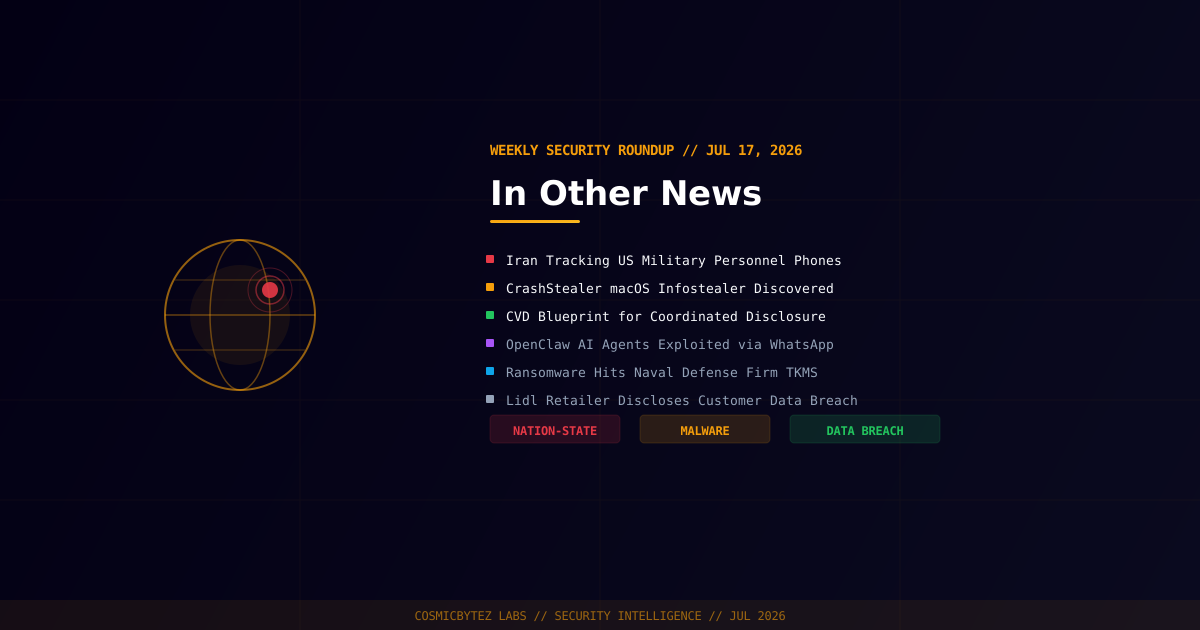
A look at the cybersecurity stories that flew under the radar this week, compiled from SecurityWeek's weekly intelligence roundup.
Iran Tracking US Military Personnel Phones
Iranian threat actors have been observed conducting surveillance operations targeting the mobile devices of US military personnel. The campaign involves tracking location data and communications, part of a broader pattern of Iranian intelligence operations targeting American military and government figures. While specific technical details are limited in public reporting, the campaign underscores the ongoing threat posed by nation-state actors to personal devices used by high-value targets — even outside secure government networks.
CrashStealer macOS Malware
Researchers have identified a new macOS infostealer dubbed CrashStealer, adding to the growing catalogue of macOS-targeted malware. The stealer is designed to exfiltrate sensitive data from macOS systems, including credentials, browser data, and cryptocurrency wallet files. macOS malware has seen a notable uptick in 2025-2026 as threat actors increasingly target the platform, which has historically been perceived as more secure than Windows but is now a high-priority target given its prevalence among technology, finance, and government workers.
macOS users should ensure Gatekeeper and XProtect are updated and exercise caution around software downloaded outside the Mac App Store.
CVD Blueprint for Coordinated Vulnerability Disclosure
A new Coordinated Vulnerability Disclosure (CVD) Blueprint has been published, offering structured guidance for researchers, vendors, and platform operators on how to responsibly disclose security vulnerabilities. CVD processes remain inconsistent across the industry, and the blueprint aims to provide a common framework that reduces the risk of premature public disclosure, gives vendors adequate remediation time, and ensures researchers receive appropriate credit and legal protections.
The blueprint is particularly relevant as AI and open-source software ecosystems grow, with many smaller vendors lacking established vulnerability response programs.
OpenClaw AI Agents Exploited via WhatsApp
Researchers demonstrated exploitation of OpenClaw AI agents through WhatsApp-based attack vectors. The attack leverages the integration between AI agent frameworks and messaging platforms, using crafted messages to manipulate agent behavior — a prompt injection variant targeting agentic AI systems. As AI agents gain broader adoption for customer service and automation, securing their integration points with external communication channels is becoming a critical concern.
Ransomware Hits Naval Defense Firm TKMS
ThyssenKrupp Marine Systems (TKMS), a major German naval defense contractor producing submarines and surface vessels, was hit by a ransomware attack. The incident raises significant concerns given TKMS's role in supplying naval vessels to NATO member states and other defense customers. Defense industrial base (DIB) organizations continue to be high-value targets for ransomware groups, both for financial gain and potential intelligence value to nation-state sponsors.
Lidl Discloses Customer Data Breach
European retail giant Lidl disclosed a data breach affecting customer data. The breach involved unauthorized access to customer information, though the full scope — including the number of affected individuals and the type of data exposed — remains under investigation. Lidl operates more than 12,000 stores across Europe and the Americas, making it one of the larger retail data breach incidents of 2026.
What This Week's Trends Tell Us
This week's stories reinforce several persistent themes in the threat landscape:
- Nation-state actors continue targeting personal devices of high-value individuals, bypassing enterprise security perimeters entirely
- macOS is no longer a safe haven — infostealer development for the platform is accelerating
- AI agent security is an emerging frontier — prompt injection and agent manipulation attacks are moving from theoretical to demonstrated
- Defense contractors remain prime ransomware targets with potential nation-state overlap
- Third-party and supply chain breaches continue to be a dominant breach vector in 2026
Stay vigilant, patch promptly, and follow CosmicBytez Labs for ongoing cybersecurity coverage.