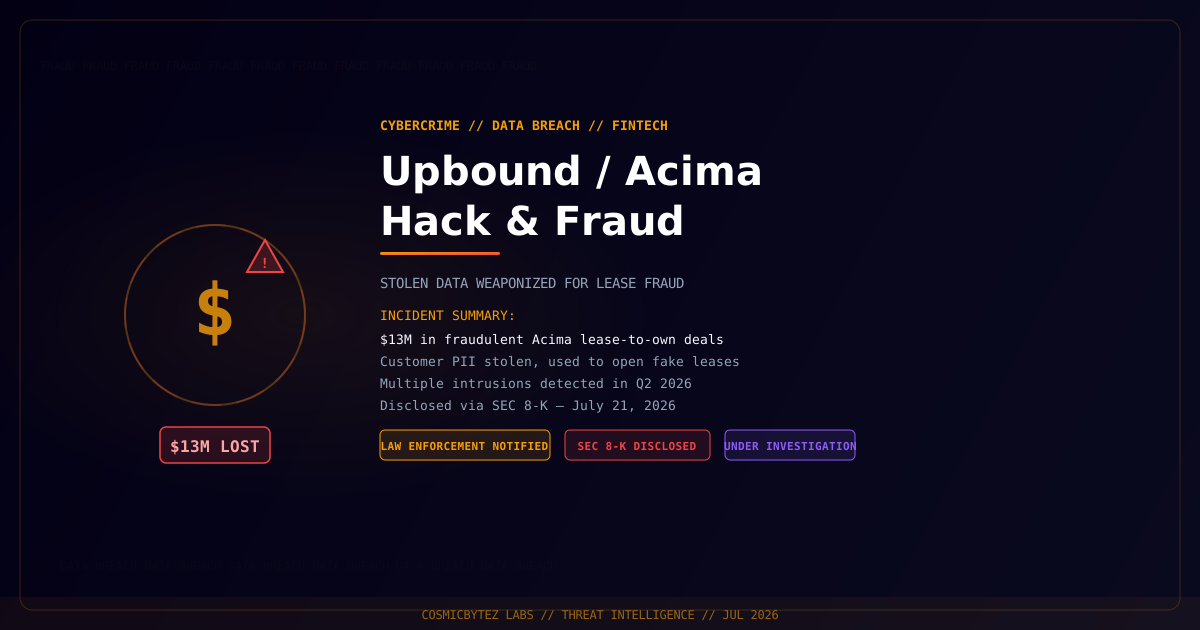
Stolen Data Weaponized for Lease Fraud
Fintech company Upbound Group — operator of the Acima lease-to-own platform — disclosed on July 21, 2026 that a cyberattack compromised customer data and resulted in approximately $13 million in fraudulent lease agreements during the second quarter of 2026.
The disclosure came through an SEC Form 8-K filing, making it one of the more unusual breach disclosures of the year: the primary harm to the company was not ransom payment or remediation costs, but direct financial losses from attackers weaponizing stolen data to impersonate customers and walk away with merchandise.
How the Attack Worked
The threat actors obtained "certain non-sensitive customer information and other documents" from Upbound's systems — language the company used in its SEC filing. Despite the "non-sensitive" label, the data contained enough personally identifiable information (PII) to successfully impersonate real Acima customers.
Using that stolen identity data, attackers opened fraudulent Acima lease-to-own agreements through the platform's retail and e-commerce partner network. The mechanics:
- Threat actors breach Upbound systems and exfiltrate customer PII
- Stolen identity data is used to open legitimate-looking Acima leases under real customer names
- Merchandise is obtained through Acima's retail partner network
- Attackers take the goods and default on the lease payments
- Upbound absorbs the financial loss — approximately $13 million in Q2 2026 alone
Scale and Timeline
| Detail | Information |
|---|---|
| Financial Loss | ~$13 million (Q2 2026) |
| Disclosure Date | July 21–22, 2026 (SEC 8-K) |
| Incident Period | Q2 2026 (April–June 2026) |
| Intrusions | Multiple cybersecurity incidents noted |
| Customers Affected | Not yet disclosed |
| Data Description | "Certain non-sensitive customer information" |
Upbound noted multiple cybersecurity incidents in its filing, suggesting more than a single intrusion event. The exact breach date and initial access vector have not been publicly disclosed pending the ongoing investigation.
Company Response
Upbound has taken the following steps:
- Engaged external cybersecurity experts for investigation and remediation
- Implemented enhanced authentication controls
- Deployed additional fraud-detection mechanisms
- Improved monitoring systems across affected platforms
- Notified federal law enforcement
- Filed an SEC 8-K disclosure (currently classified as non-material)
The company stated it will comply with all applicable legal and regulatory customer notification obligations as its investigation progresses. No ransomware group or data extortion actor has claimed responsibility for the breach.
The Acima Business Model and Why It Mattered
Acima is a lease-to-own platform that enables customers to acquire goods from retail partners — furniture, electronics, appliances — through installment lease agreements. Unlike traditional financing, Acima functions through relationships with retail partners rather than direct consumer credit.
This business model created a uniquely exploitable fraud scenario: attackers with valid PII could open leases that appeared fully legitimate to the platform, complete the "purchase" through a partner retailer, and walk away with goods before the fraudulent nature of the lease was detected.
What Customers Should Watch For
While Upbound has not confirmed which specific data elements were exposed, customers of Acima and Upbound platforms should monitor for:
- Unauthorized lease agreements opened in their name
- Unexpected credit inquiries related to Acima or lease-to-own services
- Identity theft indicators — credit report anomalies, unfamiliar accounts
- Phishing attempts exploiting awareness of the breach
If you are an Acima customer and believe your identity may have been misused, contact Acima support directly and consider placing a fraud alert or credit freeze with the major credit bureaus.
Industry Context
This incident highlights an emerging pattern in data breach exploitation: attackers moving beyond selling stolen data on darknet markets to directly monetizing PII through fraud schemes. Rather than waiting for a buyer, the threat actors used the stolen customer information themselves to generate immediate financial returns.
For fintech and lease/financing platforms, this incident underscores the need for:
- Behavioral fraud analytics that flag unusual lease application patterns
- Step-up identity verification for high-value transactions
- Velocity controls detecting sudden spikes in applications matching stolen data patterns
- Rapid response playbooks for data breach-to-fraud scenarios
References
- Upbound Group SEC 8-K Filing
- BleepingComputer — Upbound says hack caused $13 million in fraudulent Acima leases