Overview
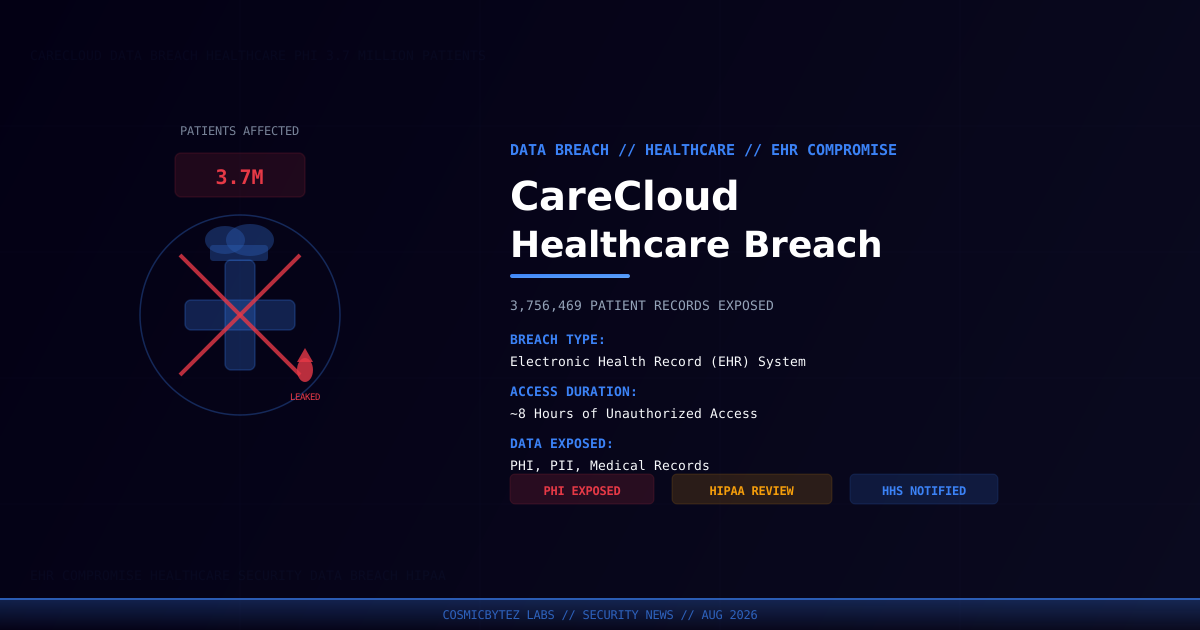
U.S. healthcare IT company CareCloud has disclosed a significant data breach affecting over 3.7 million individuals, following an incident in which an unauthorized party accessed one of the company's electronic health record (EHR) environments for approximately eight hours.
CareCloud filed notification documents with the U.S. Department of Health and Human Services (HHS), confirming that 3,756,469 patients had sensitive information exposed in the breach. The company provides cloud-based practice management, EHR software, and revenue cycle management services to healthcare providers across the United States.
What Happened
According to breach notification filings and regulatory disclosures, the incident involved a threat actor gaining unauthorized access to a CareCloud EHR environment. The attacker maintained access for approximately eight hours before being detected or otherwise losing access.
| Detail | Value |
|---|---|
| Affected Individuals | 3,756,469 |
| Breach Type | Unauthorized EHR system access |
| Duration of Access | ~8 hours |
| Reported To | U.S. Dept. of Health and Human Services |
| Company | CareCloud (healthcare IT / EHR provider) |
Data Potentially Exposed
EHR environments typically contain a rich combination of protected health information (PHI) and personally identifiable information (PII). While CareCloud has not released a full breakdown of all data categories accessed, EHR breaches of this type typically involve:
- Patient names, dates of birth, addresses
- Social Security numbers
- Health insurance information and policy numbers
- Medical record numbers and patient identifiers
- Diagnosis codes and treatment history
- Provider and facility information
The combination of PHI and PII in healthcare breaches creates compounding risks: not only are patients exposed to identity theft and insurance fraud, but their sensitive medical histories may also be weaponized for targeted phishing, blackmail, or sold on dark web marketplaces.
Regulatory Context
Healthcare breaches of this scale trigger several regulatory obligations under U.S. law:
HIPAA Breach Notification Rule
Under HIPAA's Breach Notification Rule, covered entities and their business associates must:
- Notify affected individuals within 60 days of breach discovery
- Report to HHS when a breach affects 500 or more individuals in a state
- Notify prominent media outlets in states where 500+ residents are affected
CareCloud's HHS filing confirms it has met the federal reporting threshold. State-level notifications and individual patient letters are expected to follow.
Potential Penalties
| Violation Category | HIPAA Penalty Range (Per Violation) |
|---|---|
| Unknowing violation | $100 – $50,000 |
| Reasonable cause | $1,000 – $50,000 |
| Willful neglect (corrected) | $10,000 – $50,000 |
| Willful neglect (uncorrected) | $50,000+ |
Breaches affecting millions of individuals often attract multi-million dollar settlements and may trigger investigations by state attorneys general in addition to federal HHS/OCR enforcement.
CareCloud Background
CareCloud (formerly Meridian Medical Management) provides:
- Cloud EHR and practice management software to independent medical practices
- Revenue cycle management (RCM) and billing services
- Telehealth platform and patient engagement tools
The company serves thousands of healthcare providers and manages sensitive patient data for millions of individuals across its software and managed service offerings — making it a high-value target for threat actors seeking bulk PHI for fraud or sale.
What Affected Individuals Should Do
If you have been treated by a healthcare provider that uses CareCloud's EHR system, consider the following protective steps:
- Monitor your Explanation of Benefits (EOB) statements for any unfamiliar medical claims
- Review your credit reports at AnnualCreditReport.com — consider placing a credit freeze
- Watch for phishing attempts — breach data is frequently used in targeted health-themed scams
- Contact your health insurer if you notice suspicious claims or policy changes
- If notified by CareCloud, take advantage of any offered identity protection services
Healthcare Sector Under Siege
This breach adds to a troubling pattern of large-scale cyberattacks against U.S. healthcare organizations. The healthcare sector remains one of the most targeted industries globally, due to:
- High value of PHI on criminal marketplaces (often 10–50x the value of financial records)
- Legacy infrastructure and underfunded IT security departments
- Complex vendor ecosystems with broad EHR access permissions
- Urgency-driven culture that deprioritizes security over patient care continuity
Major incidents in recent years — including the Change Healthcare ransomware attack that disrupted billing across the U.S. healthcare system — illustrate that healthcare IT vendors represent systemic risk nodes: compromising one vendor can impact thousands of downstream providers and millions of patients.
References
- BleepingComputer — Healthtech firm CareCloud data breach impacts 3.7 million patients
- The Record — Electronic health record company CareCloud says 3.7 million people affected by breach
- U.S. HHS Breach Portal