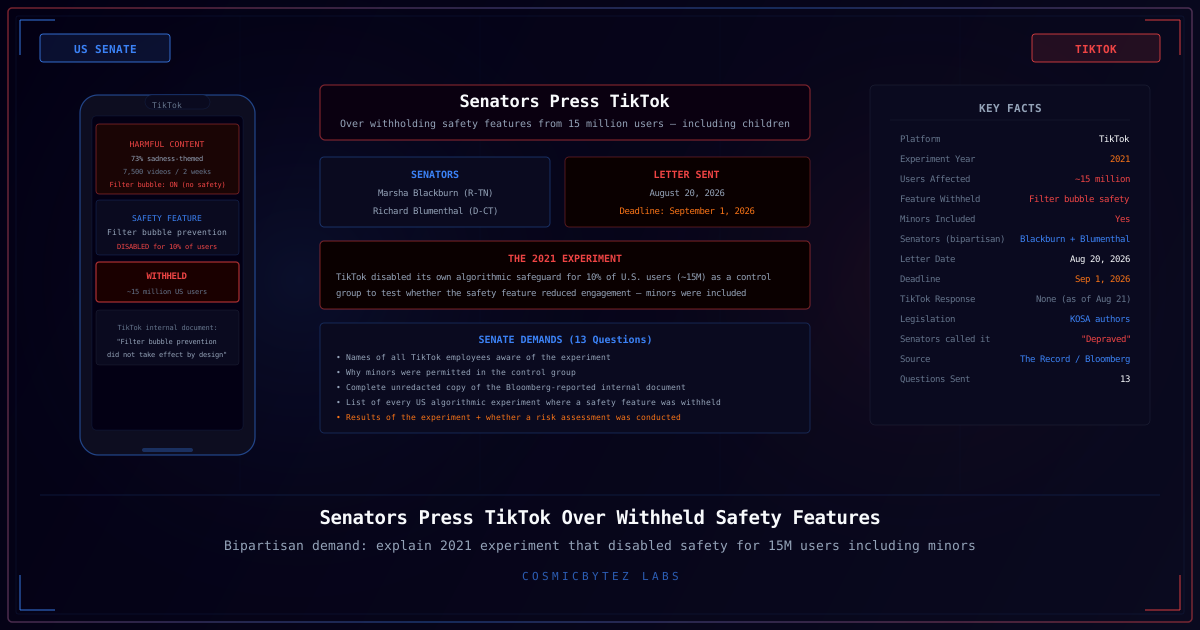
A bipartisan pair of US senators fired off a four-page letter to TikTok's leadership on August 20, 2026, demanding answers about a 2021 experiment in which the company intentionally disabled an algorithmic safety feature for approximately 15 million American users — including minors — to measure whether the safeguard reduced engagement.
The senators, Marsha Blackburn (R-TN) and Richard Blumenthal (D-CT), are co-authors of the Kids Online Safety Act (KOSA) and characterized the experiment as "depraved," saying TikTok "knowingly withheld a critical safety measure for millions of American users — including children — in order to determine whether protecting users would impact its financial bottom line."
What TikTok Did
TikTok developed an algorithmic safeguard designed to break up filter bubbles — preventing users from being served an endless stream of repetitive, potentially harmful content. The feature specifically targeted loops of content themed around sadness, hopelessness, and self-harm.
Rather than deploying the feature universally, TikTok deliberately disabled it for 10% of US users as a control group in a 2021 experiment. The stated goal was to determine whether the safety feature reduced user engagement.
The most documented case involves Chase Nasca, a 16-year-old from Bayport, New York, who was randomly assigned to the control group on January 25, 2022. According to a confidential internal TikTok document first reported by Bloomberg Businessweek in August 2026, his feed was flooded with over 7,500 videos in his final two weeks — 73% themed around sadness and personal struggle, 10% violating TikTok's own suicide and self-harm content policies.
An internal TikTok document stated explicitly: "TikTok's filter bubble prevention strategies did not take effect on this user by design."
Chase died by suicide in February 2022.
The Senate Letter
Senators Blackburn and Blumenthal sent the letter to TikTok CEO Shou Chew and Adam Presser, CEO of TikTok's US operations, on August 20, 2026. The letter poses 13 specific questions with a response deadline of September 1, 2026.
Key demands include:
- The names of every TikTok employee who was informed of the experiment
- An explanation for why minors were permitted to be included in the control group
- When executives first learned of the experiment
- A complete, unredacted copy of the internal document reported by Bloomberg Businessweek, including the full account review of Chase Nasca
- A comprehensive list of every algorithmic experiment run in the US where TikTok "withheld, disabled, delayed, or reduced a safety feature," including the number of users affected and how many were minors
- Whether a risk assessment was conducted before the experiment began
- What the results of the experiment were
TikTok's Response
TikTok did not immediately respond to requests for comment from any outlet. No formal public statement addressing the senators' letter had been issued as of August 21, 2026.
Why It Matters
The experiment goes beyond a typical content moderation dispute. TikTok isn't accused of failing to build safety features — it's accused of deliberately turning one off for millions of users, including vulnerable minors, to collect engagement data.
That distinction matters legally and ethically. If TikTok knew the safety feature worked — knew that disabling it exposed users to harmful content loops — and chose to run the experiment anyway, the question of corporate liability becomes sharp, particularly in the context of ongoing litigation over platform-linked youth mental health harms.
Blackburn and Blumenthal are the primary architects of KOSA, which would impose legal obligations on platforms to protect minors from algorithm-driven harm. The TikTok experiment provides precisely the kind of documented evidence that KOSA's critics have claimed doesn't exist: a platform intentionally making a product more dangerous for children to study the engagement effects.
Broader Context
TikTok is not the only platform facing scrutiny over algorithmic amplification of harmful content. Meta, YouTube, and others have faced similar questions about recommendation systems that optimize for engagement at the expense of user wellbeing.
What separates this case is the documentation: a confidential internal report that describes, by name, a specific user assigned to a control group that was deliberately denied a safety feature — and what happened to that user.
The senators' September 1 deadline gives TikTok less than two weeks to respond. If no satisfactory response is received, the letter signals potential legislative or investigative escalation.
Sources: The Record (Recorded Future News), Bloomberg Businessweek, TechCrunch, Axios, Senator Blumenthal's office.