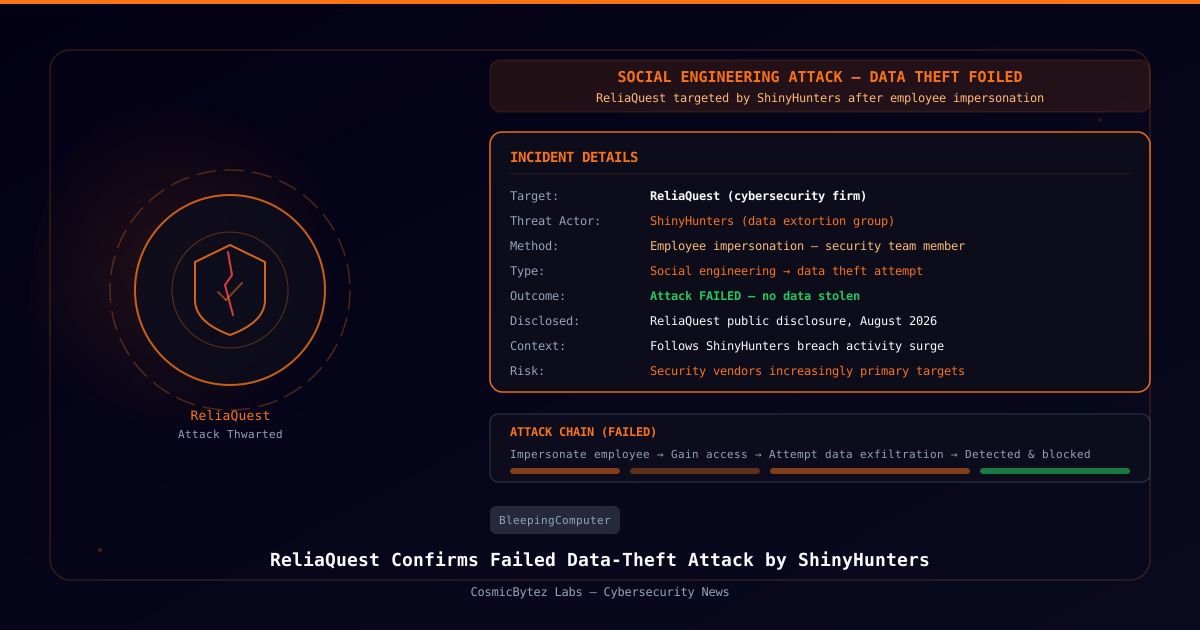
Cybersecurity firm ReliaQuest has publicly confirmed that it was targeted in a sophisticated social engineering attack linked to the ShinyHunters threat group. In the attack, hackers impersonated a member of ReliaQuest's security team in an attempt to steal sensitive data. The company says the attack was detected and blocked before any data was exfiltrated.
What Happened
According to ReliaQuest's disclosure, an attacker — attributed to the ShinyHunters group — posed as a legitimate ReliaQuest employee and attempted to use that impersonated identity to gain access to internal systems and steal data. The specific mechanism of impersonation has not been fully disclosed publicly, but social engineering attacks of this nature typically involve spear-phishing, voice phishing (vishing), or abuse of help desk and password reset workflows.
ReliaQuest confirmed that the attack was identified by its internal security team before any data theft could occur. No customer data or sensitive internal information was compromised.
Why This Matters
The targeting of a cybersecurity firm — an organization whose core business is defending others from exactly these kinds of attacks — is significant for several reasons:
Security vendors are high-value targets. Firms like ReliaQuest have deep access to customer environments through managed detection and response (MDR) services and security operations center (SOC) tooling. A successful breach could cascade into the networks of dozens or hundreds of downstream customers.
ShinyHunters has escalated tactics. The ShinyHunters group rose to prominence through large-scale credential breaches and database theft operations, but this incident reflects a pivot toward more targeted, hands-on social engineering attacks. Rather than relying solely on automated credential stuffing or dark web data purchases, the group is now investing in human-driven deception campaigns.
Impersonating security personnel is a calculated choice. Security team members typically have elevated privileges, access to sensitive systems, and a degree of implicit trust within their organizations. Impersonating a security engineer or SOC analyst may make fraudulent requests — such as credential resets or access to security tooling — appear more routine and less suspicious.
ShinyHunters: Background
ShinyHunters is a financially motivated threat actor (or collective) believed to operate primarily for profit through data theft and extortion. The group has been linked to high-profile breaches across multiple industries, including:
- Snowflake customer data theft campaign (2024)
- Ticketmaster breach affecting 560 million customers
- AT&T data breaches involving call records
- Multiple financial sector and retail data exfiltration incidents
The group is known for quickly monetizing stolen data through dark web marketplaces and extortion demands, sometimes threatening victims with public data dumps if ransoms are not paid.
Implications for the Security Industry
This incident is part of a broader trend of threat actors targeting cybersecurity and IT service providers as a force multiplier. By compromising a security vendor, attackers can potentially bypass the defenses of that vendor's entire customer base. Notable historical precedents include:
- SolarWinds (2020) — supply chain attack affecting thousands of organizations
- Kaseya (2021) — REvil ransomware distributed through MSP software
- CrowdStrike (2024) — content update incident (not malicious, but illustrative of systemic risk)
- Okta (multiple incidents) — help desk social engineering breaches
ReliaQuest's rapid detection and public disclosure are commendable. Transparency about failed attacks helps the broader community recognize and defend against similar tactics.
Defensive Takeaways
Organizations — especially security vendors and MSPs — should consider the following in light of this incident:
Identity verification for internal requests:
- Implement out-of-band verification for any access request, even from apparent internal sources
- Require multi-factor confirmation for sensitive operations regardless of the requester's identity
Social engineering awareness:
- Train security staff specifically to be skeptical of requests that leverage their own team members' identities
- Establish code words or challenge-response protocols for high-risk requests
Privileged access hygiene:
- Limit the blast radius of compromised privileged accounts through least-privilege principles
- Implement just-in-time (JIT) access provisioning for sensitive systems
Detection and monitoring:
- Monitor for anomalous access patterns even from authenticated internal identities
- Invest in behavioral analytics that can flag unusual activity even when credentials are legitimate
ReliaQuest's Response
ReliaQuest has stated that it is continuing to investigate the incident and has implemented additional controls to prevent similar attempts in the future. The company's willingness to disclose the attack publicly — even though no data was stolen — reflects an increasingly transparent approach to incident communication that the security industry should recognize and encourage.
The disclosure also serves as a warning to other security vendors to review their social engineering defenses, particularly around employee identity verification and help desk security procedures.