Cronos Halts and Rolls Back Chain After Tectonic Exploit
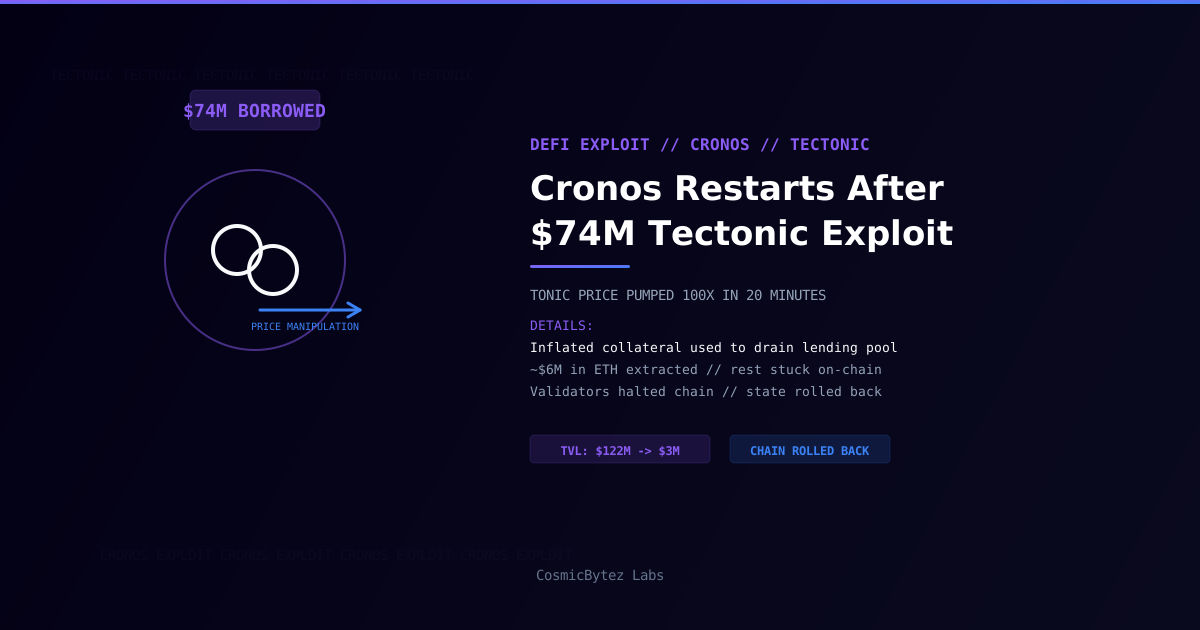
The Cronos blockchain network has resumed operations after validators took the unusual step of halting the chain and rolling back its state to contain a price-manipulation attack on the Tectonic cryptocurrency lending platform that let an attacker borrow roughly $74 million in assets.
Incident Summary
- The exploit occurred on the morning of August 31, 2026
- An attacker artificially inflated the price of Tectonic's TONIC token by 100x within 20 minutes
- The inflated TONIC was then used as collateral to borrow real crypto assets from Tectonic's lending pool
- Tectonic advised users to stop interacting with the platform while it investigated
- Cronos validators halted the network in what the team called "a validator-consensus emergency action to protect users"
- The chain restarted at 23:49:01 UTC on August 30/31, with state restored to before the exploit
How the Exploit Worked
The attacker used a price-manipulation technique rather than a direct code vulnerability: by rapidly pumping the price of the low-liquidity TONIC token roughly 100-fold in under 20 minutes, they were able to deposit TONIC as collateral at an artificially inflated valuation and borrow far more in legitimate assets than the token was actually worth.
Amount Actually Stolen
While the manipulated collateral gave the attacker access to approximately $74 million in borrowing power, security firm PeckShield reported that only around $6 million in Ethereum was successfully extracted from the network before Cronos froze activity. The remainder of the funds reportedly remained stuck on Cronos, unable to be moved off-chain.
Response
- Cronos froze all in-progress transactions and halted the network to prevent further fund movement
- The chain was restarted with state rolled back to before the exploit occurred
- Cronos said it would publish a post-mortem report with further details on the incident
- Tectonic's total value locked collapsed from roughly $122 million before the exploit to under $3 million afterward
Why This Matters
- Oracle and liquidity risk in DeFi lending: low-liquidity tokens used as collateral remain a prime target for rapid price-manipulation attacks against lending protocols.
- Chain-level intervention is controversial but effective here: halting consensus and rolling back state is a drastic measure that contradicts blockchain immutability norms, but it limited the attacker's actual take to a fraction of the exploited amount.
- TVL impact can be severe even without a full drain: Tectonic lost over 97% of its total value locked despite most of the exploited funds never leaving the chain.
Recommendations for DeFi Protocols and Users
- Avoid low-liquidity tokens as sole collateral sources in lending protocols, or apply strict price-impact and rate-of-change limits before accepting collateral valuations.
- Implement circuit breakers that pause borrowing when a collateral asset's price moves abnormally within a short window.
- Diversify collateral exposure and monitor total value locked concentration in any single lending pool.
- Treat validator-level halts as a last resort, and understand that a chain willing to roll back state carries different trust assumptions than one that is not.
Source: BleepingComputer