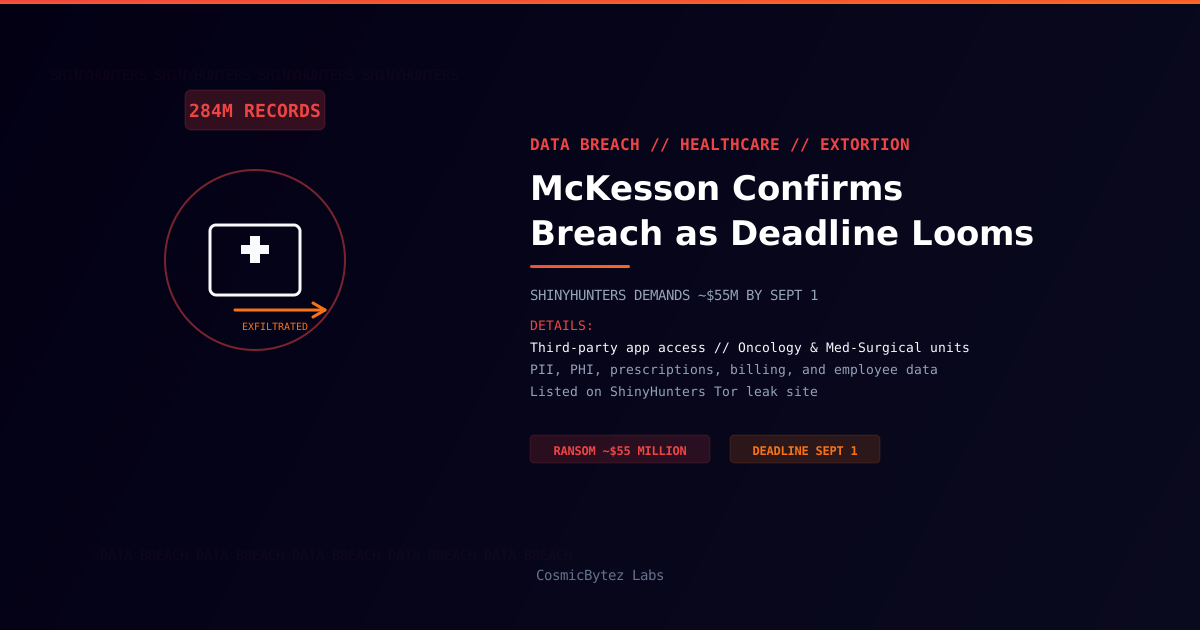
McKesson Confirms Breach as Extortion Deadline Approaches
Healthcare and pharmaceutical distribution giant McKesson Corporation has confirmed a cybersecurity incident after the ShinyHunters extortion group added the company to its Tor-based leak site, claiming the theft of 284 million customer records and demanding roughly $55 million by September 1, 2026.
Incident Summary
- McKesson discovered unauthorized access to its information systems on August 25, 2026
- Attackers gained access through third-party applications, not a direct breach of McKesson's core infrastructure
- McKesson confirmed the unauthorized access has been disrupted and its services remain unaffected
- Impacted data comes from "a subset of customers within our Oncology & Multispecialty and Medical-Surgical business units", per McKesson
What ShinyHunters Claims to Have Stolen
According to the extortion group's public claims, the stolen dataset includes:
- Personally identifiable information (PII)
- Protected health information (PHI)
- Medical and treatment details
- Prescription and billing records
- Employee data
- Information about McKesson's affiliated physicians and clinics
The Ransom Demand
ShinyHunters is demanding approximately $55 million from McKesson, with a public deadline of September 1, 2026 to begin negotiations — or the group says it will release the stolen data publicly.
McKesson's Response
McKesson says it has disrupted the unauthorized access and is offering complimentary credit monitoring and identity protection services to affected individuals. The company has not confirmed whether it intends to negotiate with the extortion group or the 284-million-record figure claimed by ShinyHunters.
Who Is ShinyHunters
ShinyHunters is a prolific extortion group that has claimed responsibility for a string of high-profile data theft campaigns in 2026, frequently leveraging compromised third-party applications and SaaS integrations rather than direct network intrusion. The group typically lists victims on a dark web leak site and sets short public deadlines to pressure rapid ransom payment.
Why This Matters
- Third-party risk in healthcare: the breach reportedly originated through third-party applications, underscoring how vendor and integration access remains a leading attack surface for large healthcare organizations.
- Scale of exposure: a claim of 284 million records, if accurate, would rank among the largest healthcare-sector breaches disclosed this year, combining PHI with financial and billing data.
- Extortion-only pressure tactics: as with other 2026 ShinyHunters campaigns, the group is using a public deadline and leak-site listing to force payment rather than deploying encryption.
Recommendations for Organizations
- Audit third-party and SaaS application access to systems holding PHI or PII, and enforce least-privilege scopes for integrations.
- Monitor for anomalous data access patterns from connected applications, not just direct network intrusions.
- Maintain a pre-approved incident response and legal plan for extortion scenarios involving regulated health data (HIPAA notification obligations apply regardless of ransom payment decisions).
- Assume third-party compromise can expose core systems — treat vendor application credentials with the same scrutiny as internal privileged accounts.
Source: SecurityWeek