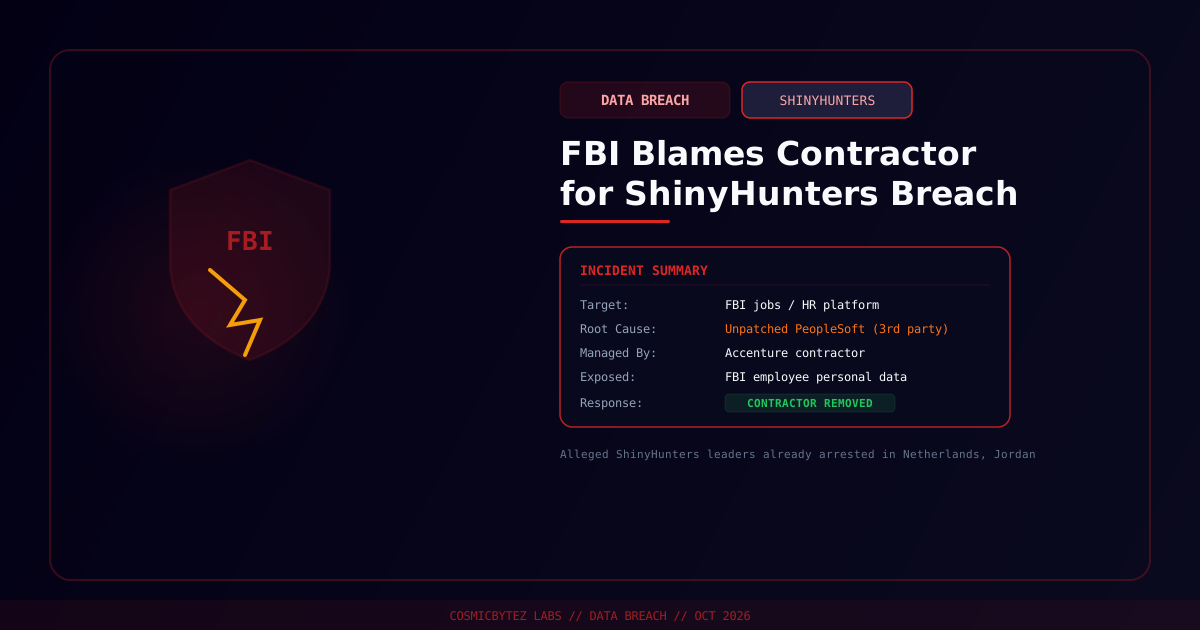
A Missed Patch, Not a Zero-Day
The FBI has confirmed that a breach of its jobs website and employee data, carried out by the ShinyHunters extortion group on September 22, traces back to a missed security patch on a third-party-managed system — not a novel exploit. FBI cyber chief Brett Leatherman said the incident "occurred as the result of a security failure of a platform managed by a third-party organization — after a contractor failed to implement a security patch."
The vulnerable system was Oracle's PeopleSoft human resources platform, managed on the FBI's behalf by Accenture.
What Happened
| Detail | Value |
|---|---|
| Target | FBI jobs website / HR platform |
| Underlying system | Oracle PeopleSoft |
| Managed by | Accenture (third-party contractor) |
| Root cause | Unapplied security patch |
| Attacker | ShinyHunters |
| Data exposed | Personal information of FBI employees |
| Date of breach | September 22, 2026 |
Some of the stolen employee data was partially leaked to media outlets, according to the report. ShinyHunters reportedly framed the attack as retaliation and leverage, claiming the goal was to pressure the FBI into retracting or correcting a May threat report the group considered inaccurate.
FBI's Response
The Bureau says it has removed the Accenture contractor responsible for the unpatched system and implemented additional mitigations to prevent further compromise. Separately — though not confirmed as directly tied to this specific intrusion — law enforcement has already arrested alleged ShinyHunters leaders in the Netherlands and Jordan, with at least one suspect reportedly cooperating with investigators. ShinyHunters' extortion demands tied to this incident have since been removed from the group's leak site, though the broader operation remains active.
Why This Matters
This breach is a textbook case of third-party risk materializing into a real incident: the FBI's own systems weren't the weak point — a contractor's patch management process was. Enterprise resource planning systems like PeopleSoft are high-value targets precisely because they centralize employee personal data, and when patch responsibility is outsourced, any gap in the vendor's own vulnerability management process becomes the organization's exposure, regardless of how mature its internal security program is.
It's also notable that a top-tier law enforcement agency wasn't immune to the same supply-chain and vendor-patching failures that have hit private-sector victims throughout 2026's wave of ShinyHunters-linked breaches (Salesforce instances, SaaS integrators, and now a federal HR platform).
Recommended Actions
- Audit third-party and contractor-managed systems for patch cadence — don't assume a vendor's SLA is being met without verification
- Require contractual patch-compliance reporting from managed-service providers handling sensitive HR or identity systems
- Segment HR/PeopleSoft-style platforms from broader internal networks to limit the blast radius of a single unpatched component
- FBI employees and any individuals affected by similar breaches should monitor for phishing or identity-theft attempts referencing leaked personal data