AI-Powered Phishing: The New Frontier in Social Engineering
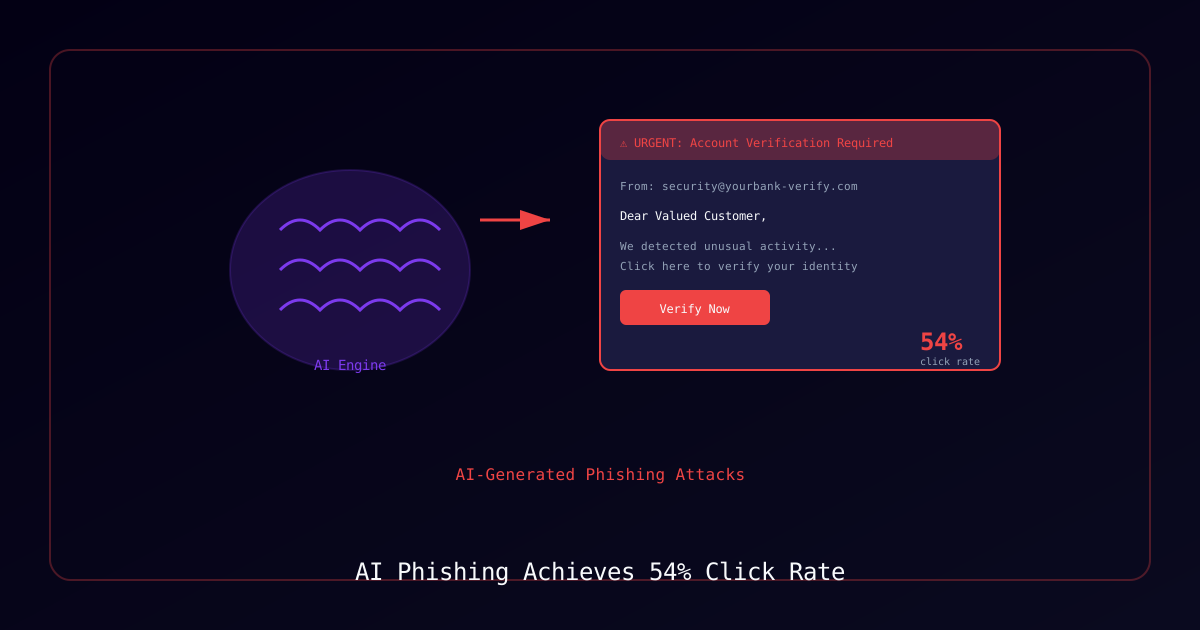
Microsoft has released alarming findings about the weaponization of artificial intelligence by threat actors, revealing that AI-automated phishing campaigns are achieving 54% click-through rates compared to just 12% for traditional phishing attempts.
Key Findings
| Metric | Traditional | AI-Powered | Improvement |
|---|---|---|---|
| Click-through Rate | 12% | 54% | 4.5x |
| Time to Create Campaign | Hours | Minutes | 10-50x faster |
| Personalization | Low | High | Significant |
| Grammar/Spelling Errors | Common | Rare | Near-native |
How AI is Being Weaponized
1. Automated Vulnerability Discovery
Threat actors are using large language models to:
- Analyze source code for security flaws
- Identify misconfigurations in cloud environments
- Generate proof-of-concept exploits
- Discover zero-days in open-source software
2. Intelligent Phishing Campaigns
AI enables hyper-personalized attacks:
Traditional Phishing:
"Dear Customer, Your account has been compromised. Click here to verify."

AI-Generated Phishing:
"Hi [Name], I noticed the Q4 report you shared in yesterday's
meeting had some discrepancies with the figures from [Colleague]'s
presentation. Could you review this updated version? The CFO
needs it for the board meeting tomorrow.

Best,
[Spoofed Executive Name]"3. Malware Generation
AI tools are being used to:
- Generate polymorphic malware variants
- Obfuscate code to evade detection
- Create custom payloads for specific targets
- Automate exploit development
4. Deepfake Voice/Video
Real-time voice cloning enables:
- Fake executive phone calls requesting wire transfers
- Video call impersonation for authentication bypass
- Voice authentication system compromise
Case Studies
Business Email Compromise (BEC) Evolution
A recent campaign documented by Microsoft:
- Reconnaissance: AI scraped LinkedIn, company websites, and news
- Profiling: Built relationship maps of target organization
- Content Generation: Created contextually relevant emails
- Timing Optimization: Sent during optimal response windows
- Adaptation: Modified approach based on response patterns
Result: $2.3M fraudulent transfer authorized
Supply Chain Attack
AI-assisted attack on software vendor:
- Identified developers via GitHub contributions
- Generated personalized spear-phishing emails
- Compromised developer workstation
- Injected backdoor into legitimate software update
- Distributed to thousands of customers
Defensive Strategies
Technical Controls
Email Security:
- AI-based email filtering (fight AI with AI)
- DMARC/DKIM/SPF enforcement
- Sandboxing for attachments
- Link analysis and rewriting

Authentication:
- Hardware security keys (FIDO2)
- Phishing-resistant MFA
- Conditional Access policies
- Continuous authenticationHuman Layer Defenses
-
Updated Training:
- Traditional phishing indicators no longer reliable
- Focus on verification procedures
- "Trust but verify" for all requests
-
Process Controls:
- Multi-person authorization for financial transactions
- Out-of-band verification for sensitive requests
- Mandatory cooling-off periods for large transfers
-
Reporting Culture:
- No-blame reporting policy
- Quick response mechanisms
- Reward program for spotted attempts
Detection Indicators
Watch for these signs of AI-generated content:
Email Analysis
- Perfect grammar in unexpected contexts
- Unusual but plausible requests
- Subtle inconsistencies in tone
- References to real events/people with slight errors
Technical Indicators
- Newly registered domains with AI-generated content
- Rapid iteration of phishing pages
- Polymorphic attachment characteristics
- Unusual sending patterns
Industry Response
Major security vendors are responding:
| Vendor | AI Defense Initiative |
|---|---|
| Microsoft | Defender AI threat detection |
| Gmail AI-powered warnings | |
| Proofpoint | Machine learning email analysis |
| Abnormal Security | Behavioral AI detection |
Recommendations
For Organizations
- Deploy AI-powered email security
- Implement zero-trust architecture
- Mandate phishing-resistant MFA
- Conduct regular AI-aware training
- Establish verification procedures for sensitive requests
For Individuals
- Verify unexpected requests via separate channel
- Be suspicious of urgency and pressure
- Check sender details carefully
- Report suspicious messages immediately
- Enable MFA everywhere possible
References
- Microsoft Security Blog - AI Threat Landscape
- The Hacker News - AI Abuse in Cyber Attacks
- Help Net Security - AI Threats in Healthcare
Last updated: January 20, 2026