Covenant Health Ransomware Attack: A Case Study in Healthcare Security
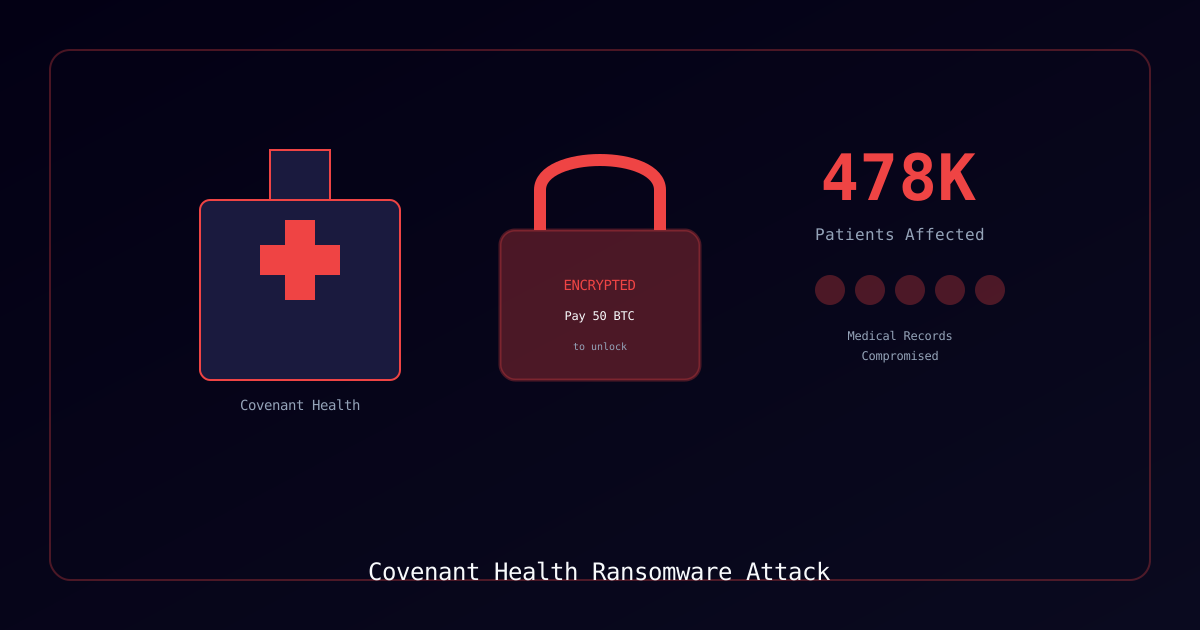
Covenant Health, Inc., a Massachusetts-based healthcare organization operating hospitals, clinics, and healthcare facilities across multiple states, has disclosed that a ransomware attack initially reported as affecting 7,800 individuals has now been confirmed to impact 478,188 patients.
Timeline of Events
| Date | Event |
|---|---|
| May 26, 2025 | Cyberattack detected, systems shutdown |
| June 2025 | Qilin ransomware group claims responsibility |
| June 2025 | Initial disclosure: 7,800 affected |
| December 2025 | Revised total: 478,188 affected |
| January 2026 | Patient notification process ongoing |
Scope of the Breach
The Qilin ransomware group announced the theft of 850 GB of sensitive data, potentially including:
- Patient names and contact information
- Social Security numbers
- Medical record numbers
- Health insurance information
- Treatment and diagnosis details
- Financial/billing information
Affected Facilities
Covenant Health operates in multiple states:
- Massachusetts
- Maine
- New Hampshire
- Pennsylvania
- Vermont
The Qilin Ransomware Group
Qilin (also known as Agenda) emerged in 2022 and has become one of the most active ransomware operations targeting healthcare:
Qilin Characteristics:
- Programming: Rust and Go variants
- Model: Ransomware-as-a-Service (RaaS)
- Tactics: Double extortion (encryption + data theft)
- Targets: Healthcare, education, government
- Payment: Typically $500K - $5M demandsIndustry Impact
This breach contributes to a troubling trend in healthcare cybersecurity:
2025 Healthcare Breach Statistics
| Metric | Value |
|---|---|
| Total Breaches | 605 |
| Individuals Affected | 44.3 million |
| Average Cost per Breach | $10.93 million |
| Average Detection Time | 212 days |
Other Major 2025 Healthcare Breaches
- Yale New Haven Health: 5.56 million patients
- Episource (UnitedHealth): 5.4 million patients
- Various smaller breaches: Cumulative millions
Expert Analysis
"We will see more disruptive attacks masquerading as traditional ransomware events. Adversaries are shifting from simply encrypting data to corrupting backups, damaging infrastructure, or compromising clinical systems in ways that prolong downtime." — Healthcare Security Analyst
Lessons Learned
What Went Wrong
- Detection Gap: Attack persisted before discovery
- Data Exposure: 850GB exfiltration indicates prolonged access
- Initial Assessment: Significant undercount of affected individuals
Recommended Mitigations
For healthcare organizations:
1. Network Segmentation
   - Isolate clinical systems from administrative networks
   - Implement zero-trust architecture

2. Data Protection
   - Encrypt PHI at rest and in transit
   - Implement DLP solutions
   - Regular backup verification

3. Detection & Response
   - 24/7 SOC monitoring
   - EDR on all endpoints
   - Incident response retainer

4. Compliance
   - Regular HIPAA risk assessments
   - Penetration testing
- Employee security trainingPatient Recommendations
If you received a breach notification:
- Monitor Credit: Enroll in offered credit monitoring services
- Review EOBs: Check Explanation of Benefits for fraudulent claims
- Freeze Credit: Consider credit freezes with all three bureaus
- Be Alert: Watch for phishing attempts using stolen information
References
- Security Affairs - Covenant Health Data Breach
- Healthcare IT News - Breach Numbers Skyrocket
- BankInfoSecurity - Covenant Health Notification
- HIPAA Journal - Healthcare Breach Statistics
Last updated: January 15, 2026