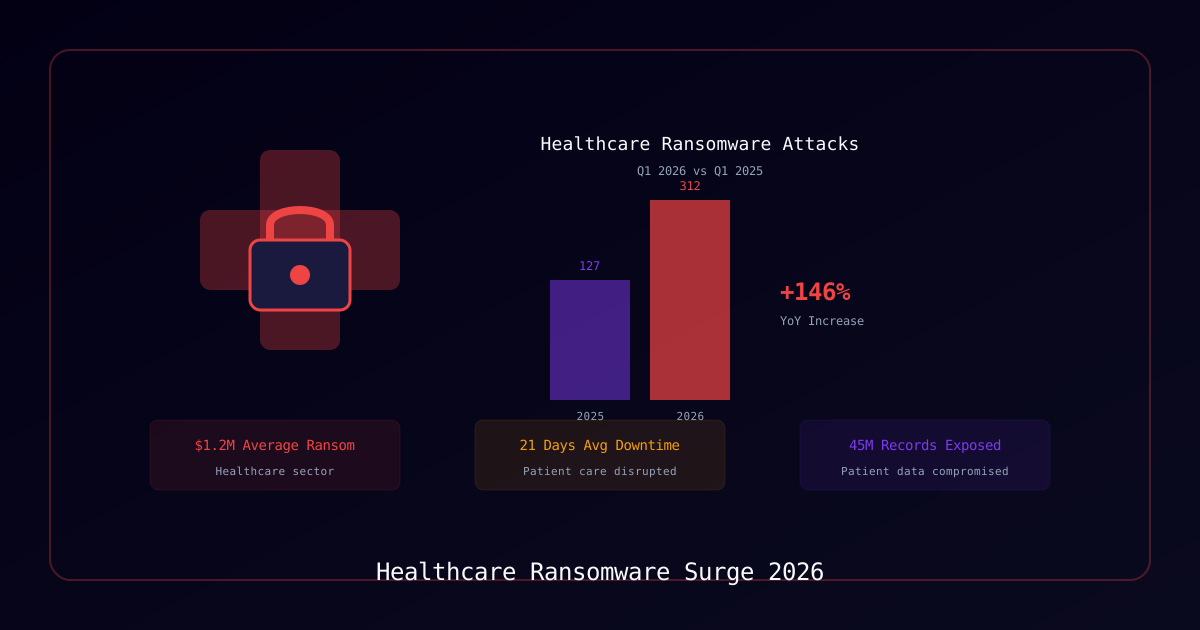
Healthcare Ransomware Attacks Surge in Early 2026
The healthcare sector is experiencing an unprecedented wave of ransomware attacks, with incidents increasing 67% compared to the same period last year. Multiple hospital systems have reported significant service disruptions.
Attack Statistics
According to data compiled from multiple sources:
- 47 confirmed healthcare ransomware incidents in January 2026
- 12 major hospital systems forced to divert emergency patients
- Average downtime: 23 days
- Average ransom demand: $4.2 million
Notable Incidents
Regional Medical Center Network (Midwest)
A major regional healthcare network serving 2.3 million patients was forced offline for 18 days after a ransomware attack. Emergency services were diverted to neighboring facilities.
Pediatric Hospital Group (Southeast)
Three children's hospitals experienced simultaneous attacks, suggesting coordinated targeting. Patient records for over 500,000 children were potentially compromised.
Threat Actor Analysis
Security researchers have identified several active groups:
| Group | Tactics | Ransom Range |
|---|---|---|
| BlackCat/ALPHV | Double extortion | $2-10M |
| LockBit 4.0 | RaaS, data theft | $500K-5M |
| Royal | Healthcare focus | $1-8M |
Contributing Factors
Industry experts cite several factors:
- Legacy systems: Many healthcare organizations running outdated software
- Budget constraints: Security investments lag behind threats
- Attack surface: IoT medical devices expand vulnerability
- High-value targets: Patient data commands premium prices
HHS Response
The Department of Health and Human Services has:
- Issued updated guidance on ransomware preparation
- Expanded threat sharing programs
- Announced additional funding for healthcare cybersecurity
- Warned of potential regulatory action against unprepared organizations
Recommendations for Healthcare Organizations
Immediate Actions
- Verify offline backup integrity
- Review incident response plans
- Assess network segmentation
- Enable MFA everywhere possible
Strategic Improvements
- Implement zero-trust architecture
- Deploy EDR solutions
- Establish threat intelligence sharing
- Conduct regular tabletop exercises
Expert Commentary
"Healthcare organizations need to treat cybersecurity as patient safety," noted a CISO of a major health system. "A ransomware attack can literally cost lives."
Looking Forward
Security analysts predict attacks will continue throughout 2026 unless organizations significantly improve their defensive posture. The combination of valuable data and historically weak security makes healthcare an attractive target.
Sources: HHS, Krebs on Security, HIPAA Journal