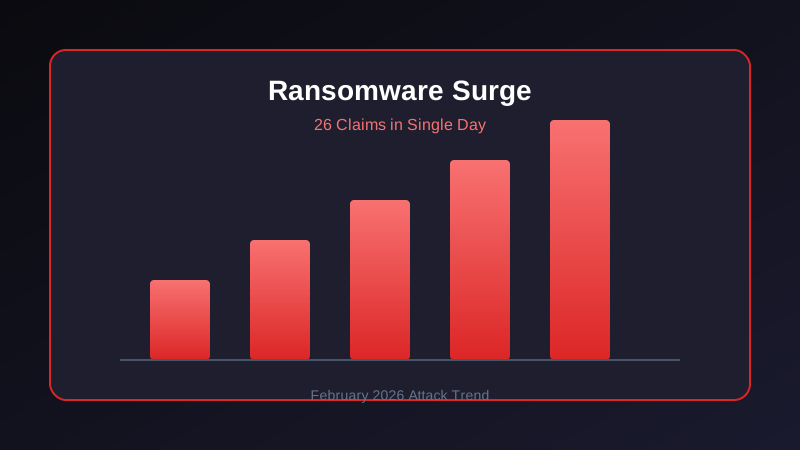
Ransomware Activity Reaches New Highs
A troubling surge in ransomware activity has marked the beginning of February 2026, with threat intelligence sources reporting 26 ransomware claims from 8 different threat groups on February 2nd alone.
This alarming trend follows 2025's record-breaking year, where cybercrime groups targeted over 8,000 organizations globally—up from approximately 6,000 the previous year.
Major Victims Disclosed
February 3, 2026 Breaches
Multiple high-profile organizations were reportedly breached:
| Organization | Threat Actor | Industry |
|---|---|---|
| BASF SE | 0APT | Chemical Manufacturing |
| Honeywell | 0APT | Industrial Conglomerate |
| Dassault Systèmes | 0APT | Software/3D Design |
| Linde plc | 0APT | Industrial Gases |
| Ferretti Group | Akira | Luxury Yachts |
| JST Manufacturing | Akira | Electronics |
| Family Health Centers | Termite | Healthcare |
| Multiple Law Firms | INC_RANSOM | Legal Services |
0APT Emerges as Major Threat
The 0APT threat actor group has emerged as a significant concern, claiming four major industrial companies in a single day. Their targets suggest a focus on manufacturing and critical infrastructure sectors.
Active Ransomware Groups
According to Check Point Research's 2026 Cyber Security Report, the most active ransomware groups currently include:
- Qilin - Leading in total claimed victims
- Akira - Targeting manufacturing and healthcare
- Cl0p - Known for supply chain attacks
- Play - Focused on enterprise targets
- Safepay - Emerging threat actor
The number of active ransomware groups increased by approximately 30% compared to 2024.
Shifting Tactics
Data-Only Extortion Rising
A notable shift in ransomware tactics shows threat actors increasingly focusing on data exfiltration without encryption:
"AI is becoming a force multiplier across attacks, with fragmentation in ransomware moving toward data-only extortion and multi-channel social engineering attacks." — Check Point Research
Key Trends
- 44% of all data breaches now involve ransomware (up 12% YoY)
- 28% of vulnerabilities exploited within one day of CVE disclosure
- Average ransom demands continue to climb into millions
WorldLeaks Claims Nike Breach
In other extortion news, the WorldLeaks group claimed responsibility for a massive data breach at Nike, allegedly exposing:
- 1.4 terabytes of internal data
- Supply chain documentation
- Manufacturing operations data
- Internal archives
Nike has not publicly confirmed the breach. Security researchers are monitoring dark web forums for leaked data.
Under Armour Breach Confirmed
Under Armour has confirmed a ransomware breach that exposed data of 72 million customers. The compromised data has appeared on dark web marketplaces and includes:
- Customer names and email addresses
- Purchase history
- Account credentials (encrypted)
- Physical addresses
Malwarebytes researchers note: "As leaked datasets are merged and enriched, they become more useful to criminals for targeted attacks."
Defensive Recommendations
Immediate Actions
- Review backup integrity - Ensure offline, immutable backups exist
- Patch critical vulnerabilities - Prioritize internet-facing systems
- Enable MFA everywhere - Especially privileged accounts
- Segment networks - Limit lateral movement potential
Detection Focus Areas
Monitor for:
- Unusual file encryption activity
- Mass file access patterns
- Data exfiltration to unknown destinations
- Disabled security tools
- Shadow copy deletion
Outlook for 2026
Industry experts predict continued escalation:
"By mid-2026, at least one major global enterprise will fall to a breach caused or significantly advanced by a fully autonomous agentic AI system." — Michael Freeman, Head of Threat Intelligence at Armis
Organizations should prepare for:
- AI-enhanced social engineering attacks
- Faster exploitation timelines
- Increased targeting of critical infrastructure
- More sophisticated extortion tactics
Sources
- Dark Web Informer - February 2, 2026 Update
- Check Point Research - 2026 Threat Intelligence Report
- Malwarebytes - Under Armour Breach Analysis
- Emsisoft - State of Ransomware 2025 Report