IRC Makes a Comeback in Botnet Operations
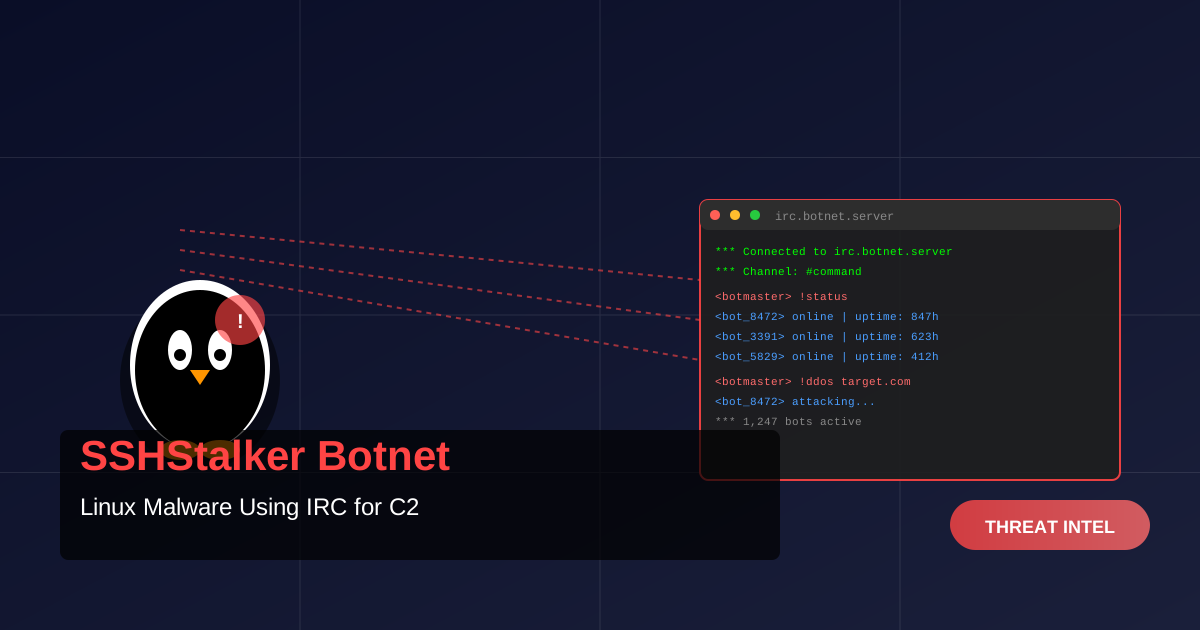
Security researchers have documented a newly discovered Linux botnet named SSHStalker that uses the Internet Relay Chat (IRC) protocol for command-and-control (C2) operations—a throwback technique that's increasingly rare in modern malware campaigns.
The discovery highlights how threat actors are revisiting legacy protocols that may fly under the radar of modern security tools focused on detecting HTTP/HTTPS-based C2 channels.
Why IRC for C2?
IRC has been largely replaced by more sophisticated C2 mechanisms in recent years, but it offers several advantages for attackers:
Legacy Protocol Benefits
- Low detection rates: Many security tools don't monitor IRC traffic extensively
- Firewall bypass: IRC ports may be less scrutinized than modern protocols
- Simplicity: Easy to implement and maintain
- Reliability: Proven protocol with decades of stability
Modern Security Gap
Most EDR and network security solutions focus on:
- HTTP/HTTPS C2 channels
- DNS tunneling
- Cloud storage abuse
- Encrypted messaging platforms
This creates a blind spot for IRC-based communications.
SSHStalker Technical Details
Infection Vector
The botnet primarily spreads through:
- SSH brute-force attacks on exposed Linux servers
- Exploitation of weak credentials
- Lateral movement through compromised networks
IRC C2 Infrastructure
Communication Pattern:
Infected Host → IRC Server → Botmaster Commands
Typical IRC Commands:
!ddos <target> <duration>- Launch DDoS attacks!scan <range>- Network reconnaissance!spread <credentials>- Propagation attempts!update- Download malware updates
Capabilities
- DDoS attack execution (TCP/UDP floods)
- Network scanning and reconnaissance
- Credential theft and harvesting
- Lateral movement tools
- Persistence mechanisms
Detection and Mitigation
Network Indicators
Monitor for unusual IRC traffic:
# Check for IRC connections (default ports)
netstat -anp | grep -E ':(6667|6697|7000)'

# Monitor IRC-related processes
ps aux | grep -i irc

# Check for outbound IRC traffic
tcpdump -i any 'port 6667 or port 6697'Host-Based Detection
Look for suspicious processes and files:
# Check for unknown cron jobs
crontab -l
ls -la /etc/cron.*

# Review SSH authentication logs
grep "Failed password" /var/log/auth.log | tail -50

# Check for suspicious listening services
netstat -tulpn | grep LISTENHardening Recommendations
-
SSH Security:
- Disable password authentication (use SSH keys only)
- Implement fail2ban or similar brute-force protection
- Change default SSH port
- Use multi-factor authentication
-
Network Security:
- Block outbound IRC ports unless required
- Implement egress filtering
- Monitor for unusual outbound connections
-
System Hardening:
- Apply security patches promptly
- Use SELinux/AppArmor
- Implement least-privilege access
- Regular security audits
Industry Impact
Affected Sectors
- Cloud providers: VPS and dedicated server hosts
- Web hosting companies: Shared hosting environments
- IoT manufacturers: Linux-based embedded devices
- Enterprise infrastructure: On-premises Linux servers
Scale of Threat
While specific infection numbers haven't been disclosed, IRC-based botnets have historically achieved significant scale:
- Lower sophistication barrier for attackers
- Easier to maintain than complex C2 frameworks
- Can leverage existing IRC infrastructure
Historical Context
IRC botnets were prevalent in the early 2000s, with notable examples:
- Agobot/Gaobot: Peak infections of 500,000+ systems
- SDBot: Widely used for DDoS attacks
- RBot: Popular among script kiddies
The return to IRC suggests:
- Attackers are exploiting security tool blind spots
- Modern defenses may be over-optimized for current threats
- Defense-in-depth must include legacy protocol monitoring
Recommendations
For Security Teams
✅ Add IRC monitoring to security stack ✅ Review firewall rules for legacy protocols ✅ Implement SSH hardening best practices ✅ Deploy host-based intrusion detection ✅ Regular security patching cadence
For System Administrators
✅ Audit all Linux servers for exposure ✅ Disable unused services and ports ✅ Implement strong authentication ✅ Monitor for unauthorized processes ✅ Regular log review and analysis
Conclusion
The emergence of SSHStalker demonstrates that threat actors continue to innovate by revisiting old techniques that modern defenses may overlook. Organizations should ensure their security posture covers both modern and legacy attack vectors.
Bottom line: Don't assume old protocols are safe to ignore—they may be exploited precisely because they're undermonitored.