First Major DeFi Hack of 2026
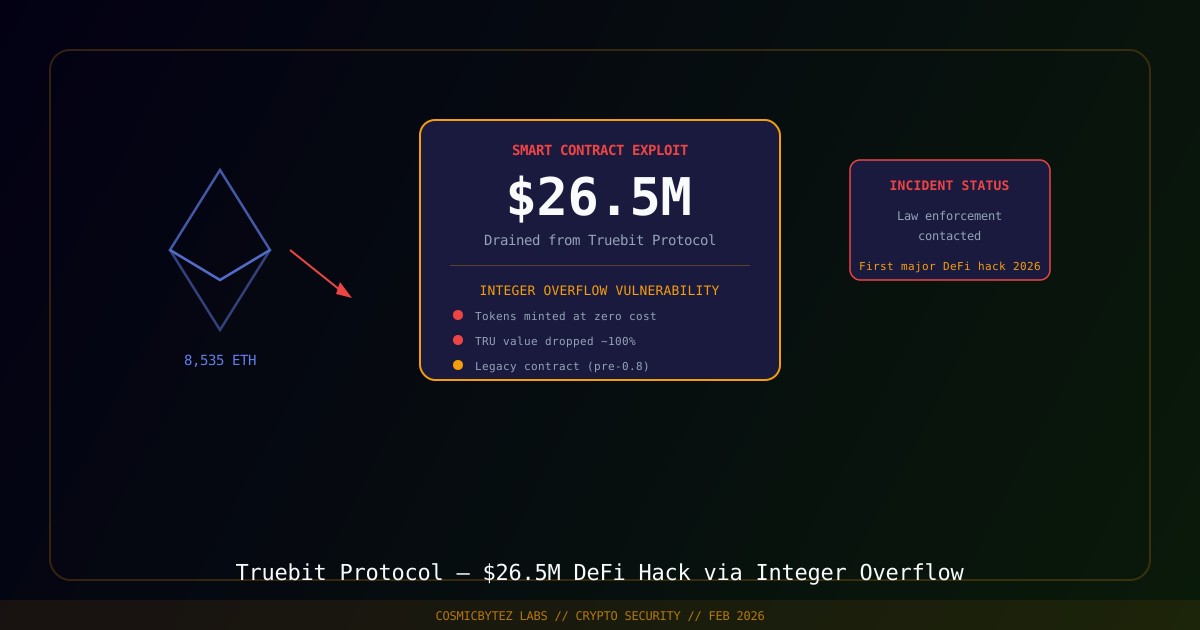
Attackers have exploited a smart contract integer overflow vulnerability in Truebit Protocol, minting massive amounts of TRU tokens at zero cost and draining $26.5 million (8,535 ETH) from the protocol. The TRU token value dropped nearly 100% within hours of the exploit.
Incident Overview
| Attribute | Details |
|---|---|
| Target | Truebit Protocol |
| Exploit Type | Smart contract integer overflow |
| Amount Stolen | $26.5 million (8,535 ETH) |
| Token Impact | TRU token value dropped ~100% |
| Status | Law enforcement contacted |
How the Exploit Worked
Integer Overflow Vulnerability
An integer overflow occurs when a computation produces a value that exceeds the maximum value a variable can hold, causing it to wrap around to zero or a small number. In Truebit's smart contract:
- Attacker identified an overflow in the token minting function
- Crafted a transaction that caused the mint amount to overflow
- Minted massive quantities of TRU tokens at effectively zero cost
- Swapped the minted tokens for ETH on decentralized exchanges
- Drained 8,535 ETH ($26.5 million) before the exploit was detected
Why This Is Preventable
Modern Solidity versions (0.8+) include built-in overflow protection. Older contracts or those using unchecked blocks remain vulnerable. The Truebit contract predated these protections and had not been updated.
Broader DeFi Security Context
This hack comes amid a surge in cryptocurrency theft:
| Period | Amount Lost | Source |
|---|---|---|
| January 2026 | $370.3 million | CertiK |
| February 2026 (Truebit) | $26.5 million | This incident |
| 2025 Total | $2.3 billion | Industry estimates |
CertiK reports January 2026 saw a nearly 4x year-over-year increase in cryptocurrency losses — the largest monthly theft volume in 11 months.
Lessons for DeFi Protocols
- Use Solidity 0.8+ with built-in overflow/underflow protection
- Conduct multiple independent audits before deployment
- Implement circuit breakers that can pause contracts if anomalous minting is detected
- Use OpenZeppelin SafeMath for legacy contracts
- Maintain bug bounty programs to incentivize responsible disclosure
Sources
- The Record — $26 Million Stolen from Truebit Protocol
- CryptoPotato — Truebit $26.5M Loss in First Major DeFi Hack of 2026