Executive Summary
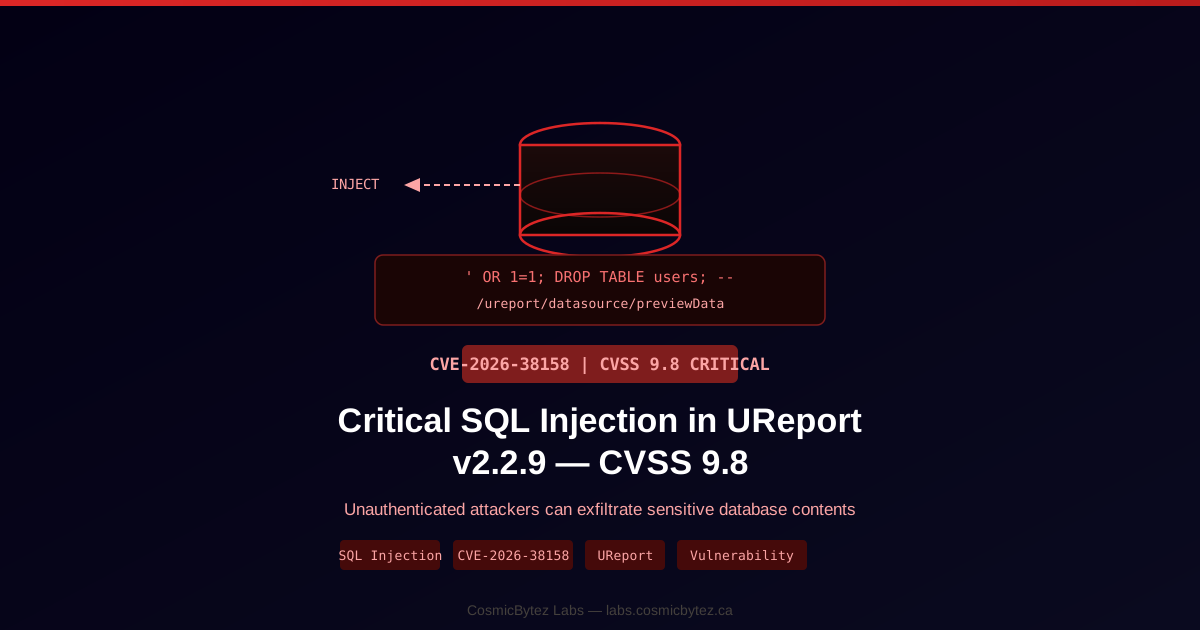
A critical SQL injection vulnerability has been identified in UReport v2.2.9, a widely used open-source Java reporting engine. Tracked as CVE-2026-38158 with a CVSS score of 9.8 (Critical), the flaw resides in the /ureport/datasource/previewData component and allows attackers to craft malicious SQL statements that access sensitive database information.
CVSS Score: 9.8 (Critical) Attack Vector: Network Authentication Required: None User Interaction Required: None
Vulnerability Overview
Affected Component
The vulnerable endpoint is the data source preview functionality exposed at:
/ureport/datasource/previewData
This component is used to preview report data during design time. Due to insufficient input sanitization, SQL parameters passed to this endpoint are not properly validated or parameterized before being executed against the underlying database.
Root Cause
The vulnerability stems from unsanitized SQL parameter injection in the previewData handler. Attackers can submit crafted SQL payloads that are executed with the same privileges as the application's database connection, enabling:
- Data exfiltration — dump of tables, schemas, and sensitive records
- Authentication bypass — access without valid credentials
- Potential privilege escalation — depending on database user permissions
Attack Scenario
An unauthenticated remote attacker sends a crafted HTTP request to the preview endpoint with a malicious SQL payload. The application executes the injected statement without validation, returning sensitive database contents in the response.
Example of the vulnerable request pattern:
POST /ureport/datasource/previewData
...
datasourceType=jdbc&sql=' UNION SELECT username,password,NULL FROM users--
Risk Assessment
| Factor | Rating |
|---|---|
| CVSS Score | 9.8 Critical |
| Attack Complexity | Low |
| Privileges Required | None |
| Confidentiality Impact | High |
| Integrity Impact | High |
| Availability Impact | High |
The combination of no authentication required, network-accessible endpoint, and high impact across all three CIA pillars makes this vulnerability extremely dangerous for organizations with exposed UReport instances.
Affected Versions
| Product | Affected Version |
|---|---|
| UReport | v2.2.9 and prior |
UReport is commonly deployed in enterprise Java environments for dynamic reporting. Organizations integrating it into business applications or internal dashboards may have exposed the preview endpoint without adequate network controls.
Detection
Indicators to Monitor
Look for anomalous patterns in web access logs targeting the /ureport/datasource/previewData endpoint, particularly:
- SQL keyword strings in POST body parameters (
UNION,SELECT,DROP,INSERT, comment sequences--,/**/) - Unusually large response payloads from the preview endpoint
- Requests from unexpected IP ranges to the UReport context path
Log Query Examples
# Grep for SQL injection patterns in access logs
grep -i "previewData" /var/log/nginx/access.log | grep -iE "(union|select|drop|--|0x)"Remediation
Immediate Actions
- Restrict network access to the
/ureport/datasource/previewDataendpoint at the firewall or reverse proxy level. Only trusted internal IP ranges should have access to the UReport admin interface. - Apply authentication controls — ensure UReport's preview and design endpoints are behind authentication. Do not expose these to the public internet.
- Monitor for exploitation — review access logs for suspicious queries against the affected endpoint.
Patch Status
At time of publication, monitor the UReport GitHub repository for a patched release addressing this vulnerability. Apply patches as soon as available.
Workaround
If an immediate patch is unavailable, block the /ureport/datasource/ path at the WAF or reverse proxy:
# Nginx example — block UReport datasource preview in production
location ~* ^/ureport/datasource/ {
    deny all;
    return 403;
}