Overview
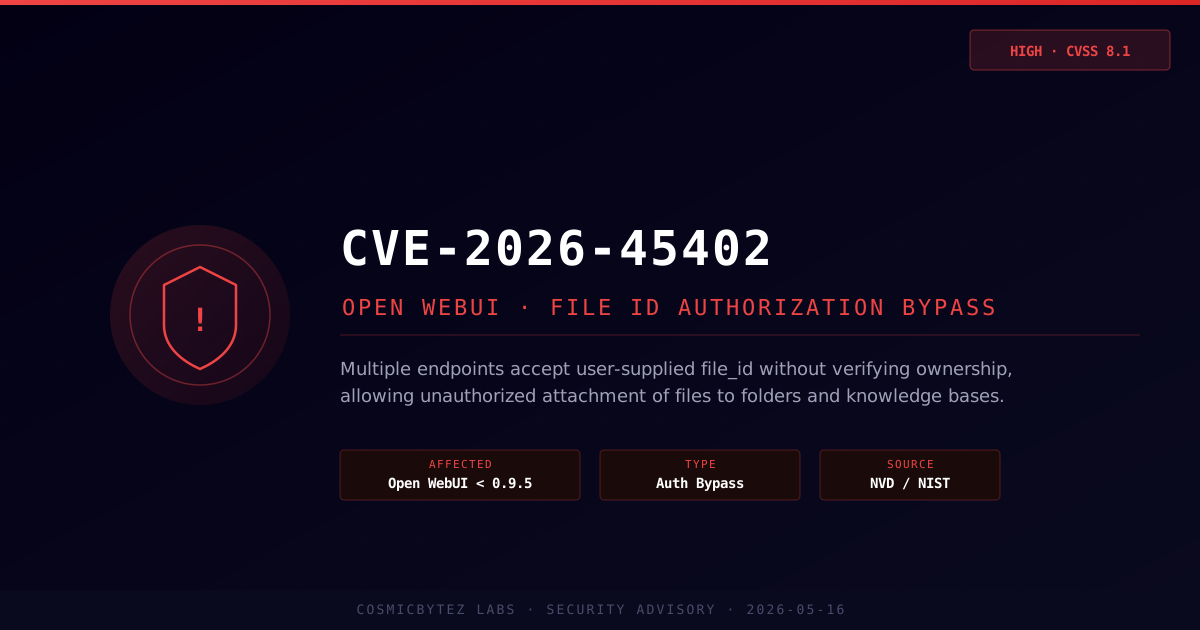
CVE-2026-45402 is a high-severity authorization bypass vulnerability affecting Open WebUI, a self-hosted AI platform designed for offline operation. The flaw was assigned a CVSS score of 8.1 and was disclosed on May 15, 2026 via the National Vulnerability Database.
The vulnerability exists in multiple API endpoints that accept a caller-supplied file_id parameter without verifying that the requesting user has ownership or access rights to the referenced file.
Technical Details
When a user submits a request that includes a file_id value, the affected endpoints attach the referenced file to a resource the caller controls — such as a folder or a knowledge base — without first checking that the file belongs to them.
This creates an Insecure Direct Object Reference (IDOR) condition. An authenticated but unprivileged user can:
- Enumerate or guess valid
file_idvalues belonging to other users - Submit requests to vulnerable endpoints with those IDs
- Attach other users' files to their own folders or knowledge-base entries
- Gain read access to content they were not intended to see
The flaw affects the folder knowledge and knowledge-base contents management endpoints at minimum. The root cause is a missing ownership check — the application trusts caller-supplied IDs rather than verifying server-side authorization before performing the attachment operation.
Affected Versions
| Product | Affected | Fixed |
|---|---|---|
| Open WebUI | All versions prior to 0.9.5 | 0.9.5 |
Impact
- Confidentiality: Authenticated users can access files uploaded by other users on the same instance
- Integrity: Unauthorized files can be silently attached to user-controlled resources
- Scope: Any shared or multi-user Open WebUI deployment is at risk
Self-hosted instances with a single operator are less exposed, but any organization running Open WebUI for teams is directly affected.
Remediation
Upgrade to Open WebUI 0.9.5 or later immediately. The fix introduces server-side ownership verification on all endpoints that accept file_id parameters, ensuring that the requesting user is the legitimate owner before performing any attachment operations.
If an immediate upgrade is not possible:
- Restrict access to the Open WebUI instance to trusted users only
- Monitor API logs for unexpected
file_idvalues in attachment requests - Review existing knowledge-base and folder memberships for unauthorized files