Executive Summary
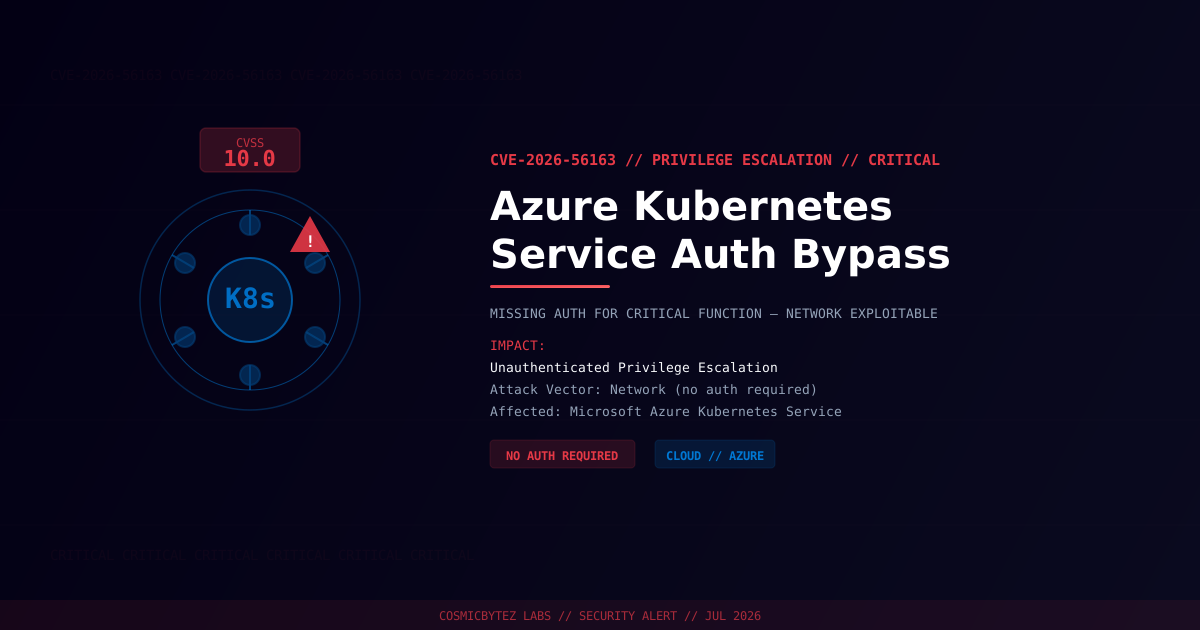
A CVSS 10.0 Critical vulnerability has been disclosed in Microsoft Azure Kubernetes Service (AKS) that allows an unauthenticated attacker to escalate privileges over a network by exploiting a missing authentication check on a critical function. Tracked as CVE-2026-56163, this flaw represents one of the most severe possible vulnerability classifications and requires immediate attention from organizations running AKS workloads.
CVSS Score: 10.0 (Critical)
The vulnerability stems from a missing authentication requirement on a critical function within the AKS control plane. Because no credentials are required to trigger the vulnerable function, any network-accessible attacker can attempt exploitation without prior access.
Vulnerability Overview
| Attribute | Value |
|---|---|
| CVE ID | CVE-2026-56163 |
| CVSS Score | 10.0 (Critical) |
| Type | Missing Authentication for Critical Function |
| Attack Vector | Network |
| Privileges Required | None |
| User Interaction | None |
| Scope | Changed |
| Affected Product | Microsoft Azure Kubernetes Service |
Affected Products
| Product | Status |
|---|---|
| Microsoft Azure Kubernetes Service (AKS) | Affected — apply vendor guidance |
Attack Vector
1. Attacker identifies internet-accessible Azure Kubernetes Service endpoint
2. Attacker sends unauthenticated request to the critical function
3. No authentication or authorization checks are performed
4. Attacker achieves elevated privilege context within AKS
5. Potential for cluster takeover, workload manipulation, or lateral movementImpact of Successful Exploitation
| Impact | Description |
|---|---|
| Privilege Escalation | Unauthenticated attacker gains elevated AKS permissions |
| Cluster Control | Potential to manipulate Kubernetes workloads and resources |
| Data Access | Access to secrets, ConfigMaps, and workload data |
| Lateral Movement | Pivot to other Azure resources and services |
| Persistent Access | Ability to deploy malicious workloads or backdoors |
Immediate Remediation
Step 1: Apply Microsoft Security Updates
Monitor the Microsoft Security Response Center (MSRC) for patches and apply all available updates to your AKS clusters immediately.
# Check your AKS cluster version
az aks show --resource-group <rg> --name <cluster-name> --query kubernetesVersion

# Upgrade to the latest patched version
az aks upgrade --resource-group <rg> --name <cluster-name> --kubernetes-version <patched-version>Step 2: Review AKS Network Exposure
Limit exposure of AKS API server endpoints by enabling private cluster mode or restricting authorized IP ranges:
# Enable authorized IP ranges on existing cluster
az aks update \
  --resource-group <rg> \
  --name <cluster-name> \
  --api-server-authorized-ip-ranges "<your-ip-range>/32"

# Check current authorized IP ranges
az aks show --resource-group <rg> --name <cluster-name> \
--query apiServerAccessProfile.authorizedIpRangesStep 3: Enable Azure Defender for Kubernetes
# Enable Microsoft Defender for Containers
az security pricing create --name Containers --tier StandardIf Immediate Patching Is Not Possible
- Restrict network access to AKS API server endpoints using Azure NSGs and firewall rules
- Enable audit logging for all AKS control plane operations
- Monitor for anomalous API calls to the Kubernetes API server
- Review cluster RBAC bindings for unexpected privilege grants
- Enable Azure Policy for Kubernetes to enforce workload security controls
Detection Indicators
| Indicator | Description |
|---|---|
| Unexpected privilege escalation events | Audit log entries showing permission changes without prior authentication |
| Anomalous Kubernetes API calls | Requests from unexpected source IPs or without valid credentials |
| Unauthorized workload deployments | New pods or DaemonSets not matching known deployment patterns |
| Changes to ClusterRoleBindings | Modifications to RBAC that were not initiated by known operators |
Post-Remediation Steps
- Confirm AKS cluster is running the patched version
- Audit all ClusterRoleBindings and RoleBindings for unauthorized entries
- Review workload inventory for unexpected pods or deployments
- Rotate service account tokens and Kubernetes secrets
- Enable and review Kubernetes audit logs for signs of prior exploitation
- Verify Azure RBAC assignments at the subscription and resource group level
- Test access controls using
kubectl auth can-ifor critical operations
References
- NVD — CVE-2026-56163
- Microsoft Security Response Center
- Azure Kubernetes Service Security Best Practices