CVE-2026-7679: YunaiV yudao-cloud OAuth2 Improper Authentication
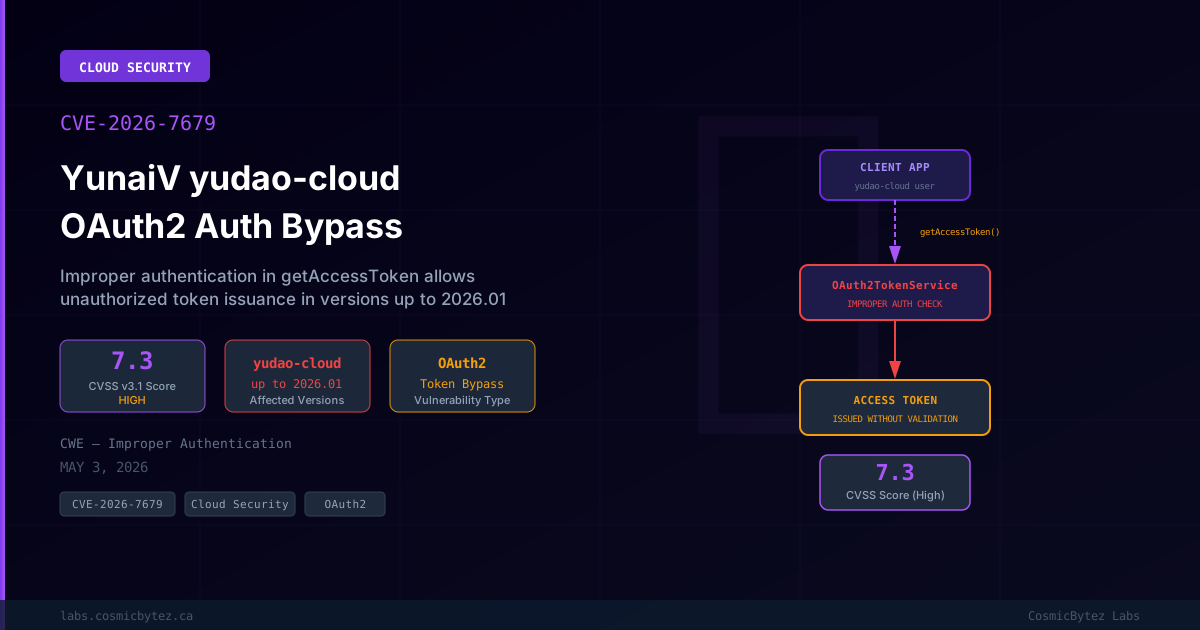
A high-severity authentication bypass vulnerability has been disclosed in YunaiV yudao-cloud, a widely deployed open-source cloud platform based on the RuoYi framework. Tracked as CVE-2026-7679 with a CVSS score of 7.3 (High), the flaw affects all versions up to and including 2026.01 and resides in the OAuth2 token issuance subsystem.
Vulnerability Overview
| Attribute | Value |
|---|---|
| CVE ID | CVE-2026-7679 |
| CVSS Score | 7.3 (High) |
| CWE Classification | CWE-287 — Improper Authentication |
| Affected Product | YunaiV yudao-cloud |
| Affected Versions | All versions up to and including 2026.01 |
| Vulnerable Function | getAccessToken in OAuth2TokenServiceImpl.java |
| Attack Vector | Network |
| In-the-Wild Exploitation | Not confirmed at time of disclosure |
| Published | May 3, 2026 |
Technical Analysis
The vulnerability exists in the getAccessToken function within the file:
yudao-module-system-biz/src/main/java/io/github/ruoyi/common/oauth2/service/impl/OAuth2TokenServiceImpl.java
This Java class is responsible for issuing OAuth2 access tokens to authenticated clients within the yudao-cloud platform. The flaw results from insufficient validation of the authentication state prior to token generation — meaning that a crafted request can trigger token issuance without the caller having successfully passed authentication checks.
Root Cause
The getAccessToken method accepts parameters from the caller that influence token scope and subject identity. Due to missing or improperly ordered authentication guards, an attacker can manipulate these parameters to:
- Bypass the credential verification step.
- Trigger token issuance for an arbitrary user identity or privilege scope.
- Receive a valid, platform-signed access token without ever supplying legitimate credentials.
This is a logic flaw in the authentication flow rather than a memory corruption issue — it requires no special privileges to exploit and is reachable over the network from any party that can communicate with the OAuth2 endpoint.
Exploitation Path
1. Attacker identifies the OAuth2 token endpoint exposed by yudao-cloud
   (typically /system/oauth2/token or similar REST path)

2. Attacker crafts a token request with manipulated parameters:
   - Bypasses the credential check via parameter manipulation
   - Specifies a target user identity or elevated scope

3. OAuth2TokenServiceImpl.getAccessToken() processes the request
   without completing the authentication validation chain

4. Platform issues a signed access token for the requested identity

5. Attacker uses the token to authenticate API calls, access protected
resources, or escalate privileges within the yudao-cloud deploymentAbout YunaiV yudao-cloud
yudao-cloud is a popular open-source microservices cloud platform built on Spring Cloud and the RuoYi administrative framework. It is widely used in Chinese enterprise environments for building internal management systems, ERP backends, and cloud-native applications. The platform includes modules for:
- System administration and RBAC
- Code generation
- Workflow management
- Payment integration
- OAuth2-based SSO
Its broad adoption in enterprise back-office systems means a successful authentication bypass can expose sensitive business data, administrative interfaces, and integrated third-party services.
Scope and Risk
Organizations running yudao-cloud in environments where the OAuth2 endpoint is internet-accessible face the highest risk. Even in internally-hosted deployments, the vulnerability could be exploited by:
- Malicious insiders accessing the token endpoint from within the network perimeter.
- Attackers with initial network access (e.g., via a compromised machine on the same segment) pivoting to the cloud management plane.
- Automated scanners targeting known RuoYi/yudao deployments, as the framework is widely fingerprinted.
Remediation
Primary Fix: Update to a Patched Version
Check the official yudao-cloud repository for a patched release and update immediately:
# Pull the latest release from the upstream repository
git fetch origin
git checkout <patched-version-tag>

# Rebuild and redeploy affected services
mvn clean package -pl yudao-module-system/yudao-module-system-bizMonitor the YunaiV yudao-cloud GitHub releases page for patch availability.
Interim Mitigations (Pre-Patch)
If an immediate update is not feasible:
- Restrict network access to the OAuth2 token endpoint using firewall rules or API gateway policies — limit access to trusted IP ranges only.
- Add authentication middleware at the reverse proxy (nginx/Kong/Spring Cloud Gateway) layer to enforce pre-authentication before requests reach the OAuth2 service.
- Audit existing access tokens — review tokens issued over recent weeks for signs of unauthorized issuance, particularly tokens with elevated scopes not tied to recognized login events.
- Enable comprehensive API access logging on the
/oauth2/tokenendpoint to detect exploitation attempts.
Detection
Monitor for indicators of exploitation:
# Review OAuth2 token issuance logs for anomalies
grep "getAccessToken" /path/to/yudao-cloud/logs/system.log | grep -v "user_id="

# Look for tokens issued without matching login events
# Query your audit database for tokens where the grant_type is unusual
# or where the user_id does not correspond to a recent authentication event

# Check for tokens with unusually broad scopes
SELECT * FROM system_oauth2_access_token
WHERE scope LIKE '%admin%'
ORDER BY create_time DESC
LIMIT 100;Unexpected access tokens — particularly those tied to administrative accounts or issued outside normal business hours — should be revoked and investigated.
Impact Assessment
| Impact Area | Description |
|---|---|
| Authentication Bypass | Attacker can obtain valid OAuth2 tokens without credentials |
| Unauthorized API Access | Valid tokens grant access to all APIs protected by OAuth2 |
| Privilege Escalation | Token scope manipulation may yield elevated privilege tokens |
| Data Exposure | Access to user data, business records, and management interfaces |
| Attack Barrier | Network access to the OAuth2 endpoint is the only prerequisite |
Key Takeaways
- CVE-2026-7679 is a CVSS 7.3 High authentication bypass in YunaiV yudao-cloud up to and including version 2026.01.
- The
getAccessTokenfunction inOAuth2TokenServiceImpl.javafails to enforce proper authentication validation before issuing tokens. - Internet-exposed deployments are at highest risk — restrict OAuth2 endpoint access to trusted networks immediately.
- Update to the patched version as soon as it is released by the YunaiV project maintainers.
- No confirmed in-the-wild exploitation was reported at time of NVD disclosure on May 3, 2026.