Executive Summary
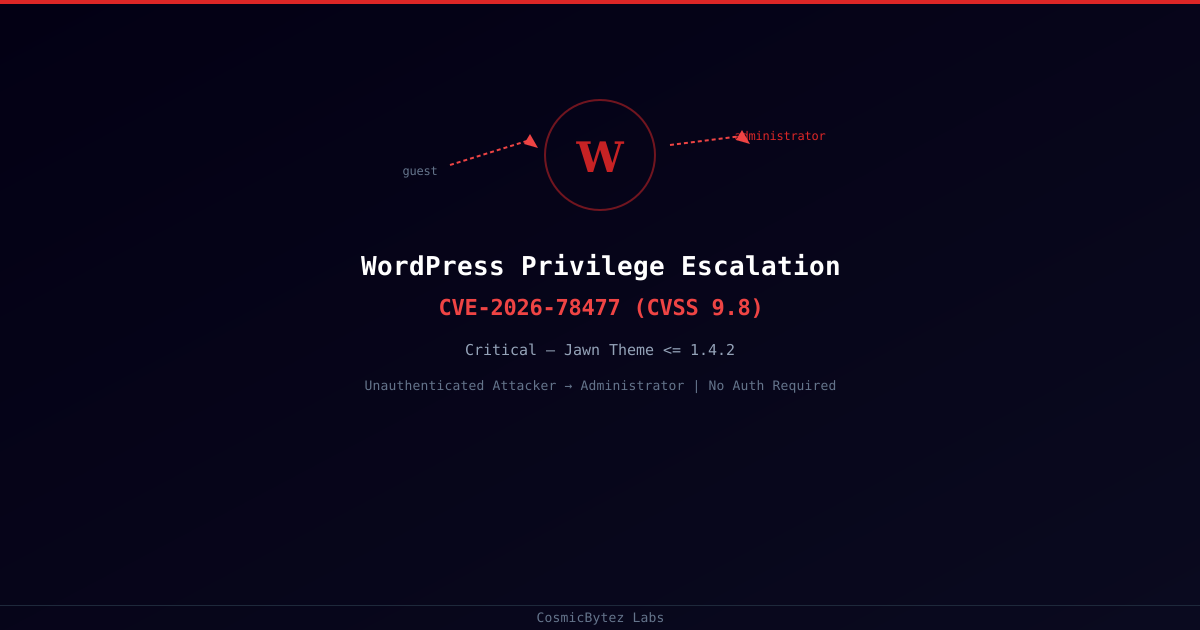
CVE-2026-78477 is a critical privilege escalation vulnerability (CVSS 9.8) in the Jawn theme for WordPress, affecting all versions up to and including 1.4.2. An unauthenticated attacker can exploit this flaw to elevate their privileges to that of a WordPress administrator — gaining full control of the affected site without any prior credentials.
| Attribute | Value |
|---|---|
| CVE ID | CVE-2026-78477 |
| CVSS Score | 9.8 (Critical) |
| Type | Privilege Escalation (Authentication Bypass) |
| Attack Vector | Network |
| Authentication | None required |
| User Interaction | None |
| Affected Versions | Jawn Theme ≤ 1.4.2 |
| Published | 2026-08-25 |
Vulnerability Details
The Jawn WordPress theme contains a flaw in its user registration or role assignment logic that allows an unauthenticated attacker to obtain administrator-level access. WordPress privilege escalation vulnerabilities of this class typically stem from one of the following root causes:
- Insecure user registration endpoint — A theme-provided AJAX action or REST endpoint allows arbitrary role assignment during user creation
- Missing capability checks — Administrative functions lack
current_user_can()or nonce verification, allowing unauthenticated invocation - Exposed privileged action hooks — Theme hooks registered without authentication guards that can be triggered by unauthenticated HTTP requests
The impact is complete: a successful exploit yields full WordPress admin access, enabling the attacker to install plugins, modify site content, create backdoor accounts, and execute server-side code through the theme/plugin editor.
Affected Versions
| Product | Affected | Fixed |
|---|---|---|
| WordPress Jawn Theme | All versions ≤ 1.4.2 | 1.4.3+ (if available) |
Sites running Jawn theme versions 1.4.2 and earlier are vulnerable. There is no indication that older or newer versions are exempt unless a specific patch has been released.
Impact
A successful exploit allows an unauthenticated remote attacker to:
- Gain full WordPress administrator access with no credentials
- Install malicious plugins — delivering webshells, skimmers, or backdoors
- Deface or alter site content — for phishing, misinformation, or SEO spam
- Create persistent backdoor accounts — surviving theme updates
- Execute PHP code — via the built-in theme/plugin editor if not disabled
- Exfiltrate the WordPress database — including all user credentials, private content, and personal data
- Pivot to the underlying server — if file write permissions and PHP execution are available
Risk Context
WordPress powers approximately 40% of the web. Theme-based privilege escalation vulnerabilities are a preferred initial access vector for threat actors deploying credit card skimmers (Magecart), SEO spam injectors, and ransomware droppers. A CVSS 9.8 rating reflects the near-zero exploitation barrier: no credentials, no user interaction, fully remote.
Remediation
Immediate Actions
-
Update Jawn theme immediately — Apply the patched version (1.4.3 or later) as soon as it is available from the theme developer or the WordPress theme directory.
-
If no patch is available — deactivate the theme — Switch to a default WordPress theme (Twenty Twenty-Four, etc.) until a fix is released. A vulnerable active theme is a critical exposure.
-
Audit for compromise — Check for:
- Newly created administrator accounts not created by site owners
- Unexpected plugin installations
- Modified theme or plugin files (
checksumsvia WP-CLI:wp plugin verify-checksums --all) - Unfamiliar scheduled cron jobs
-
Restrict registration — If user registration is not required, disable it in WordPress Settings → General → "Anyone can register."
-
Implement a WAF — Web Application Firewalls (Wordfence, Cloudflare WAF) can block exploitation attempts while patching is underway.
WP-CLI Audit Commands
# List all administrator accounts
wp user list --role=administrator

# Verify plugin file integrity
wp plugin verify-checksums --all

# Check recently modified files
find /var/www/html/wp-content -name "*.php" -newer /var/www/html/wp-config.php

# List all active plugins
wp plugin list --status=activeDetection
Indicators of Compromise
| Indicator | Description |
|---|---|
| Unexpected admin user accounts | Attacker created backdoor admin |
POST requests to /wp-admin/admin-ajax.php with action=jawn_* from unauthenticated sources | Exploit attempt |
| New plugin installations without admin activity | Post-exploit persistence |
Modified functions.php or theme files | Webshell or backdoor injection |
| Cron jobs calling external URLs | Malware beacon or C2 |
Log Review
# Check Apache/Nginx logs for suspicious POST requests
grep -i "admin-ajax\|wp-json.*jawn\|register" /var/log/nginx/access.log | grep "POST" | grep " 200 "

# Check for new admin users created recently
wp user list --role=administrator --format=tableKey Takeaways
- CVSS 9.8 Critical — Unauthenticated privilege escalation to WordPress admin
- Zero barriers to exploit — No credentials, no interaction, fully remote
- Deactivate immediately if no patch — An unpatched active theme is an open door
- Audit for compromise — The vulnerability may already be exploited; check for new admin accounts and modified files
- Apply defense-in-depth — WAF, least-privilege file permissions, and registration restrictions reduce exposure while patching proceeds