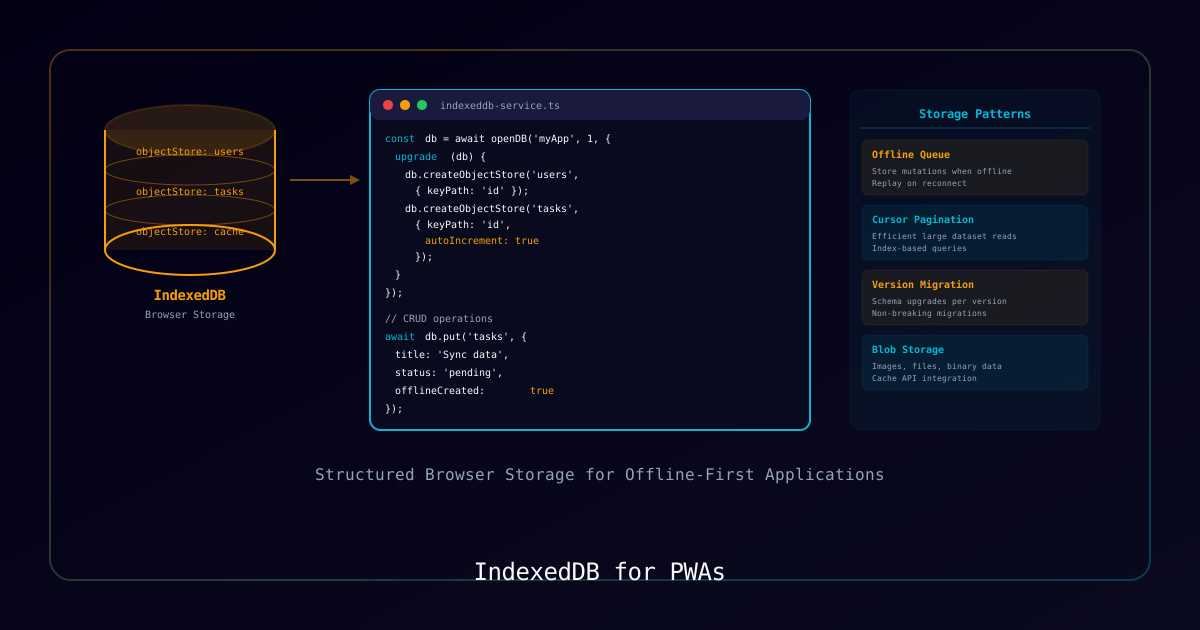
Overview
IndexedDB is the browser's built-in NoSQL database for structured offline data storage. Unlike localStorage (5MB limit, synchronous, strings only), IndexedDB handles megabytes of structured data with indexes and transactions. This guide builds a clean abstraction layer for using IndexedDB in PWAs.
Why IndexedDB?
| Feature | localStorage | IndexedDB |
|---|---|---|
| Storage Limit | ~5MB | ~50MB+ (varies by browser) |
| Data Types | Strings only | Objects, arrays, blobs, files |
| Async | No (blocks UI) | Yes (non-blocking) |
| Indexes | No | Yes (queryable) |
| Transactions | No | Yes (ACID) |
Process
Step 1: Database Abstraction
Wrap IndexedDB's callback-based API in a Promise-based class:
// lib/indexed-db.ts

interface DBConfig {
  name: string;
  version: number;
  stores: StoreConfig[];
}

interface StoreConfig {
  name: string;
  keyPath: string;
  indexes?: { name: string; keyPath: string; unique?: boolean }[];
}

export class LocalDB {
  private db: IDBDatabase | null = null;
  private config: DBConfig;

  constructor(config: DBConfig) {
    this.config = config;
  }

  async open(): Promise<IDBDatabase> {
    if (this.db) return this.db;

    return new Promise((resolve, reject) => {
      const request = indexedDB.open(this.config.name, this.config.version);

      request.onupgradeneeded = (event) => {
        const db = (event.target as IDBOpenDBRequest).result;
        for (const store of this.config.stores) {
          if (!db.objectStoreNames.contains(store.name)) {
            const objectStore = db.createObjectStore(store.name, {
              keyPath: store.keyPath,
            });
            for (const index of store.indexes || []) {
              objectStore.createIndex(index.name, index.keyPath, {
                unique: index.unique || false,
              });
            }
          }
        }
      };

      request.onsuccess = () => {
        this.db = request.result;
        resolve(this.db);
      };

      request.onerror = () => reject(request.error);
    });
  }

  async add<T>(storeName: string, item: T): Promise<IDBValidKey> {
    const db = await this.open();
    return new Promise((resolve, reject) => {
      const tx = db.transaction(storeName, "readwrite");
      const store = tx.objectStore(storeName);
      const request = store.add(item);
      request.onsuccess = () => resolve(request.result);
      request.onerror = () => reject(request.error);
    });
  }

  async put<T>(storeName: string, item: T): Promise<IDBValidKey> {
    const db = await this.open();
    return new Promise((resolve, reject) => {
      const tx = db.transaction(storeName, "readwrite");
      const store = tx.objectStore(storeName);
      const request = store.put(item);
      request.onsuccess = () => resolve(request.result);
      request.onerror = () => reject(request.error);
    });
  }

  async get<T>(storeName: string, key: IDBValidKey): Promise<T | undefined> {
    const db = await this.open();
    return new Promise((resolve, reject) => {
      const tx = db.transaction(storeName, "readonly");
      const store = tx.objectStore(storeName);
      const request = store.get(key);
      request.onsuccess = () => resolve(request.result as T);
      request.onerror = () => reject(request.error);
    });
  }

  async getAll<T>(storeName: string): Promise<T[]> {
    const db = await this.open();
    return new Promise((resolve, reject) => {
      const tx = db.transaction(storeName, "readonly");
      const store = tx.objectStore(storeName);
      const request = store.getAll();
      request.onsuccess = () => resolve(request.result as T[]);
      request.onerror = () => reject(request.error);
    });
  }

  async delete(storeName: string, key: IDBValidKey): Promise<void> {
    const db = await this.open();
    return new Promise((resolve, reject) => {
      const tx = db.transaction(storeName, "readwrite");
      const store = tx.objectStore(storeName);
      const request = store.delete(key);
      request.onsuccess = () => resolve();
      request.onerror = () => reject(request.error);
    });
  }

  async query<T>(
    storeName: string,
    indexName: string,
    value: IDBValidKey
  ): Promise<T[]> {
    const db = await this.open();
    return new Promise((resolve, reject) => {
      const tx = db.transaction(storeName, "readonly");
      const store = tx.objectStore(storeName);
      const index = store.index(indexName);
      const request = index.getAll(value);
      request.onsuccess = () => resolve(request.result as T[]);
      request.onerror = () => reject(request.error);
    });
  }
}Step 2: Application-Specific Database
// lib/app-db.ts
import { LocalDB } from "./indexed-db";

export interface Transaction {
  id: string;
  amount: number;
  category: string;
  description: string;
  date: string;
  type: "income" | "expense";
  synced: boolean;
  updatedAt: string;
}

const db = new LocalDB({
  name: "budget-tracker",
  version: 2,
  stores: [
    {
      name: "transactions",
      keyPath: "id",
      indexes: [
        { name: "date", keyPath: "date" },
        { name: "category", keyPath: "category" },
        { name: "synced", keyPath: "synced" },
        { name: "type", keyPath: "type" },
      ],
    },
    {
      name: "categories",
      keyPath: "id",
      indexes: [{ name: "name", keyPath: "name", unique: true }],
    },
  ],
});

export const transactionStore = {
  async add(tx: Omit<Transaction, "id" | "synced" | "updatedAt">) {
    const record: Transaction = {
      ...tx,
      id: crypto.randomUUID(),
      synced: false,
      updatedAt: new Date().toISOString(),
    };
    await db.put("transactions", record);
    return record;
  },

  async getAll() {
    return db.getAll<Transaction>("transactions");
  },

  async getByCategory(category: string) {
    return db.query<Transaction>("transactions", "category", category);
  },

  async getUnsynced() {
    return db.query<Transaction>("transactions", "synced", false as any);
  },

  async markSynced(ids: string[]) {
    for (const id of ids) {
      const tx = await db.get<Transaction>("transactions", id);
      if (tx) {
        await db.put("transactions", { ...tx, synced: true });
      }
    }
  },

  async delete(id: string) {
    await db.delete("transactions", id);
  },
};Step 3: React Hook for Database Access
// hooks/useTransactions.ts
"use client";

import { useState, useEffect, useCallback } from "react";
import { transactionStore, Transaction } from "@/lib/app-db";

export function useTransactions() {
  const [transactions, setTransactions] = useState<Transaction[]>([]);
  const [loading, setLoading] = useState(true);

  const refresh = useCallback(async () => {
    const data = await transactionStore.getAll();
    // Sort by date descending
    data.sort((a, b) => new Date(b.date).getTime() - new Date(a.date).getTime());
    setTransactions(data);
    setLoading(false);
  }, []);

  useEffect(() => {
    refresh();
  }, [refresh]);

  const add = async (tx: Omit<Transaction, "id" | "synced" | "updatedAt">) => {
    const record = await transactionStore.add(tx);
    await refresh();
    return record;
  };

  const remove = async (id: string) => {
    await transactionStore.delete(id);
    await refresh();
  };

  const totals = {
    income: transactions
      .filter((t) => t.type === "income")
      .reduce((sum, t) => sum + t.amount, 0),
    expenses: transactions
      .filter((t) => t.type === "expense")
      .reduce((sum, t) => sum + t.amount, 0),
    get balance() {
      return this.income - this.expenses;
    },
  };

  return { transactions, loading, add, remove, refresh, totals };
}Step 4: Migration Strategy
Handle schema changes when upgrading the database version:
// lib/migrations.ts

export function handleUpgrade(db: IDBDatabase, oldVersion: number) {
  // Version 1 → 2: Add 'type' index to transactions
  if (oldVersion < 2) {
    if (db.objectStoreNames.contains("transactions")) {
      const tx = db.transaction("transactions", "readwrite");
      const store = tx.objectStore("transactions");
      if (!store.indexNames.contains("type")) {
        store.createIndex("type", "type");
      }
    }
  }

  // Version 2 → 3: Add 'budgets' store
  if (oldVersion < 3) {
    db.createObjectStore("budgets", { keyPath: "id" });
  }
}Storage Limits by Browser
| Browser | Default Limit | Eviction Policy |
|---|---|---|
| Chrome | 60% of disk space | LRU when quota exceeded |
| Firefox | 50% of disk space | LRU per origin |
| Safari | 1GB (asks for more) | 7-day eviction without interaction |
| Edge | Same as Chrome | Same as Chrome |
Key Takeaways
- Wrap IndexedDB's callback API in Promises for clean async/await usage
- Use indexes for any field you'll query by — they make lookups O(1) instead of O(n)
- Track
syncedstatus on each record for reliable cloud sync - Use
crypto.randomUUID()for IDs — works offline without server coordination - Version your schema with
onupgradeneededfor safe migrations - Safari evicts data after 7 days without user interaction — persist important data to cloud