Overview
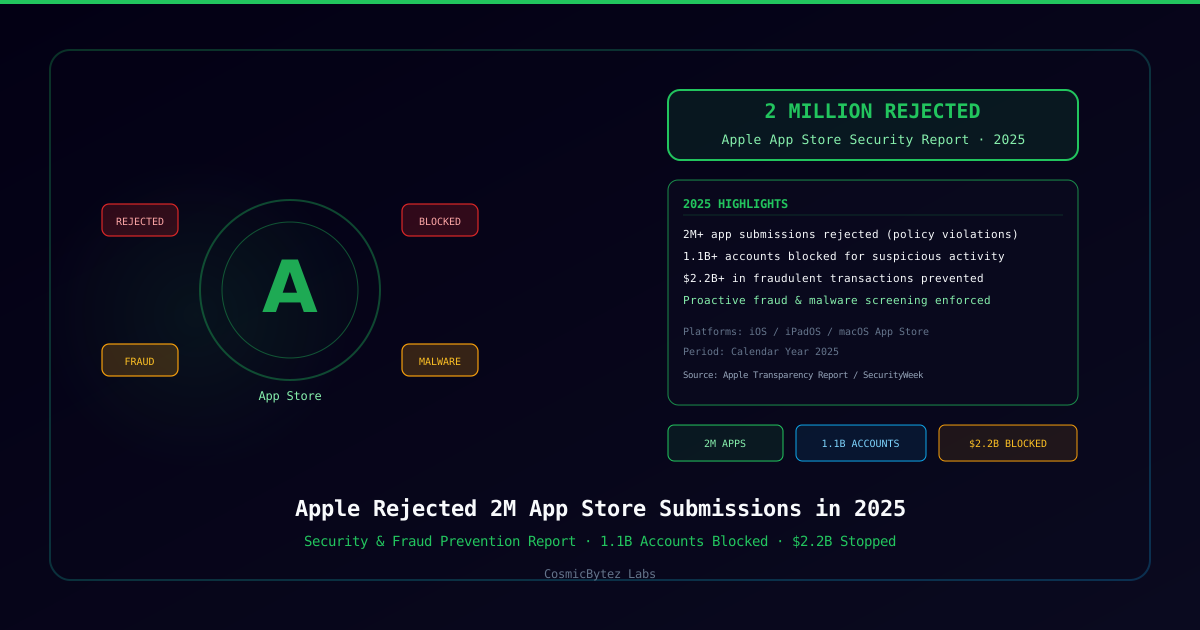
Apple has published its annual App Store transparency report, revealing the company rejected over 2 million app submissions in 2025 for violating App Store guidelines related to security, fraud, and privacy. The company also blocked more than 1.1 billion accounts and prevented over $2.2 billion in potentially fraudulent transactions during the same period.
The figures underscore the sustained scale of malicious activity targeting Apple's platform — and the operational investment required to maintain App Store integrity.
2025 by the Numbers
| Metric | 2025 Total |
|---|---|
| App submissions rejected | 2,000,000+ |
| Accounts blocked | 1,100,000,000+ |
| Fraudulent transactions prevented | $2,200,000,000+ |
What Gets Rejected?
Apple's review process screens submissions across multiple violation categories:
- Malware and unauthorized data collection — apps embedding malicious code or spyware
- Privacy violations — misuse of system APIs or data collection without disclosure
- Fraud and impersonation — fake apps cloning legitimate services or brands
- Guideline non-compliance — policy violations across content, payments, and functionality
- Developer account abuse — accounts flagged for suspicious submission patterns or stolen credentials
The review pipeline combines automated static analysis and dynamic scanning with human review for flagged or higher-risk submissions.
The Ongoing Battle
Despite Apple's review controls, sophisticated actors continue to probe the platform. Notable patterns from 2025 and early 2026 include:
- SDK-level attacks — malicious third-party SDKs embedded in otherwise legitimate apps bypass per-app review (e.g., the EngageLab SDK flaw that exposed 50M users)
- Developer account rotation — the 1.1B blocked accounts figure suggests heavy automated account creation to cycle through bans
- Post-approval updates — dynamic code loading techniques used to introduce malicious behavior after approval
- Google Play comparison — the NoVoice malware that infected 23M devices via Google Play illustrates that Apple's stricter controls do provide meaningful friction, even if not a complete barrier
Developer and Enterprise Takeaways
For security teams managing iOS applications or third-party software:
- Audit third-party SDKs — the review process evaluates the submitted binary, not the SDK supply chain over time
- Monitor code signing integrity — compromised developer certificates enable fraudulent repackaging outside the App Store
- Use App Attest — Apple's App Attest API enables runtime verification that apps are genuine and unmodified
- Watch sideloading risk — EU regulatory changes have expanded alternative distribution channels; enterprise policies should address accordingly
References
- SecurityWeek: Apple Rejected 2 Million App Store Submissions in 2025 for Security and Fraud Prevention
- Apple Transparency Report