Overview
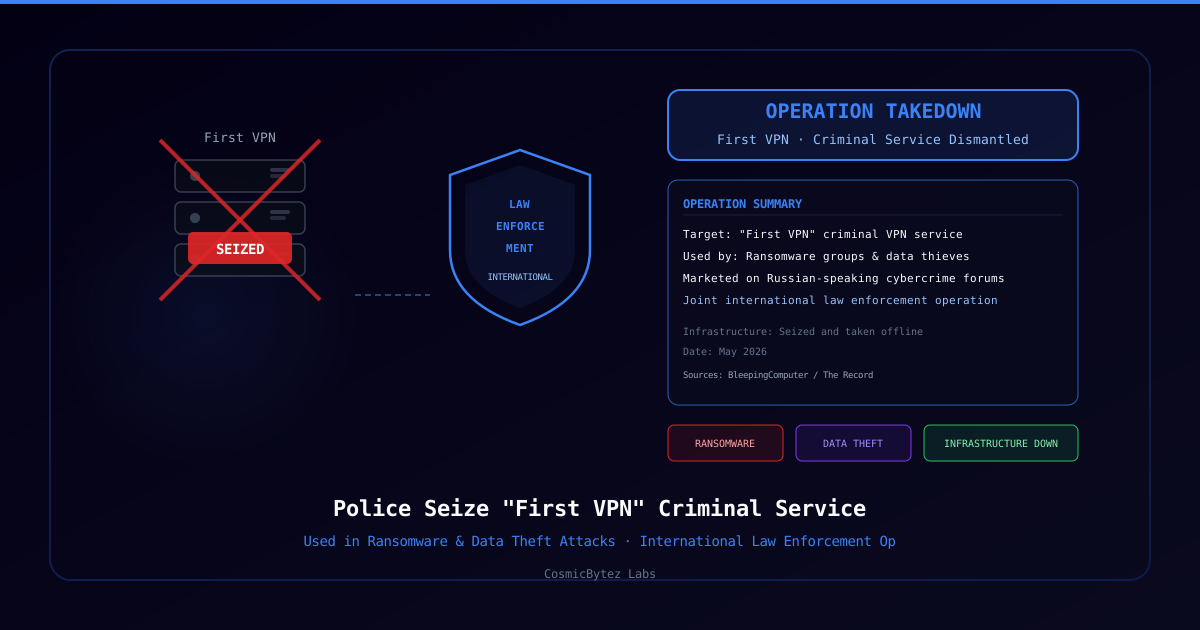
International law enforcement agencies have seized and taken offline a virtual private network service known as "First VPN" — a platform that had been actively marketed on Russian-speaking cybercrime forums for years as a secure tool for criminals to evade detection. The service was used to facilitate ransomware attacks and data theft operations.
The takedown is part of a continuing pattern of coordinated international operations targeting criminal-enabling infrastructure, following major actions against services like Tycoon2FA, Operation PowerOff (DDoS platforms), and Operation Endgame.
What Was First VPN?
First VPN was a commercially operated VPN service marketed directly to cybercriminals, offering anonymization capabilities to threat actors conducting:
- Ransomware attacks — obscuring operator identity and command-and-control communications
- Data theft and exfiltration — anonymizing data transfer channels
- Dark web activity — shielding criminal buyers and sellers from attribution
Unlike consumer VPN services, First VPN positioned itself explicitly in underground markets, advertising on Russian-speaking cybercrime forums as a solution for criminals seeking to evade law enforcement tracking.
The Law Enforcement Operation
The joint international operation targeted the infrastructure powering First VPN:
- Servers and domains seized — the service was taken fully offline
- Multi-jurisdictional coordination — European law enforcement agencies coordinated the takedown
- Criminal-only market — the service had no legitimate commercial positioning
No specific arrest announcements have been confirmed at time of publication. Investigations into customers and operators are expected to continue.
Why Targeting Infrastructure Matters
Ransomware groups and cybercriminals do not operate in isolation — they rely on a stack of specialized services: VPNs, bulletproof hosting, crypters, initial access brokers, and phishing kits. Taking down enabling infrastructure disrupts operational security even when individual actors aren't immediately arrested.
Consequences of the First VPN takedown include:
- Attribution exposure — historical traffic through the service may become available to investigators
- Operational disruption — groups relying on First VPN must find alternative anonymization
- Deterrence signal — demonstrates law enforcement visibility into criminal service markets
This mirrors the strategic logic behind earlier infrastructure operations: removing the "picks and shovels" of cybercrime raises operational costs and increases exposure for all users of the platform.
Recommendations
Organizations and security teams should:
- Update threat intelligence feeds — infrastructure changes post-takedown may affect IoC lists
- Review historical traffic logs — if First VPN exit node IPs are published by authorities, correlate against historical logs for potential indicator matches
- Monitor for activity spikes — disrupted groups typically seek alternative infrastructure quickly, which can generate observable network noise
- Track follow-on law enforcement announcements — customer data from seized services often feeds subsequent arrests
References
- BleepingComputer: Police seize "First VPN" service used in ransomware, data theft attacks
- The Record: Europe dismantles VPN service used by cybercriminals to hide ransomware attacks