Overview
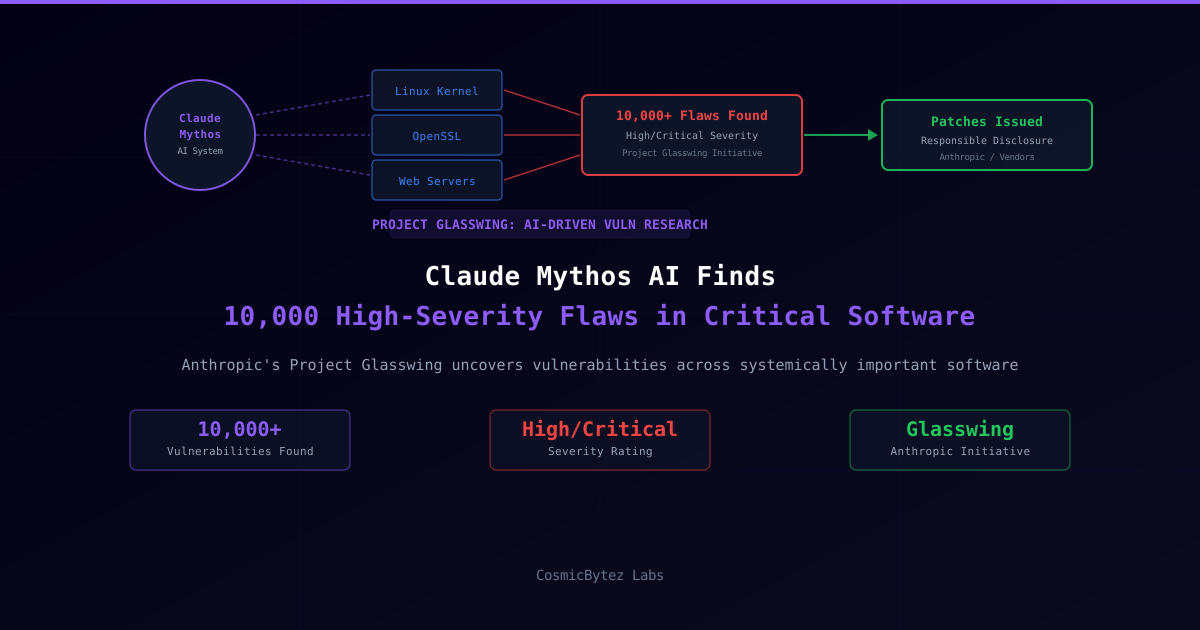
Anthropic has announced a major milestone for Project Glasswing, its AI-powered cybersecurity research initiative: the Claude Mythos AI system has discovered more than 10,000 high- or critical-severity vulnerabilities across some of the world's most widely deployed and "systemically important" software — all within roughly one month of operation.
The disclosure represents a watershed moment in AI-assisted security research, demonstrating that large language models operating in an autonomous or semi-autonomous capacity can conduct vulnerability research at a scale and speed that would be impossible for human security teams alone.
Project Glasswing
Project Glasswing was launched by Anthropic as a cybersecurity initiative aimed at proactively discovering and responsibly disclosing vulnerabilities in critical software infrastructure before malicious actors can exploit them.
Key aspects of the project:
- AI-driven analysis using Claude Mythos — a specialized capability built on top of Anthropic's Claude model family
- Focus on systemically important software — targeting codebases that underpin critical infrastructure, widely used open-source libraries, and enterprise platforms
- Responsible disclosure pipeline — findings are coordinated with affected vendors before public disclosure
The initiative appears to be Anthropic's answer to concerns about AI being used offensively for vulnerability discovery, by proactively deploying the same capabilities defensively.
Scale of Findings
| Metric | Value |
|---|---|
| Total Vulnerabilities Found | 10,000+ |
| Severity Level | High or Critical |
| Timeframe | ~1 month since launch |
| Target Category | Systemically important software |
| Disclosure Approach | Responsible disclosure to vendors |
The 10,000+ figure exclusively covers high- and critical-severity findings — meaning lower-severity issues were likely identified in even greater numbers. The focus on systemically important software means these vulnerabilities, if left unpatched, could have had outsized impact on the security of the broader internet.
What "Systemically Important Software" Means
Anthropic appears to be targeting codebases in categories such as:
- Operating system components — Linux kernel, BSD variants
- Cryptographic libraries — OpenSSL, libssl, TLS implementations
- Web server software — Apache, Nginx, and related components
- Network infrastructure tools — Routing software, DNS implementations
- Widely used open-source libraries — Libraries with billions of downstream dependents
Vulnerabilities in these layers can have cascading effects: a single critical flaw in a foundational library may affect thousands of applications built upon it.
Implications for AI-Assisted Security Research
The Project Glasswing results raise significant questions and opportunities for the security community:
The positive case — defensive AI:
- AI systems can process millions of lines of code at a speed and thoroughness no human team can match
- Pattern recognition across large codebases can identify subtle vulnerability classes that human reviewers miss
- Proactive AI-driven research could "drain the vulnerability pool" faster than attackers can exploit it
The dual-use concern:
- The same capabilities that find vulnerabilities defensively can be used offensively
- If Claude Mythos can find 10,000 critical flaws in a month, adversarial AI systems could do the same — and choose not to disclose
- This underscores the importance of responsible AI development and deployment in security contexts
For security teams:
- AI-assisted code analysis is transitioning from experimental to production-ready capability
- Organizations running significant open-source software should expect accelerating rates of vulnerability disclosure as more AI systems enter this space
- Patch management velocity will become increasingly critical
Responsible Disclosure
Anthropic has indicated that Project Glasswing findings are being handled through coordinated responsible disclosure — notifying affected vendors with adequate time to develop and release patches before public disclosure.
This approach mirrors the industry standard established by organizations like Google Project Zero, where researchers provide vendors a fixed disclosure window (typically 90 days) before publishing technical details publicly.
Organizations running affected software should monitor vendor security advisories closely in coming weeks and months as Project Glasswing disclosures roll out.
Sources
- The Hacker News — Claude Mythos AI Finds 10,000 High-Severity Flaws in Widely Used Software