Overview
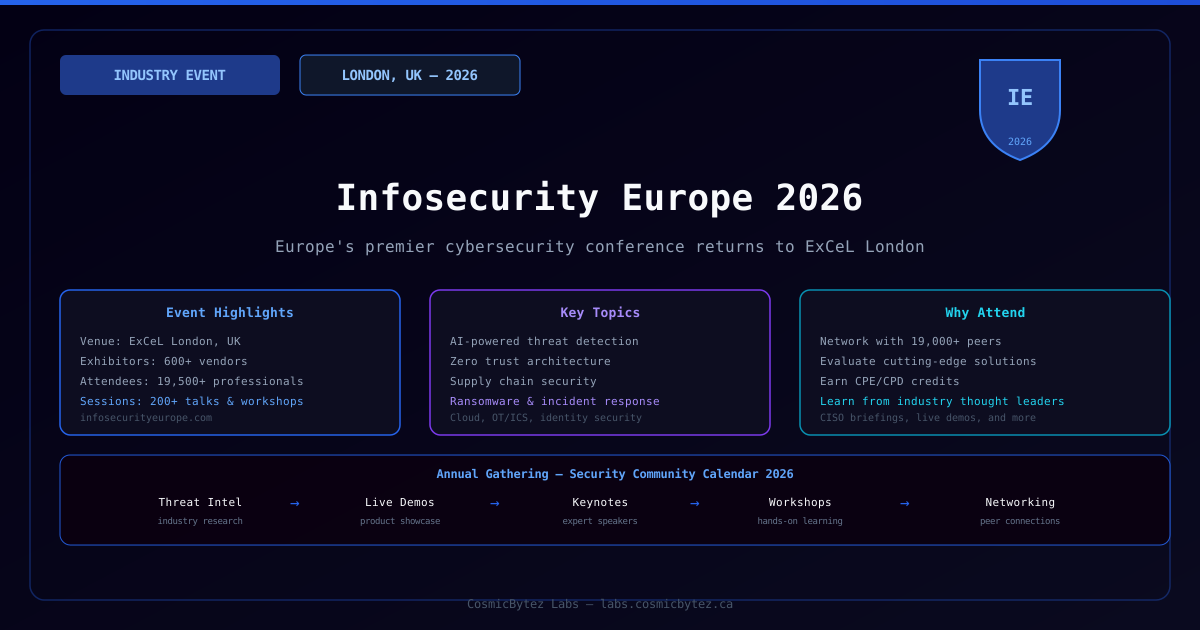
Infosecurity Europe is back, drawing tens of thousands of cybersecurity professionals to ExCeL London for the continent's most comprehensive security conference. The annual event serves as a focal point for the global cybersecurity community — connecting practitioners, vendors, researchers, and executives under one roof for days of sessions, live demonstrations, and networking.
As the threat landscape continues to evolve at an unprecedented pace, Infosecurity Europe 2026 arrives at a critical moment. AI-assisted attacks, supply chain compromises, and state-sponsored espionage dominated headlines in the first half of 2026, ensuring packed rooms and intense discussions across every track.
What to Expect
Exhibition Floor
With over 600 exhibitors, the exhibition hall showcases the full spectrum of the cybersecurity market:
- Endpoint detection and response (EDR) vendors
- Cloud security posture management (CSPM) platforms
- Identity and access management (IAM) solutions
- Threat intelligence providers
- AI-powered security operations platforms
Attendees can evaluate new products, request live demonstrations, and compare offerings across adjacent solution categories.
Conference Sessions
More than 200 speaker sessions span a range of formats — keynotes, panel discussions, technical deep-dives, and interactive workshops. Key tracks for 2026 include:
| Track | Focus Areas |
|---|---|
| Threat Intelligence | Nation-state actors, ransomware, dark web monitoring |
| AI & Security | LLM attacks, AI-powered defense, deepfake threats |
| Zero Trust | Architecture, identity-first design, micro-segmentation |
| Supply Chain | Software bill of materials (SBOM), dependency security |
| Cloud Security | Multi-cloud posture, serverless risks, cloud-native threats |
| OT/ICS Security | Critical infrastructure protection, ICS/SCADA vulnerabilities |
| Incident Response | Playbooks, tabletop exercises, lessons learned |
Hot Topics for 2026
AI-Assisted Attacks
The cybersecurity community is grappling with the dual-use nature of AI. Threat actors are leveraging large language models to craft more convincing phishing campaigns, automate vulnerability discovery, and generate custom malware. Sessions this year will examine how defenders can use the same tools to stay ahead — from AI-powered alert triage to autonomous threat hunting.
Supply Chain Security
Following high-profile compromises like the TanStack npm attack and the cascading breaches it caused at Grafana, GitHub, and OpenAI, supply chain security is a centerpiece of 2026 discussions. Conversations will cover:
- Software composition analysis (SCA) and SBOM mandates
- CI/CD pipeline hardening
- Token lifecycle management — a lesson painfully reinforced by recent incidents
- Open source package vetting strategies
Ransomware Resilience
Despite law enforcement disruptions of groups like ALPHV/BlackCat and LockBit infrastructure, ransomware remains the most financially damaging cybercrime category. Presentations will focus on backups, segmentation, and negotiations — alongside the growing trend of data extortion without encryption.
Professional Development
Infosecurity Europe is a recognized CPE/CPD credit opportunity for certifications including:
- CISSP (ISC²)
- CISM and CISA (ISACA)
- CompTIA Security+ and related credentials
- SANS GIAC certifications
Attendees can log verifiable professional development hours across sessions and workshops.
Community and Networking
Beyond sessions and the expo floor, Infosecurity Europe is a critical networking venue:
- CISO Round Tables — private, chatham-house-rule discussions for senior security leaders
- Early career and diversity programs — mentorship programs and entry-level tracks
- UK government briefings — sessions covering NCSC guidance and UK policy updates
- Academic research presentations — university and research institute findings from the year
Sources
- Dark Reading — Infosecurity Europe Event Coverage