Overview
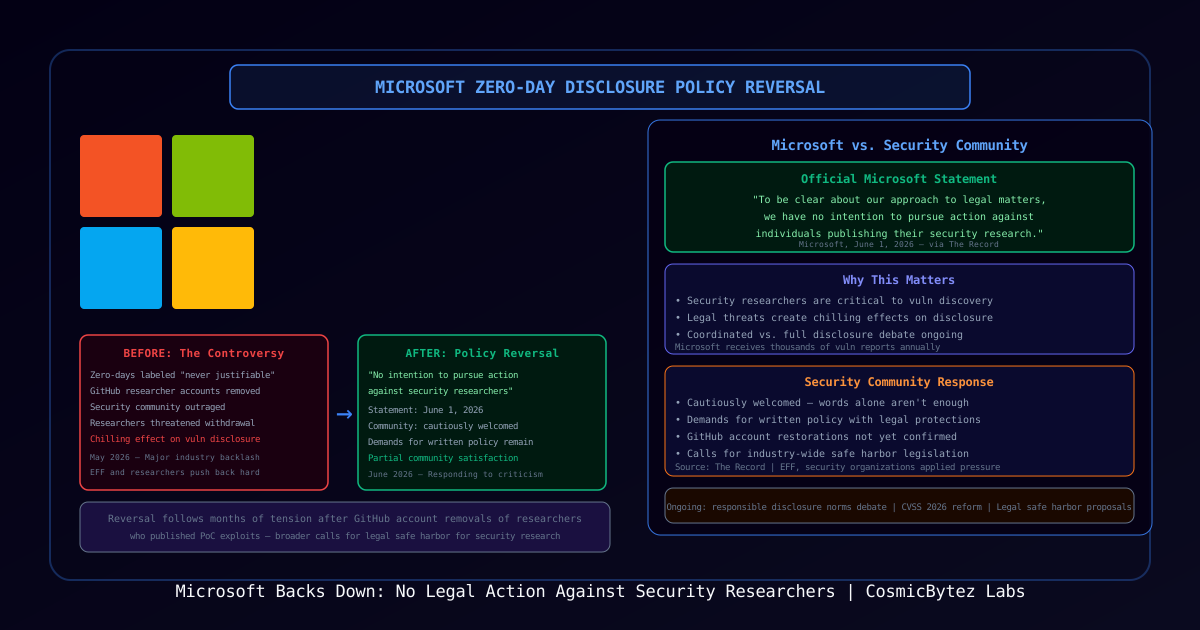
Microsoft has issued a clarification on its stance toward security researchers following weeks of mounting controversy. After the company removed GitHub accounts belonging to researchers who had published zero-day vulnerability disclosures and issued statements characterizing such publications as "never justifiable," the security research community pushed back with significant force. On June 1, 2026, Microsoft stated:
"To be clear about our approach to legal matters, we have no intention to pursue action against individuals conducting or publishing their security research."
The statement represents a notable retreat from the aggressive posture that had sparked widespread alarm about chilling effects on vulnerability disclosure practices that are foundational to the security research ecosystem.
Background: How the Controversy Developed
The Triggering Events
The dispute between Microsoft and the security research community escalated through a series of actions:
-
Public statements on zero-day disclosure — Microsoft representatives characterized the public release of zero-day vulnerabilities and proof-of-concept (PoC) exploit code as "never justifiable," a position widely viewed by the security community as an attack on legitimate research publication norms that have developed over decades
-
GitHub account removals — The company removed or suspended GitHub accounts belonging to security researchers who had published PoC exploit code for Windows vulnerabilities — including both fully patched vulnerabilities and recently disclosed ones — citing terms of service violations related to exploit publication
-
Community response — The security research community, including independent researchers, academic institutions, security companies, and advocacy organizations including the Electronic Frontier Foundation (EFF), reacted strongly to both the statements and the account removals
Why the Community Reacted So Strongly
The security research community's reaction reflected deep concern about precedent-setting behavior:
- Publication of security research — including PoC code for patched vulnerabilities — has been considered a legitimate and important part of security practice for decades. It enables defensive researchers to validate patches, build detections, and understand attack techniques.
- GitHub is the primary platform for security research publication and collaboration. Removing researcher accounts affects not just the targeted researchers but sends a chilling signal to the entire community.
- Legal threats from vendors are specifically identified by security researchers and organizations as a key barrier to vulnerability disclosure. The Computer Fraud and Abuse Act (CFAA) and similar laws create genuine legal exposure for researchers.
- Researchers threatened to stop reporting vulnerabilities directly to Microsoft and route all disclosures through full public disclosure first — which would leave Microsoft's customers exposed for longer while simultaneously depriving Microsoft of coordinated disclosure benefits.
Microsoft's Policy Reversal
Microsoft's statement explicitly affirms it will not pursue legal action against researchers publishing their security research:
"To be clear about our approach to legal matters, we have no intention to pursue action against individuals conducting or publishing their security research."
The company indicated it is "taking the feedback seriously" — acknowledging that its earlier stance generated substantial and legitimate pushback from the research community.
What this statement covers:
- Researchers who publish proof-of-concept exploit code for Microsoft vulnerabilities
- Security researchers who publicly disclose vulnerabilities — even through full disclosure rather than coordinated disclosure
- Individuals publishing findings about Microsoft products through academic papers, blog posts, or conference presentations
The Vulnerability Disclosure Debate: Context
This episode sits within a decades-old debate in cybersecurity about how vulnerabilities should be disclosed:
| Approach | Description | Trade-offs |
|---|---|---|
| Coordinated Disclosure | Researcher reports to vendor first; patch before publication | Vendor can patch before public exposure; researchers depend on vendor response timelines |
| Full Disclosure | Immediate public publication of all details | Maximum pressure on vendors; exposes unpatched systems to attackers |
| PoC After Patch | Publish PoC once patch is available | Validates fixes; can enable exploitation of slow-patching organizations |
| Bug Bounty Programs | Paid, structured coordinated disclosure | Incentivizes reporting; scope limitations may exclude critical research |
Microsoft's initial position appeared to oppose public disclosure broadly — including the publication of PoC code for already-patched vulnerabilities, a practice that many defensive security teams rely on to build detections and verify patch effectiveness. This went further than most vendor responsible disclosure policies and was perceived as an attempt to suppress security research entirely.
What Remains Unresolved
Despite the positive clarification, significant concerns remain within the security research community:
No Formal Written Policy
The statement is a verbal clarification in response to media pressure — not a binding written policy document or formal legal commitment. Without codification, researchers cannot rely on this statement in a legal context if Microsoft's position changes again or if individual legal decisions diverge from the stated intent.
GitHub Account Status Unclear
Microsoft has not confirmed that researchers who had their GitHub accounts removed will have those accounts reinstated or that the removals will be reversed. For affected researchers, this remains a concrete harm with no clear resolution.
Scope Ambiguity
The statement doesn't clearly define what counts as "security research" versus activity Microsoft would consider outside acceptable bounds. This ambiguity leaves researchers uncertain about edge cases — such as disclosing vulnerabilities in products used by law enforcement or national security agencies.
No Safe Harbor Language
The security research community and legal advocates have long called for formal safe harbor provisions — explicit legal protections that create clear, enforceable boundaries for what constitutes protected security research activity. A verbal statement from a spokesperson does not provide the same protection as contractual or legislative safe harbor language.
The Broader Implications
For Microsoft: As one of the world's largest enterprise software vendors, Microsoft's relationship with independent security researchers is critical. The independent research community discovers vulnerabilities that Microsoft's own teams often miss, and maintaining a healthy vulnerability disclosure pipeline ultimately makes Microsoft products more secure for hundreds of millions of users. Alienating researchers would create long-term harm to the security of Microsoft's entire product portfolio.
For Researchers: Legal uncertainty remains a structural problem for security research, particularly for individual contributors without corporate legal support. Until clear safe harbor protections are legislated or formally committed to by vendors, researchers face genuine risk publishing work that may be perceived as enabling exploitation.
For the Industry: The episode highlights the need for industry-wide standards on vendor-researcher relationships. Organizations like FIRST (Forum of Incident Response and Security Teams) have worked to develop norms around vulnerability disclosure, but these lack enforcement mechanisms. Legislative or contractual solutions may ultimately be necessary.
Key Takeaways
- Microsoft has clarified it will not pursue legal action against individuals conducting or publishing security research, reversing its earlier aggressive posture
- The statement follows significant backlash after Microsoft removed GitHub accounts of researchers publishing zero-day disclosures and labeled such disclosures "never justifiable"
- The security community cautiously welcomes the statement but is calling for formal written policy with enforceable legal protections
- GitHub account reinstatements for affected researchers have not been announced
- This episode underscores the ongoing need for clear safe harbor protections for legitimate security research, whether through vendor policy or legislation