Overview
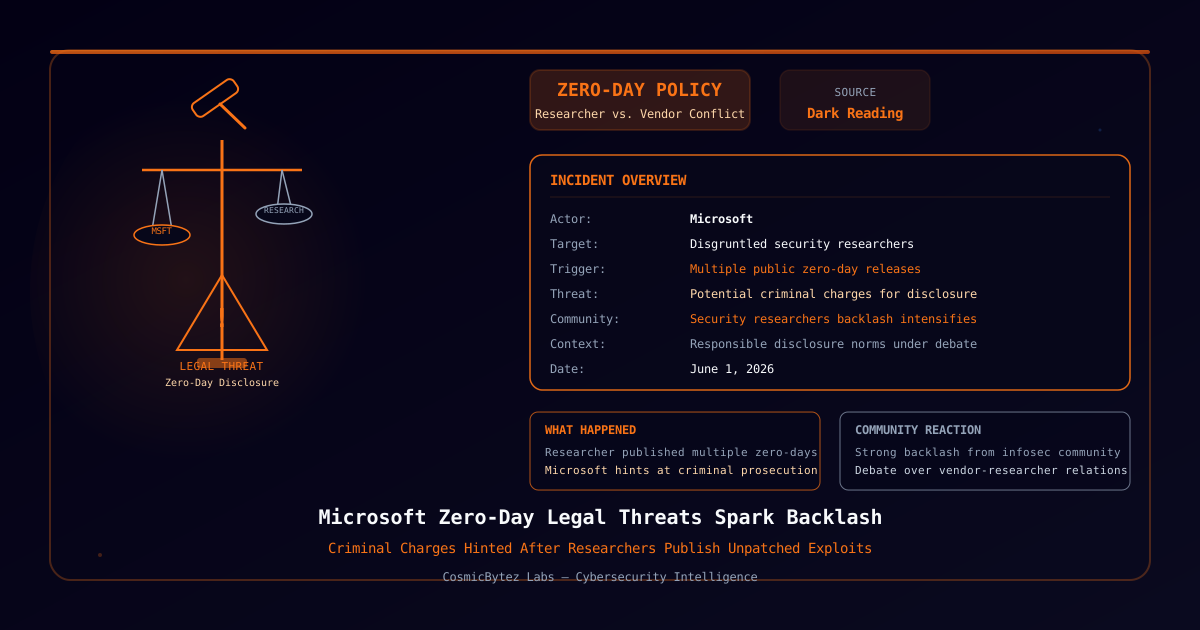
Microsoft has drawn sharp criticism from the security research community after appearing to hint at potential criminal charges against a disgruntled security researcher who has published multiple unpatched zero-day exploits targeting Microsoft products in recent weeks. The implied legal threats have sparked an intense debate over vendor-researcher relations, responsible disclosure norms, and whether large technology companies are using legal pressure to suppress inconvenient security findings.
The controversy highlights deep tensions in the security community between vendors seeking time to patch vulnerabilities and researchers who argue that public disclosure — however disruptive — ultimately serves the public interest by forcing faster remediation.
Background
The Researcher's Disclosures
In the weeks leading up to the conflict, a security researcher — apparently acting out of frustration with what they described as inadequate response from Microsoft's security team — published several working proof-of-concept exploits for previously unreported Windows vulnerabilities. The disclosures included functional exploit code, meaning that within hours of each publication, threat actors could theoretically weaponize the techniques.
The act of publishing exploits for unpatched vulnerabilities without a coordinated disclosure period is generally condemned by mainstream security organizations — but it is not unprecedented, and whether it constitutes criminal activity is a contested legal question that varies significantly by jurisdiction.
Microsoft's Response
Rather than focusing solely on rapid patching, Microsoft's communications in response to the disclosures reportedly included language suggesting that the researcher's actions could constitute criminal conduct, citing laws related to computer fraud and abuse. The company stopped short of filing formal charges, but the implied threat was sufficient to alarm significant portions of the security research community.
Community Backlash
The reaction from security researchers has been swift and largely critical of Microsoft.
Core concerns raised by the community include:
- Chilling effect on disclosure — Legal threats, even without formal action, can deter researchers from reporting vulnerabilities they discover, leaving users exposed for longer
- Power asymmetry — Large vendors have substantial legal resources that individual researchers cannot match, making legal intimidation a disproportionate response
- Public interest argument — Researchers argue that public disclosure, however abrupt, forces vendors to prioritize security fixes they might otherwise delay
- Prior failures in disclosure process — Many researchers point to past instances where Microsoft or other vendors sat on vulnerability reports for months or years without action, suggesting that alternative disclosure mechanisms have failed to achieve timely patching
Security community members noted:
Publishing zero-days is controversial, but threatening criminal prosecution for vulnerability research sets a dangerous precedent that will ultimately make the entire ecosystem less secure.
Former Microsoft employees and respected security researchers publicly questioned whether the company's legal posture would be counter-productive, noting that researchers who fear prosecution may either sit on critical vulnerabilities or report them exclusively to exploit brokers and nation-state actors rather than to vendors.
The Responsible Disclosure Debate
The incident has reignited fundamental questions about vulnerability disclosure that the security community has grappled with for decades.
Coordinated Disclosure Model
The dominant model, advocated by organizations like CISA and supported by most major vendors, involves:
- Researcher discovers a vulnerability
- Researcher notifies the vendor privately
- Vendor has a defined period (typically 90 days) to develop and release a patch
- Researcher publishes findings after the patch window closes — or earlier if the vendor fails to respond
This model is codified in programs like Google Project Zero, which has a strict 90-day deadline, and has broad support as a balance between researcher credit, vendor time to patch, and user safety.
The Full Disclosure Alternative
A minority position holds that immediate public disclosure — including working exploit code — provides the strongest incentive for rapid vendor response. Proponents argue that only when vendors face immediate, tangible reputational damage do they prioritize security over feature development.
Critics counter that this approach arms attackers before defenders have time to patch, leaving the very users these researchers claim to be protecting more exposed than before.
The Middle Ground Failure
What often triggers disruptive public disclosures is not ideological disagreement, but rather the failure of coordinated disclosure in specific cases — researchers who reported vulnerabilities and received no response, received minimal acknowledgment, or watched their findings quietly closed without public notification or credit. In these cases, public disclosure becomes a form of last resort.
Microsoft's Broader Context
This incident comes at a sensitive moment for Microsoft's security posture. The company has faced sustained scrutiny following several high-profile incidents:
- The Secure Future Initiative launched in response to criticism over security culture and practices
- Ongoing debates about the security of Microsoft 365 and Azure services
- Prior controversy over handling of zero-day researchers and the security researcher account removals in May 2026
Microsoft's decision to hint at criminal charges, rather than simply focusing on rapid patching, suggests the company views the unauthorized disclosures as an existential threat to its reputation and customer trust — but the community response suggests the legal strategy may be producing the opposite effect.
Key Takeaways
- Microsoft hinted at criminal charges against a researcher who published multiple unpatched zero-day exploits for Windows
- The security research community has responded with significant backlash, warning of chilling effects on vulnerability disclosure
- The incident reignites longstanding debates about the coordinated disclosure model and its failures
- Legal threats from large vendors against individual researchers represent a power asymmetry that many in the community view as dangerous for the overall security ecosystem
- Rapid patching, not legal threats, is the most productive response to public zero-day disclosures