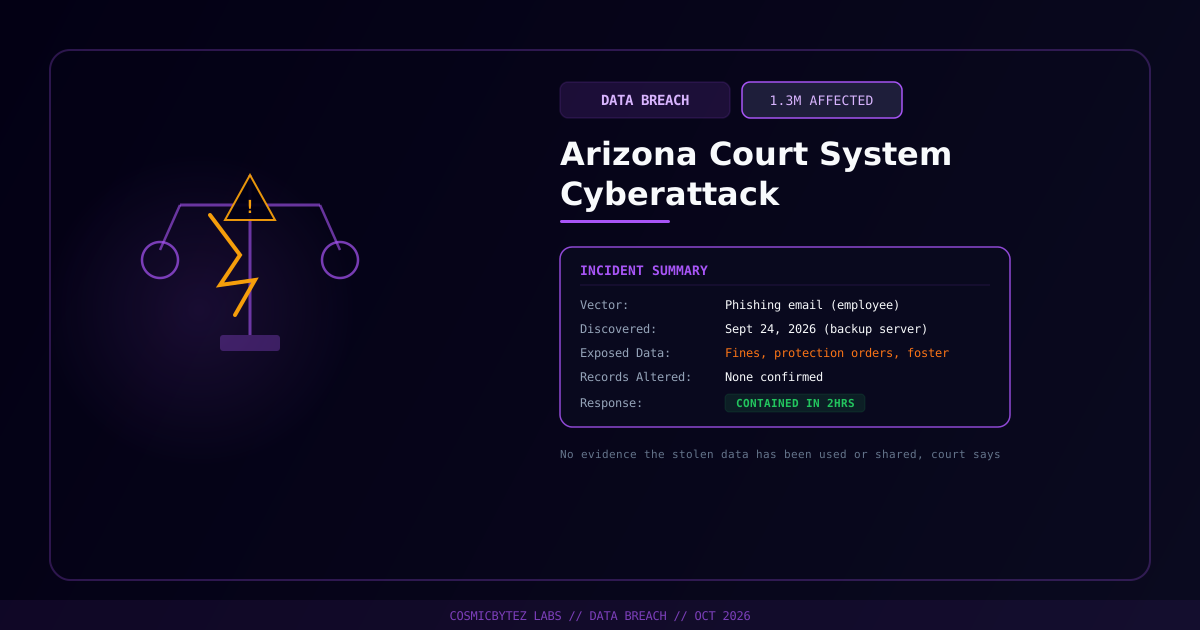
Breach Traced to a Single Phishing Click
The Arizona Supreme Court has disclosed a cyberattack on its court technology systems that exposed personal information belonging to more than 1.3 million people, in one of the larger public-sector breaches reported this year. Court officials say the intrusion is believed to have started when a court employee clicked a malicious link in an email — a reminder that even well-resourced government IT environments remain exposed to basic social engineering.
What Was Exposed
| Category | Scope |
|---|---|
| Unpaid court fees/fines/restitution | 1.3 million individuals, traffic and criminal violations dating back 30 years |
| Protection orders | Nearly 30,000 active and inactive orders |
| Foster care board reports | 150,000 reports filed from 2010 onward |
Court spokesperson Alberto Rodriguez said the agency has "no evidence it has been used or shared" regarding the stolen data, and emphasized that no records were altered or deleted, and no juror, witness, or employee information was part of the theft.
Timeline
- Discovery: Court technology staff identified the intrusion on a backup server on September 24, 2026
- Containment: The attack was shut down approximately two hours after detection
- Notification: Affected individuals were subsequently notified
- Operational impact: No court cases were affected or delayed by the incident
Why This Matters
Court systems hold a uniquely sensitive mix of records — financial penalties, protective orders meant to shield domestic violence victims, and child welfare documentation — that can cause real harm if it reaches the wrong hands, even without evidence of misuse so far. Protection order data in particular is sensitive because its exposure could theoretically help an abuser locate or identify a protected party, even though the court has not indicated that specific risk materialized here.
The rapid two-hour containment window suggests reasonably mature detection capability on the court's backup infrastructure, but the fact the initial compromise went undetected long enough for an employee's phishing click to reach a backup server at all underscores a familiar gap: email security training and technical controls (link sandboxing, attachment filtering) remain the first line of defense against breaches that start this way.
Recommended Actions
- Public-sector IT teams should treat this as a reminder to audit phishing-simulation and email-filtering coverage for frontline staff with access to case management systems
- Individuals who have interacted with Arizona's court system — particularly those with past fines, protection orders, or foster care involvement — should watch for phishing attempts referencing this breach and monitor for identity theft
- Segment backup infrastructure from general user network access where possible, so a single phished credential doesn't provide a path to bulk historical records
- Review retention policies for decades-old records; data that no longer serves an active purpose is still a liability if it's breached