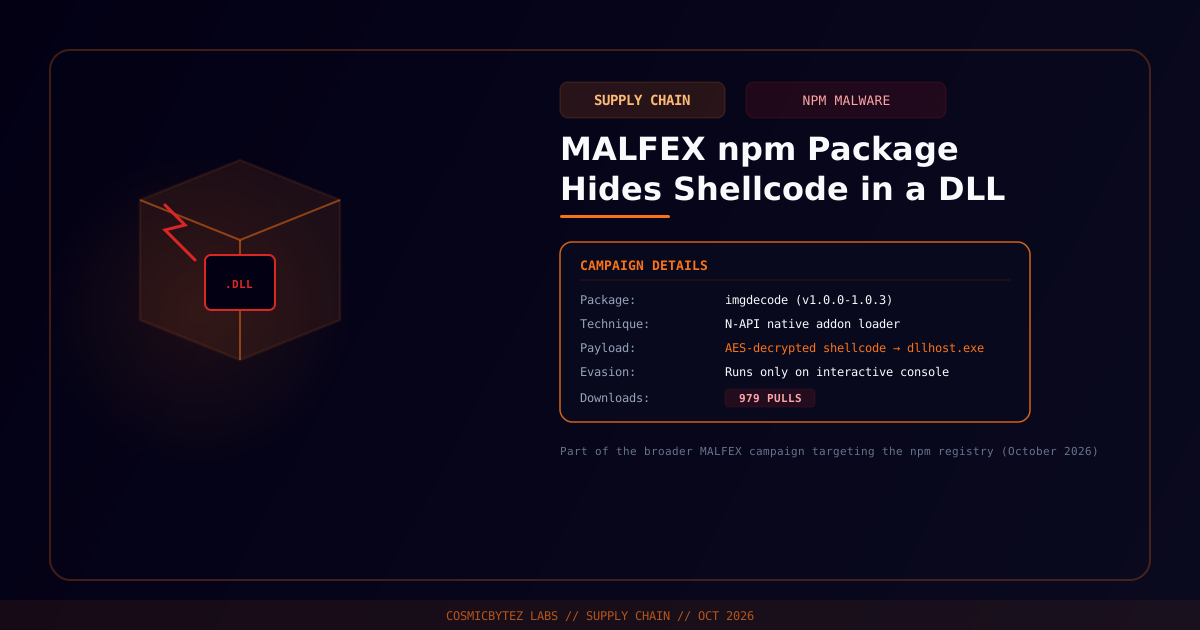
A Loader Written in Compiled Code, Not JavaScript
Researchers have uncovered the latest escalation in the MALFEX npm supply-chain campaign: a package named imgdecode that conceals its malicious loader inside a compiled Windows native addon rather than plain JavaScript. The package was uploaded to the npm registry on September 30, 2026, by a publisher account named malfexteste8, and has been downloaded 979 times as of the latest count.
According to analysis from SafeDep, the package's top-level JavaScript file is only nine lines long — just enough to load a prebuilt Windows DLL (prebuilds/win32-x64/imgdecode.node). From version 1.0.1 onward, the malicious logic runs inside the native addon's N-API module initialization function, meaning no postinstall script is needed to trigger it. Simply require('imgdecode') is enough.
How the Attack Works
| Stage | Behavior |
|---|---|
| Load | require('imgdecode') loads imgdecode.node, a compiled Windows DLL |
| Trigger | Native addon executes inside N-API init — no install script required |
| Evasion Check | Payload only activates when stdout is an interactive Windows console, skipping CI runners and sandboxes with redirected output |
| Fetch | Addon downloads a file (banner.png) from the GitHub repository cavecrew/proj |
| Decrypt | Downloaded blob is decrypted with AES-256-CBC using a hardcoded key |
| Execute | Decrypted shellcode is injected into a newly spawned, suspended dllhost.exe process |
Shifting the malicious logic out of JavaScript and into a compiled binary is a deliberate evasion move: most automated supply-chain scanners are built to analyze JS source code, and a nine-line loader stub gives them almost nothing to flag. The actual malicious behavior only becomes visible once the native addon itself is reverse-engineered.
Part of a Fast-Moving Campaign
imgdecode isn't an isolated incident — it's the latest package in an npm cat-and-mouse campaign that has been evolving for weeks:
- Earlier MALFEX packages
native-runnerandimg-to-nativeformed a prior loader chain:img-to-nativefetched an encrypted blob from the samecavecrew/projGitHub repository, decrypted it with a hardcoded key, and wrote the result to disk as a Go executable in the AppData folder — with no package in the chain using an install hook. - After Checkmarx publicly disclosed that chain and npm removed the packages, the operator responded within two days, publishing replacements named
runhelperandimgbundle. imgdecodeversion 1.0.3 — the fully native-addon variant — was published on October 11, 2026, six days after the Checkmarx report, marking the campaign's shift from JavaScript loaders to compiled binaries.
The rapid republishing cadence — removal followed by a renamed replacement within 48 hours — shows an operator actively monitoring takedown activity and iterating around it rather than abandoning the campaign.
Why This Matters
- Detection evasion by design: moving the loader into a compiled N-API addon defeats static analysis tools built around parsing JavaScript, a growing trend as npm supply-chain scanners mature
- No install-script dependency: npm ecosystems increasingly flag or restrict
postinstallscripts; executing from the addon's native init function sidesteps that specific defense - Sandbox-aware payloads: the interactive-console check means automated malware sandboxes and CI pipelines with piped output may never observe the malicious behavior, inflating false confidence in "clean" scan results
- Persistent operator: the campaign has already cycled through at least five package names (
native-runner,img-to-native,runhelper,imgbundle,imgdecode) in response to takedowns
Recommendations
For Developers
- Audit new dependencies for native addons (
.nodefiles,binding.gyp,prebuilds/directories) with the same scrutiny applied to install scripts — native code is harder to review but just as capable of arbitrary execution - Avoid installing unfamiliar, recently-published npm packages — especially single-purpose utility packages with generic names like "imgdecode" — without checking publisher history and download patterns
- Run
npm installin CI/sandboxed environments by default so any console-interactivity-gated payloads are less likely to find a live target
For Security Teams
- Monitor for outbound connections to GitHub repositories serving binary blobs disguised as image files (e.g.,
banner.png) from build or developer workstations - Flag process injection into
dllhost.exeor other suspended legitimate Windows processes as a high-priority detection rule - Treat npm packages with no install script but a native addon as requiring the same review bar as those with
postinstallhooks — the execution trigger has simply moved
For the npm Ecosystem
- This campaign underscores that supply-chain defense built solely around JavaScript source scanning has a blind spot: compiled native addons. Registries and scanners should extend analysis to prebuilt binaries bundled in packages, not just the JS entry point.
MALFEX's pivot to native code is a reminder that supply-chain attackers adapt as fast as the defenses built against them — and that "no install script" is no longer a reliable signal of safety.