Massive AI Conversation Leak
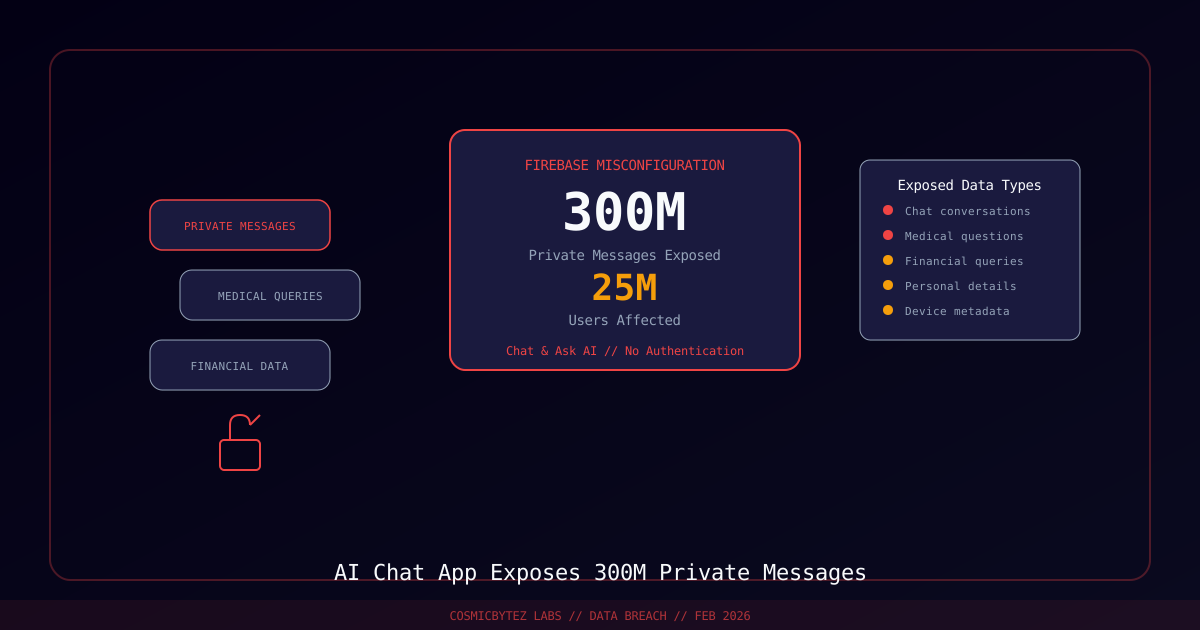
Security researchers have discovered a misconfigured Google Firebase backend in the popular Chat & Ask AI app (50M+ downloads), exposing 300 million private chatbot conversations from approximately 25 million users. The exposed data includes conversations across ChatGPT, Claude, and Gemini models — representing one of the largest AI-related data exposures to date.
What Was Exposed
| Data Type | Volume | Risk |
|---|---|---|
| Private conversations | 300 million messages | Critical |
| User accounts | 25 million users | High |
| Timestamps | Per-message timing data | Medium |
| Model settings | Temperature, system prompts | Medium |
| Chatbot names | Custom bot configurations | Medium |
| AI model identifiers | ChatGPT, Claude, Gemini usage | Medium |
The Root Cause: Firebase Misconfiguration
The breach was caused by Firebase Security Rules set to public, allowing anyone to:
- Read all stored conversation data without authentication
- Modify existing records
- Delete data from the database
This is a common but critical misconfiguration in Firebase-backed applications. Firebase Security Rules default to restrictive access, but developers must explicitly configure them — and in this case, the rules were set to allow unrestricted public access.
// Vulnerable Firebase rules (what was likely configured)
{
  "rules": {
    ".read": true,    // Anyone can read ALL data
    ".write": true    // Anyone can modify ALL data
  }
}Why AI Conversation Data Is Uniquely Sensitive
What People Tell AI Chatbots
Users often share highly sensitive information with AI assistants that they wouldn't share elsewhere:
- Medical symptoms and health concerns — Seeking health advice
- Legal questions — Describing legal situations in detail
- Financial information — Asking for tax, investment, or debt advice
- Personal relationships — Discussing private matters
- Business strategies — Sharing confidential business plans
- Code and credentials — Pasting API keys, passwords, and proprietary code
- Mental health — Discussing anxiety, depression, and personal struggles
Third-Party App Risk
This incident highlights the risk of using third-party AI wrapper apps instead of official platforms:
- Thousands of apps proxy ChatGPT, Claude, and Gemini APIs
- Security varies wildly between developers
- Users trust the AI brand but security depends on the app developer
- No standardized security requirements exist for third-party AI apps
Impact
For Affected Users
- Privacy violation — Personal conversations exposed to potential bad actors
- Social engineering — Conversation content can be used for targeted phishing
- Credential exposure — Any API keys, passwords, or tokens shared in conversations are compromised
- Reputational risk — Sensitive or embarrassing conversations could be leaked publicly
- Corporate espionage — Business-related AI conversations may contain trade secrets
Regulatory Implications
- GDPR — 300 million conversations from EU users triggers significant compliance obligations
- CCPA/CPRA — California residents' AI conversations are protected data
- AI-specific regulations — EU AI Act and emerging frameworks may apply
Recommendations
For Chat & Ask AI Users
- Stop using the app immediately until security is confirmed
- Review your conversations — Consider what sensitive information you shared
- Change related passwords — If you discussed or pasted credentials in chats
- Monitor accounts — Watch for targeted phishing or social engineering
- Use official AI apps — Access ChatGPT, Claude, and Gemini through their official applications
For All AI Users
- Be cautious what you share — Treat AI conversations as potentially public
- Use official platforms — Official apps from OpenAI, Anthropic, and Google have stronger security
- Avoid sharing credentials — Never paste passwords or API keys into AI chats
- Review app permissions — Understand what data third-party AI apps collect
Sources
- Malwarebytes — AI Chat App Exposes 300 Million Conversations
- 404 Media — Massive AI Chat App Leaked Millions of Conversations
- CyberSecurityNews — AI Chat App Data Exposure