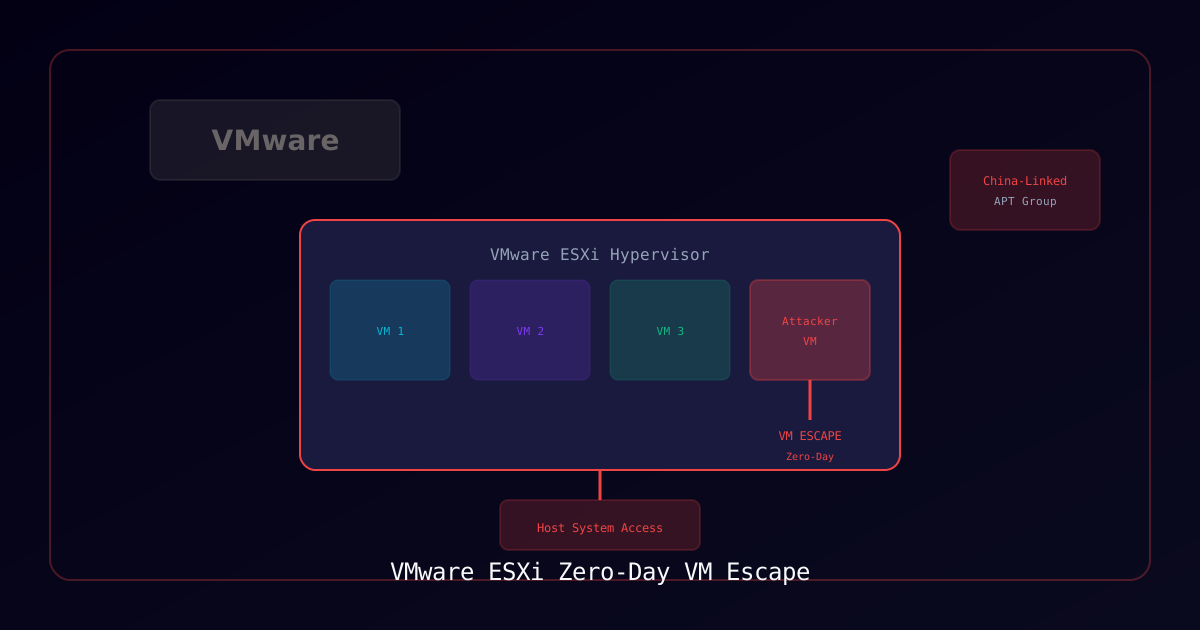
VMware ESXi Zero-Day Exploitation: VM Escape in the Wild
Security researchers at Huntress have documented a sophisticated, multi-stage attack chain attributed to Chinese-speaking threat actors that successfully escaped virtual machine isolation to compromise underlying VMware ESXi hypervisors.
Attack Overview
The attack demonstrates an alarming capability: breaking out of VM isolation to compromise the hypervisor itself, potentially affecting all virtual machines on the host.
Attack Chain:
┌─────────────────┐
│  SonicWall VPN  │ ← Initial Access (compromised appliance)
└────────┬────────┘
         ↓
┌─────────────────┐
│  Internal Pivot │ ← Lateral Movement
└────────┬────────┘
         ↓
┌─────────────────┐
│ Guest VM Access │ ← Foothold in virtualized environment
└────────┬────────┘
         ↓
┌─────────────────┐
│   VM ESCAPE     │ ← Zero-day exploitation
└────────┬────────┘
         ↓
┌─────────────────┐
│ ESXi Hypervisor │ ← Full infrastructure compromise
└─────────────────┘Technical Details
Initial Access: SonicWall VPN Compromise
The attackers leveraged a compromised SonicWall VPN appliance as their initial access vector:
- Exploited known vulnerability in SonicWall SMA/SRA devices
- Obtained valid credentials through previous breach
- Established persistent backdoor access
VM Escape Technique
The zero-day vulnerability exploited relates to VMware's virtual hardware emulation:
| Component | Details |
|---|---|
| Vulnerability | Memory corruption in SVGA driver |
| Vector | Malicious graphics commands from guest |
| Result | Code execution on hypervisor |
| CVSS | Pending (estimated 9.0+) |
Indicators of Compromise
File Hashes (SHA256):
- backdoor.exe: 3f7a8b2c1d4e5f6a7b8c9d0e1f2a3b4c5d6e7f8a9b0c1d2e3f4a5b6c7d8e9f0a
- loader.dll: a1b2c3d4e5f6a7b8c9d0e1f2a3b4c5d6e7f8a9b0c1d2e3f4a5b6c7d8e9f0a1

Network Indicators:
- C2 Domain: update.vmware-cdn[.]com (typosquat)
- C2 IP: 103.XXX.XXX.XXX (China-based hosting)

MITRE ATT&CK:
- T1190: Exploit Public-Facing Application
- T1068: Exploitation for Privilege Escalation
- T1611: Escape to HostImpact Assessment
A successful VM escape attack has severe implications:
Direct Impacts
- Hypervisor Compromise: Full control of ESXi host
- Lateral Movement: Access to all VMs on host
- Data Theft: Memory dumping of all guest VMs
- Persistence: Rootkit installation at hypervisor level
Business Impacts
- Potential access to all workloads in virtualized environment
- Ability to manipulate or destroy any VM
- Network visibility across virtual infrastructure
- Credential harvesting from memory
Mitigation Steps
Immediate Actions
- Audit SonicWall Devices:
# Check for known vulnerable versions
show version
# Review active sessions for anomalies
show users current- ESXi Hardening:
# Enable lockdown mode
vim-cmd hostsvc/advopt/update UserVars.ESXiShellInteractiveTimeOut 900
# Disable unnecessary services
esxcli system settings advanced set -o /UserVars/CIMEnabled -i 0- Network Segmentation:
- Isolate management networks
- Restrict vMotion traffic
- Implement micro-segmentation
Long-term Recommendations
| Action | Priority | Timeline |
|---|---|---|
| Patch SonicWall appliances | Critical | Immediate |
| Apply VMware patches when available | Critical | Upon release |
| Implement EDR on ESXi | High | 30 days |
| Network segmentation review | High | 30 days |
| Virtualization security audit | Medium | 60 days |
Threat Actor Profile
The attack characteristics align with known Chinese APT groups:
- Sophistication: Multi-stage, zero-day usage
- Targets: Western enterprises, critical infrastructure
- Timing: Activity during Chinese business hours
- Infrastructure: Chinese hosting providers
Detection Opportunities
Monitor for:
- Unusual guest-to-host communication patterns
- SVGA driver crashes or anomalies
- Unexpected ESXi shell access
- New or modified VIBs (VMware Installation Bundles)
- Anomalous vSphere API calls
References
- The Hacker News - VMware ESXi Zero-Day Exploit
- Huntress Security Research
- VMware Security Advisories
- CISA Alerts
Last updated: January 22, 2026