Overview
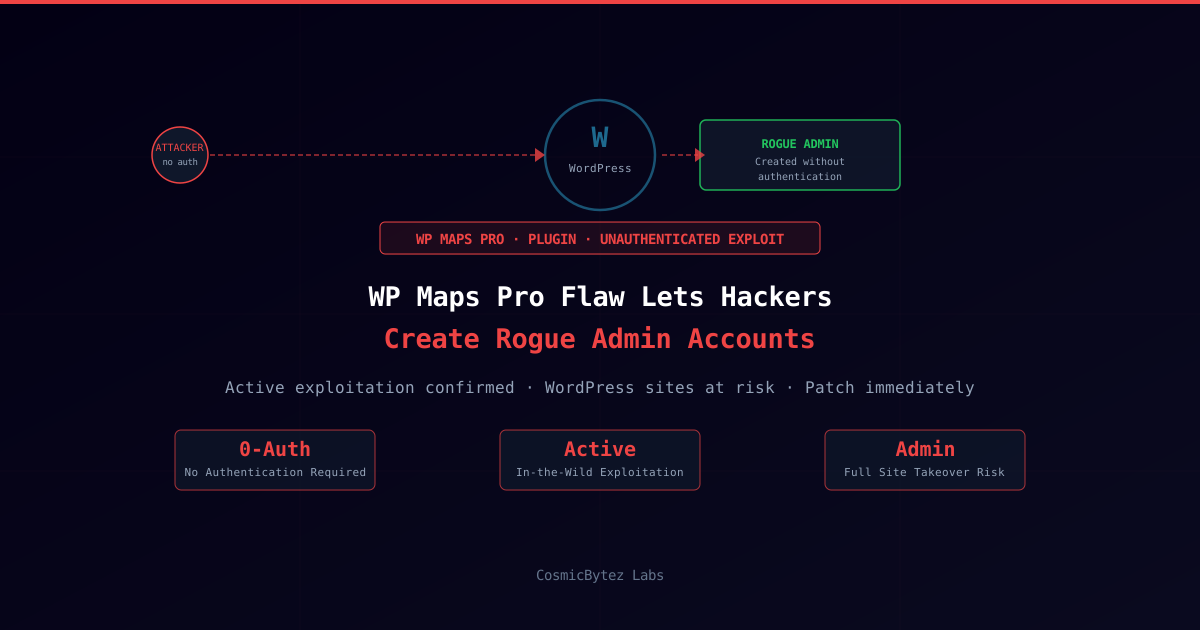
Security researchers and defenders have confirmed active exploitation of a critical vulnerability in the WP Maps Pro WordPress plugin, allowing attackers to create rogue administrator accounts on affected WordPress installations without any authentication. The exploitation is ongoing, putting an unknown number of WordPress sites at risk of full compromise.
The vulnerability requires no authentication and no user interaction — attackers need only be able to send an HTTP request to a targeted site running the vulnerable plugin version.
The Vulnerability
The flaw exists in the WP Maps Pro plugin, a premium WordPress plugin used to embed interactive maps on websites. The vulnerability allows an unauthenticated attacker to trigger an administrative user creation function exposed by the plugin, bypassing WordPress's native user registration controls.
Key characteristics:
- No authentication required — exploitable by any external attacker
- No user interaction — victim does not need to click anything
- Full administrator creation — attacker receives WordPress admin privileges
- Remote exploitation — exploitable over the network with a simple HTTP request
Attack Flow
1. Attacker identifies a WordPress site running vulnerable WP Maps Pro
2. Sends a specially crafted unauthenticated HTTP request
3. Plugin processes the request and creates a new WordPress admin account
4. Attacker logs in as administrator
5. Full site takeover achieved: install malware, steal data, deface siteActive Exploitation
According to reporting from BleepingComputer, exploitation of this vulnerability is active in the wild. Attackers are scanning for vulnerable WordPress installations and attempting to exploit the flaw at scale.
Common attacker goals after gaining WordPress admin access include:
- Malware injection — injecting malicious JavaScript or PHP backdoors into theme files
- SEO spam — adding hidden spammy links and content for black-hat SEO
- Credential harvesting — stealing customer data, payment info, or user credentials
- Hosting resource abuse — using the server for crypto mining or botnet activity
- Ransomware staging — encrypting or holding the site hostage
Affected Versions
| Plugin | Affected Versions | Status |
|---|---|---|
| WP Maps Pro | Vulnerable versions (check changelog for patched release) | Patch recommended immediately |
WordPress site administrators should check their installed plugin version and compare against the vendor's changelog to determine if they are running a vulnerable build.
Recommendations
Immediate Actions
- Update WP Maps Pro to the latest version immediately via the WordPress dashboard or by manually uploading the patched release
- Audit administrator accounts — check for any unfamiliar admin users created recently:
WordPress Dashboard → Users → Administrators - Review recent user registrations — look for accounts created without a corresponding legitimate signup
- Check file integrity — scan theme files and plugin files for injected malicious code
Detection
WordPress site owners can detect compromise by looking for:
- Unexpected admin accounts — especially ones created around the same timeframe
- Unknown user emails in the WordPress user list
- Unusual login activity in access logs from foreign IPs
- Modified theme or plugin files — use a file integrity checker or compare against known-good copies
Hardening
- Keep all plugins updated (enable auto-updates for security releases)
- Install a WordPress security plugin (Wordfence, Sucuri, etc.)
- Enable two-factor authentication for all admin accounts
- Use activity logging (WP Activity Log plugin) to track user creation events
- Restrict wp-admin access by IP using .htaccess or a firewall ruleBroader Context: WordPress Plugin Risk
The WP Maps Pro exploitation follows a well-established pattern of WordPress plugin vulnerabilities being rapidly weaponized:
- WordPress powers approximately 43% of all websites globally
- Premium and free plugins are a recurring attack vector due to inconsistent security practices
- Unauthenticated privilege escalation vulnerabilities in WordPress plugins are among the most dangerous — they require minimal attacker skill and deliver immediate full compromise
WordPress site administrators are strongly advised to maintain automatic security updates and regularly audit installed plugins for necessity and update status.
Sources
- BleepingComputer — WP Maps Pro bug exploited to create admin accounts on WordPress sites