First Major MCP Server Supply Chain Attack
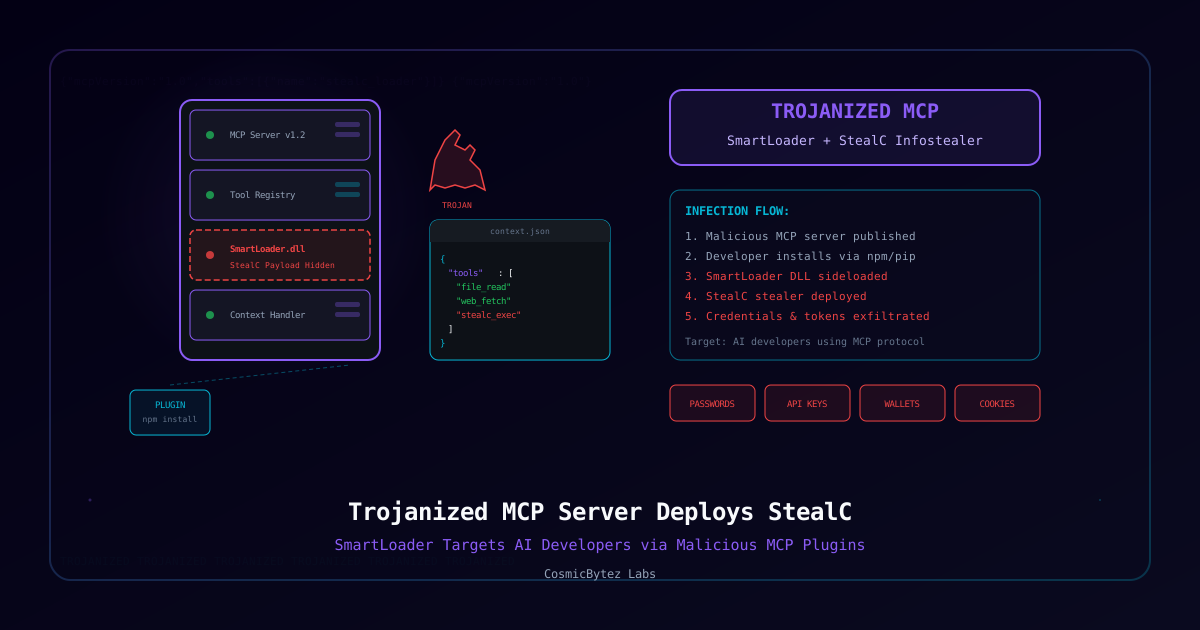
The first significant supply chain attack targeting the Model Context Protocol (MCP) ecosystem has been disclosed. A SmartLoader campaign distributes a trojanized MCP server disguised as Oura Health's legitimate tool, ultimately deploying the StealC infostealer to harvest developer credentials.
Attack Chain
| Stage | Description |
|---|---|
| Discovery | Victim searches for Oura MCP server on public registries |
| Download | Rogue server found listed among legitimate alternatives |
| Execution | ZIP archive launched, executes obfuscated Lua script |
| Loader | SmartLoader deploys and establishes persistence |
| Payload | StealC infostealer steals credentials and crypto wallets |
Why Developers Are High-Value Targets
Developer workstations contain a treasure trove of sensitive data:
- API keys for production services
- Cloud credentials (AWS, Azure, GCP)
- SSH keys and certificates
- Database connection strings
- CI/CD pipeline tokens
- Cryptocurrency wallet data
A single compromised developer machine can provide attackers with access to entire production environments.
The MCP Ecosystem Risk
The Model Context Protocol has rapidly gained adoption as a standard for AI tool integration. However, the ecosystem currently lacks:
- Centralized package verification — no signed packages
- Security review processes for listed servers
- Automated malware scanning of server submissions
- Publisher identity verification
This mirrors the early days of npm and PyPI, where supply chain attacks were rampant before security measures were implemented.
Recommendations
For Developers
- Verify MCP server origins — check publisher identity before installation
- Audit installed MCP servers against known-good sources
- Use isolated environments for testing new MCP servers
- Monitor for unexpected network connections from MCP processes
For Organizations
- Establish formal security review processes for MCP server installations
- Maintain an approved MCP server allowlist
- Deploy endpoint monitoring on developer workstations
- Implement credential rotation policies for production secrets
As the MCP ecosystem grows, supply chain security must be a first-class concern. This attack demonstrates that threat actors are already targeting the AI tooling supply chain.