Executive Summary
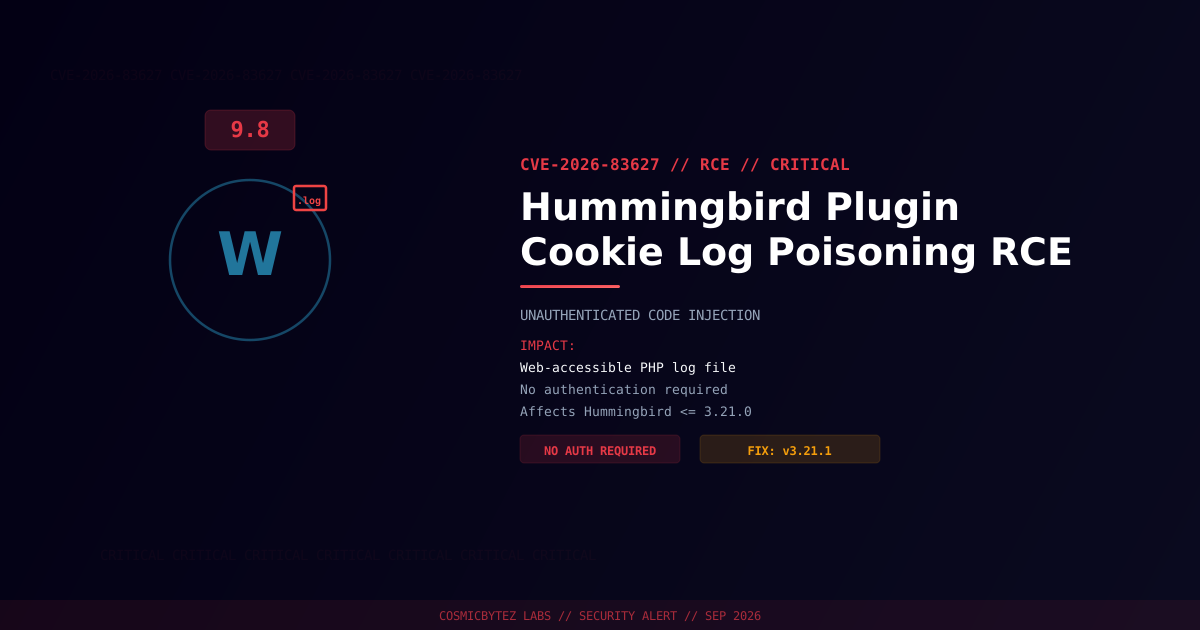
A critical unauthenticated code injection vulnerability (CVE-2026-83627, CVSS 9.8) has been disclosed in Hummingbird – Speed Optimization, Caching, Minify, Compress & CDN, a widely used WordPress performance plugin from WPMU DEV. The flaw affects all versions up to and including 3.21.0 and stems from the log_msg() function in core/modules/class-page-cache.php, which writes attacker-controlled cookie data into a debug log that is directly reachable over HTTP.
CVSS Score: 9.8 (Critical)
Because the file that's supposed to protect that log never gets its safety header written, an attacker who merely sets a crafted cookie can plant PHP code that executes the moment the log file is requested in a browser — no login, no plugin configuration changes, no user interaction.
Vulnerability Overview
| Attribute | Value |
|---|---|
| CVE ID | CVE-2026-83627 |
| CVSS Score | 9.8 (Critical) |
| Type | Improper Control of Code Generation (CWE-94) |
| Attack Vector | Network (no authentication required) |
| Privileges Required | None |
| User Interaction | None |
| Root Cause | PHP namespace resolution bug + missing input sanitization |
How the Bug Works
Hummingbird's page-cache module writes a debug log to wp-content/wphb-logs/page-caching-log.php. That path lives inside the public web root, so it's supposed to be neutralized by a leading <?php die(); ?> guard header written before any log content.
The guard is only written when class_exists('Filesystem') returns true — but the actual class is namespaced as Hummingbird\Core\Filesystem. class_exists() resolves bare string arguments against the global namespace, so the check can never match. On a normal front-end request, the guard header is silently skipped and the log file is created without it.
From there, get_cookies() writes the raw name of any cookie prefixed wphb_cache_ straight into that now-unprotected file, with no sanitization:
1. Attacker sends a request to any page on the target WordPress site
2. Attacker sets a cookie named wphb_cache_<malicious PHP payload>
3. Hummingbird's page-cache logger writes the cookie name verbatim into
   wp-content/wphb-logs/page-caching-log.php
4. Because the die() guard was never written, the file is plain executable PHP
5. Attacker requests the log file's URL directly — the payload executes
6. Full remote code execution as the web server userThis is functionally a log-poisoning-to-RCE chain, but it requires no authentication and no unusual plugin configuration — only that the plugin's page caching be active, which it is by default.
Impact of Successful Exploitation
| Impact | Description |
|---|---|
| Remote Code Execution | Arbitrary PHP execution as the web server user |
| Database Compromise | Full read/write via wp-config.php credentials |
| Webshell Persistence | Planted code can survive plugin updates if not cleaned |
| Site Takeover | Create admin accounts, modify content, redirect visitors |
| Lateral Movement | Pivot to other sites on shared hosting |
Immediate Remediation
Step 1: Update to 3.21.1 or Later
# Via WP-CLI
wp plugin update wp-hummingbird

# Verify the installed version
wp plugin get wp-hummingbird --field=versionOr via WordPress admin: Plugins > Installed Plugins > Hummingbird > Update Now.
Step 2: Check for Existing Compromise
# Inspect the page-cache log for suspicious cookie-derived filenames
cat wp-content/wphb-logs/page-caching-log.php

# Confirm the die() guard is present at the top of the file
head -n 1 wp-content/wphb-logs/page-caching-log.php

# Search for recently modified PHP files outside expected paths
find wp-content/ -name "*.php" -newer wp-includes/version.php -type fIf Immediate Patching Is Not Possible
- Block direct HTTP access to
wp-content/wphb-logs/at the web server level (deny-all rule for that directory) - Disable Hummingbird's page caching module until patched
- Monitor access logs for requests to
page-caching-log.php
Post-Remediation Steps
- Confirm the plugin is updated to 3.21.1 or later
- Delete any existing
wp-content/wphb-logs/page-caching-log.phpand let the plugin regenerate it - Review recently created admin accounts and file modifications
- Rotate WordPress secret keys with
wp config shuffle-salts - Deploy a WAF rule blocking direct access to
wphb-logs/